
One
difference between this Super Bowl and the one 48 years ago: “this magnificent
sportin' event” concludes the NFL season three weeks later. Way too long, as
far as I’m concerned.
One
difference between this Super Bowl and the one 48 years ago: “this magnificent
sportin' event” concludes the NFL season three weeks later. Way too long, as
far as I’m concerned.

The 24-7 final score was not remotely indicative of
just how thoroughly Miami dominated Minnesota, which had gone 12-2 in the
regular season (and had given the Dolphins one of their most hotly contested victories
early in 1972, in a bruising 16-14 come-from-behind win).
Vikings head coach Bud Grant had made front-page news
in the run-up to the game with his complaint about sparrows in the locker-room
shower at Houston’s Rice Stadium.
When it was all over, he had two more persistent
headaches: how the Dolphins’ offense had pushed around his legendary “Purple
People Eaters” defense, and how Miami’s “No Name Defense” had, in the words of
Miami Herald sports columnist Edwin Pope, “pounded Minnesota's
runners into such terror that the Vikings did not get a first down rushing for
an astounding 44 minutes and 17 seconds.”
Among head coach Don Shula’s 347 career
triumphs, few could have been sweeter than his Super Bowl victory at Rice Stadium.
His Super Bowl win the year before may have capped an
undefeated season and at least temporarily quieted complaints that the veteran
coach couldn’t win The Big One.
But this one proved that the earlier success was no
fluke. It also put Shula among the elite circle of coaches who have won two
consecutive Super Bowls, along with Vince Lombardi, Chuck Noll, Jimmy Johnson,
Mike Shanahan, and Bill Belichick—giving the Dolphin coach a fair claim to have
forged the closest thing that the National Football League has to a dynasty.
Dolphins dominate
Over the years, the surviving members of Dolphins have
been justly proud of their undefeated 1972 season, particularly when the New
England Patriots achieved a perfect 17-0 season in 2007 before falling to the
New York Giants in Super Bowl LXII.
But, even though the Dolphins’ 12-2 record-season
record in 1973 might suggest a slight falloff from their prior magical year,
some observers believed that the team was stronger than the undefeated squad.
Unlike the year before, with the Dolphins’ 14-7 win
over the Washington Redskins (an outcome suddenly threatened a few minutes
before the end when placekicker Garo Yepremian’s inept pass on a broken play
led to a Redskin touchdown), the Dolphins never loosened their choke hold over
their opponents. Their advantage in time of possession (33:45 versus 26:15)
tells only part of the tale.
On both sides of the ball, the Dolphins set the pace
early, capitalizing on the Vikings’ inability to get momentum. Miami scored
twice in the first quarter on touchdowns by Larry Csonka and Jim Kiick,
a rushing pair that, like the Green Bay Packers’ Jim Taylor and Paul Hornung
(“Thunder and Lightning”), had earned their own nicknames—in this case, the
more colorful (and given their close friendship, more appropriate) catchphrase,
“Butch Cassidy and the Sundance Kid.”
A Yepremian field goal in the second quarter put
Shula’s squad up 17-0 by halftime.
On the other side of the ball, the “No Name Defense”
was throttling the Vikings. The major hope that Minnesota had to get within
striking distance was crushed when, with fourth and one with a minute left in
the half, Miami middle linebacker Nick Buoniconti knocked the ball loose from
Viking running back Oscar Reed and the Dolphins’ Jake Scott recovered (one of
two fumble recoveries that the free safety had that day).
Another, two-yard touchdown run by Csonka in the third
quarter only added to the Vikings’ woes.
Head On, the title of
Csonka’s 2020 memoir, tells you most but not all of what you need to know about
the running back’s take-no-prisoners rushing style.
First, his initial pattern of running was even more
physically confrontational—with more potential for long-term physical
injury—before Shula taught him how to lead with his forearm rather than his
head.
Second, “head on” doesn’t convey the sheer futility of
trying to tackle Csonka. You’d have a better chance of bringing down a Sherman
tank.
The Vikings’ plight in Houston, as he rumbled on 33
carries for 145 yards for a Super Bowl MVP designation, was best expressed by
linebacker Jeff Siemon:
“It's not the collision that gets you. It's what
happens after you tackle him. His legs are just so strong he keeps moving. He
carries you. He's an immovable weight.”
The Vikings’ Fran Tarkenton could take only meager
satisfaction in becoming the first quarterback to score a touchdown in the
Super Bowl. The score came in the fourth quarter with his team down 24-0. With
the running game going nowhere, he was under continual pressure all day, dumping
off short passes to tight ends and running backs who were immediately
surrounded and stopped by a sea of green uniforms.
My rooting interest in the Dolphins
You might wonder how I became interested in this game
and this team.
Well, in the early 1970s, when I started watching pro
football on a regular basis, the Green Bay Packers had fallen off the high
standard set under Vince Lombardi. My area’s New York Giants were even worse,
still less than halfway through a 17-year absence from the playoffs. I
abominated their divisional rivals, the Dallas Cowboys.
I ended up gravitating to the up-and-coming Dolphins.
Their thrilling double-overtime victory over the Kansas City Chiefs in the 1971
Championship game sealed the deal for me.
Their loss to the Dallas Cowboys in Super Bowl VI only made me pull all
the harder for them to surmount their last hurdle to glory.
I was glad beyond measure when the Dolphins break
through against the Redskins, then again against the Vikings. Great times
seemed to stretch far into the future.
The Dolphins didn’t have long to enjoy their victory.
Less than a month later, Csonka, Kiick, and receiver Paul Warfield announced
that they would be jumping to the upstart World Football League for the 1975
season.
That left only one more season when quarterback Bob
Griese could count on his chief rushing and receiving threats. The Dolphins’
loss in the divisional playoffs to the Oakland Raiders, on Dec. 31, 1974—the famous
“Sea of Hands” game in which Clarence Davis snared a Ken Stabler TD
pass in the final seconds—was dismaying and, in terms of their period of
dominance, final.
Changes since Super Bowl VIII
Younger readers who come across this post may have no
idea what pro football was like a half century ago, while older ones might have
forgotten some details. I can tell you that the Super Bowl was far different
then from now, both in how it was played and how it was viewed by a mass
audience.
Even by 2004, the ambiance of the “ultimate game” as
we know it now was set. So here are the major contrasts between Super Bowl VIII
and Super Bowl XXXVIII. (God, save me from this plague of Roman numerals!):
*Passing is a more central part of the game. Testifying to the respect in which he was held across the league, Griese was elected to the Pro Football Hall of Fame, but in Super Bowl VIII he
attempted only seven passes, completing all but one. Bill Walsh’s implementation
of the “West Coast offense” with the San Francisco 49ers and NFL rules protecting
quarters gave passers more room to operate—and, in parallel fashion, decreased
the importance of running backs. The last back to be named Super Bowl MVP was
the Denver Broncos’ Terrell Davis, back in January 1998.
*Players grew in size. The biggest man on the
Dolphins’ offensive line, Hall of Famer Larry Little, weighed 265 pounds. Thirty
years later, the heaviest offensive lineman for the Patriots, Wilbert Brown,
tipped the scales at 320 pounds.
*The game occurs later in the year. With 17
regular-season games starting in 2003 versus 14 in 1973, along with an
additional round in the playoffs, the season is longer. The 2004 Super Bowl,
featuring the New England Patriots and the Carolina Panthers, was the first to
take place in February. The additional games increase the possibility of injuries
that can affect the outcome.
*The game occurs later in the day. Kickoff time
for Super Bowl VIII was 3:30 pm ET; 30 years later, it was 6:25.
*The game has become a de facto secular national
holiday. Over time, the NFL has realized that, to increase viewership, the
inherent drama of the game would not be enough, so it added entertainment elements.
The halftime entertainment at Super Bowl VIII, "A Musical America,"
featured the University of Texas band, along with Miss Texas Judy Mallett. In
contrast, the entertainers at Super Bowl XXXVIII were P. Diddy, Nelly, Kid
Rock, and the controversial pair that ended up giving rise to the phrase “wardrobe
malfunction,” Justin Timberlake and Janet Jackson. Even ads from America’s
biggest companies made the game “must-see TV” for more casual football fans,
and the average cost of these 30-second commercials skyrocketed, from $103,500 in
1974 to $2.3 million in 2004.
There is one other major difference in football—certainly
not apparent in 1973, and only starting to surface in 2003: the danger that
players faced with concussions. The NFL first released the results of a
five-year study on mild traumatic brain injuries in October 2003.
It was already too late for several members of the 1974 Super Bowl champions. Kiick, Scott, Buoniconti, Bob Kuechenberg, Bill Stanfill, and Earl Morrall were identified as having C.T.E. (Chronic Traumatic Encephalopathy).
These cases, as well as so many others from the era when I
watched football avidly week to week, have made me reevaluate how I think about
the sport and its ultimate game.
In reading Homer’s Odyssey in college, I don’t think that I properly appreciated the traumas experienced by Odysseus and his comrades in arms as they made their way home after the greatest battle of their lives.
Now, thinking of them in relation to the Dolphins, it all seems far more
understandable to me.
After all, who can bear to watch aging warriors as
they prove all too mortal far from the site of their greatest victory?
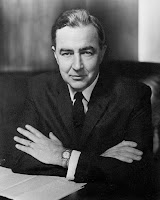
Wait, wait…you mean football’s not important?
Forget about challenging a powerful party apparatus stacked
against him—that quote might be as good a reason as any why Senator McCarthy—by
nearly all accounts, witty and brilliant—never became President. Political
consultants talk about “the Nascar voter,” but if you ask me, football voters
are far more numerous.
I hate to say it, but football was already beginning
to replace baseball as America’s game in the Sixties when McCarthy said this. He
just attuned to reading the signs, intent as he was on guiding legislation
through the Senate, or reading the poetry of Robert Lowell.
The first two Super Bowls had already been played when
McCarthy trudged through the snows of New Hampshire to challenge Lyndon Johnson
in that state’s primary. Wilder football fans were wondering why the winning
coach in those initial Super Bowls, Vince Lombardi, didn’t run for President
himself.
Nothing that’s happened in the five decades since has fundamentally shaken Americans’ love affair with the game. Not steroids, not halftime wardrobe malfunctions, not traumatic concussion-related injuries, not Colin Kaepernick taking a note, not even Tom Brady monopolizing the Super Bowl.
St. Paul has a Winter Carnival. The Super Bowl
provides a nationwide version of it, only on the gaudiest scale imaginable.
I’ve become convinced that the sport has become so
important to so many, paradoxically enough, because it’s not important.
While everybody worries about something or other day
to day—education, health, paying the bills, politicians who not only do stupid
stuff but are shameless about it—football gives them a chance to join with
other people on something that doesn’t matter because it’s utterly forgettable,
with no real-world consequences for them.


 “Smiley”—that’s my nickname for Bill Belichick, based on innumerable pictures like this. But I’m
afraid that other people have different, less kind names in mind. People like
Don Shula, who’s made hardly a peep in the 20 years since he retired as head coach
of the Miami Dolphins, but who, about a month ago, in an interview given around his 85th birthday, referred to
the New England Patriots coach as “Beli-cheat.”
“Smiley”—that’s my nickname for Bill Belichick, based on innumerable pictures like this. But I’m
afraid that other people have different, less kind names in mind. People like
Don Shula, who’s made hardly a peep in the 20 years since he retired as head coach
of the Miami Dolphins, but who, about a month ago, in an interview given around his 85th birthday, referred to
the New England Patriots coach as “Beli-cheat.”.jpg) I came upon this Super Bowl promotion, Extra Point
Kick, in Times Square tonight on my way home from work. In fact, this was just the beginning of “Super Bowl Boulevard,” running through Times Square down Broadway—the center of all
kinds of activity this week as the Denver Broncos and the Seattle Seahawks
compete for the Vince Lombardi Trophy.
I came upon this Super Bowl promotion, Extra Point
Kick, in Times Square tonight on my way home from work. In fact, this was just the beginning of “Super Bowl Boulevard,” running through Times Square down Broadway—the center of all
kinds of activity this week as the Denver Broncos and the Seattle Seahawks
compete for the Vince Lombardi Trophy.


