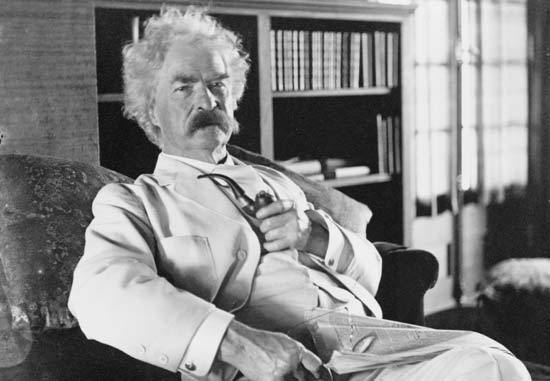
Showing posts with label Mark Twain. Show all posts

Sunday, August 16, 2026

Flashback, August 1876: Audience Stunned by Richard Wagner’s Epic ‘Ring’ Cycle

As the opening-night audience listened to the premiere of the latest works by Richard Wagner in mid-August 1876, they got what they anticipated, and then some with his “Ring Cycle": a totally immersive musical theater experience, requiring a maximum commitment of time and devotion.

I’m not sure you will find another cultural figure who created something so enormous, so innovative, or requiring so many resources. Drawing on Norse mythology, Wagner proposed o stage four operas connected by a symbol, to which he gave the name of the whole cycle: Der Ring des Nibelungen (“The Ring of the Nibelungen”), totaling 15 to 16 hours.

Only one person he trusted to act as librettist, composer, overall artistic director, stage director, producer, prompter, and supervisor of his acoustic and seating innovations: himself.

Each of the four operas (Das Rheingold, Die Walküre, Siegfried, and Götterdämmerung) needed not one, but two intermissions. And he wanted, and got, a theater built to his specifications in the city of Bayreuth.

Along the way, Wagner was unbelievably fortunate to have the patronage of King Ludwig II of Bavaria. I don’t think I was the only tourist ever to view the latter’s castle, Neuschwanstein, and think, “This guy was crazy.” (In fact, he was sidelined for good—after all but sinking Bavaria into bankruptcy—in 1886, and died shortly afterward under mysterious circumstances.)

In some ways, Ludwig differed from the composer. He would have preferred Munich rather than Bayreuth as the site of the Festspielhaus; he upbraided Wagner for his antisemitism; and, when the monarch compelled his genius friend to turn over the scores of the first two parts of the “Ring,” Siegfried and Die Walküre, it led to a quarrel and a temporary construction halt until Ludwig extended a loan that allowed the festival to open.

Moreover, Ludwig believed in Wagner enough to support him financially when the composer sought to fend off creditors and keep his quarter-century dream of the gesamtkunstwerk, or “total work of art.”

In short, it was inconceivable that Wagner would have realized his dream if not for the patron he privately nicknamed “Parsifal” after his pure, idealistic hero.

Not everyone was enamored with Wagner’s work or the mystique accruing to it. In this prior post, I noted that Mark Twain did not, contrary to belief, write that “Wagner is better than he sounds.”

But he did approvingly pass along that observation by someone else, and he did devote an extended essay, “At the Shrine of St. Wagner,” that took issue with Bayreuth’s cuisine and the composer’s songs (“Nothing can make a Wagner opera absolutely perfect and satisfactory to the untutored but to leave out the vocal parts”).

I have to admit feeling much the same as Twain. But it would also be impossible to deny that Wagner fundamentally changed musical theater—and, arguably, paved the way for so much in 20th-century culture through his innovations, including:

*orchestral arrangements that incorporated new instruments;

*powerfully built singers who could make themselves heard over these 80-to-100 piece orchestras;

*signers as fully committed to naturalistic acting as to their vocals;

*pits covered, with orchestras unseen so audiences can concentrate on what is onstage;

*leitmotifs, or short, recurring instrumental cues associated with characters, objects, and themes, the better for audiences both to remember them over multiple hours and to subliminally signal emotions;

*continuous, “through-composed” music that blurred traditional distinctions between opera’s arias and recitative sections;

*seating “in the round,” with audience members seated democratically, without regard to pricing;

*theater lights darkened during performances so audiences would concentrate on the action and not on what others around them were doing;

*ambitious subject matter dealing with the most convulsive human emotions: greed, power, love, and salvation.

Even if you have never attended the performance of an opera, it is hard to miss the widespread influence of Wagner:

*films that either use his music directly (most famously, “The Ride of the Valkyries” in Francis Ford Coppola’s Apocalypse Now) or his leitmotif device (the scores of John Williams);

*J.R.R. Tolkien’s The Lord of the Rings, which, despite the novelist’s denials, employed a similar plot as the “Ring Cycle”: the complications involved in possessing an object of miraculous power; and,

*most controversially, fusing romantic nationalism with antisemitism, leading to exploitation by one of his greatest admirers, Adolf Hitler. 

Thursday, January 1, 2026

Quote of the Day (Mark Twain, on New Year’s Day, ‘A Harmless Annual Institution’)

“Now is the accepted time to make your regular annual good resolutions. Next week you can begin paving hell with them as usual. Yesterday, everybody smoked his last cigar, took his last drink, and swore his last oath. Today, we are a pious and exemplary community. Thirty days from now, we shall have cast our reformation to the winds and gone to cutting our ancient shortcomings considerably shorter than ever. We shall also reflect pleasantly upon how we did the same old thing last year about this time. However, go in, community. New Year's is a harmless annual institution, of no particular use to anybody save as a scapegoat for promiscuous drunks, and friendly calls, and humbug resolutions, and we wish you to enjoy it with a looseness suited to the greatness of the occasion.”—American novelist, humorist, lecturer, and journalist Mark Twain (1835-1910), “New Year's Day,” Virginia City Territorial Enterprise, Jan. 1, 1863

Wednesday, November 26, 2025

Quote of the Day (Mark Twain, on the Supreme Court and Partisanship)

"It is disgraceful, in Congress, or anybody at all, to question the honor and virtue of the highest tribunal in our country. If we cannot believe in the utter and spotless purity of the Judges of so sacred a tribunal, we ought at least to have the pride to keep such a belief unexpressed. I cannot conceive it possible that a man could occupy so royal a position as a Supreme Judge, and be base enough to let his decisions be tainted by any stain of his political predilections. I hate to hear people say this Judge will vote so and so, because he is a Democrat—and this one so and so because he is a Republican. It is shameful. The Judges have the Constitution for their guidance; they have no right to any politics save the politics of rigid right and justice when they are sitting in judgment upon the great matters that come before them…. When we become capable of believing our Supreme Judges can so belittle themselves and their great office as to read the Constitution of the United States through blurring and distorting spectacles, it will be time for us to put on sackcloth and ashes."—American novelist, humorist, and journalist Mark Twain (1835-1910), Letter to the San Francisco Alta California, Feb. 19, 1868

I never imagined that Mark Twain could be naïve until I read the above dispatch.

Even in his own time—11 years before he wrote this—the Supreme Court had accelerated the notion towards civil war with its Dred Scott decision. A month before the decision was handed down, President-elect James Buchanan worked behind the scenes to influence the outcome. Enslaved African-Americans paid the price, but so, too, did Buchanan’s Democratic Party, which split over the issue.

Partisanship on the Supreme Court is even more virulent today, leading to a near three-decade low in public opinion. That poses a challenge to its legitimacy that will only increase over the next few years. The current president is bent on having his way in everything—and the high court, at least until the tariff case, has been willing to grant him virtually everything he desires.

In other words, it may be, as Twain lamented, "time for us to put on sackcloth and ashes."


Tuesday, May 20, 2025

Quote of the Day (Mark Twain, on Murder and Free Speech)

“Murder is forbidden both in form and in fact. Free speech is granted in form, but forbidden in fact. By the common estimate, both are crimes. They're held in deep odium by all civilized people. Murder is sometimes punished, free speech always when committed, which is seldom.”—American novelist and short-story writer Mark Twain (1835-1910), “The Privilege of the Grave," The New Yorker, Dec. 22 and 29, 2008 issue

Friday, October 20, 2023

Quote of the Day (Mark Twain, on the Need to “Leave Out the Vocal Parts’ in Wagner Operas)

“The entire overture, long as it was, was played to a dark house with the curtain down. It was exquisite; it was delicious. But straightway thereafter, of course, came the singing, and it does seem to me that nothing can make a Wagner opera absolutely perfect and satisfactory to the untutored but to leave out the vocal parts. I wish I could see a [Richard] Wagner opera done in pantomime once. Then one would have the lovely orchestration unvexed to listen to and bathe his spirit in, and the bewildering beautiful scenery to intoxicate his eyes with, and the dumb acting couldn't mar these pleasures, because there isn't often anything in the Wagner opera that one would call by such a violent name as acting; as a rule all you would see would be a couple of silent people, one of them standing still, the other catching flies. Of course I do not really mean that he would be catching flies; I only mean that the usual operatic gestures which consist in reaching first one hand out into the air and then the other might suggest the sport I speak of if the operator attended strictly to business and uttered no sound.”—American novelist and humorist Mark Twain (1835-1910), “Mark Twain at Beyreuth” (often called “At the Shrine of St. Wagner”), originally printed in the Chicago Daily Tribune, Dec. 6, 1891, included in Mark Twain’s Travel Letters From 1891-92 

Saturday, May 6, 2023

Quote of the Day (Mark Twain, on Republics vs. Monarchies)

“Citizenship is what makes a republic; monarchies can get along without it.” —American novelist and humorist Mark Twain (1835-1910), “Layman’s Sermon” to Young Men’s Christian Association, New York, Mar. 4, 1906, reprinted in Mark Twain`s Speeches, edited by William Dean Howells (1910)

Remember this, as you take in the breathless post-mortems on the coronation of King Charles. As you read Twain’s quote, please also be sure to mentally insert the words “An active, well-informed” before “citizenship.” Otherwise, a republic, even one of long standing, can veer towards something worse than a monarchy: a dictatorship.

(For a serious consideration of what Charles’ coronation means to the future of the Commonwealth of Nations, the 56-member association of states that (mostly) once belonged to the British Empire, see this blog post from earlier this week on the Council of Foreign Relations Website from Manjari Chatterjee Miller and Clare Harris.)

Friday, March 24, 2023

Quote of the Day (Mark Twain, on Cats and Lies)

“One of the most striking differences between a cat and a lie is that a cat has only nine lives.”—American humorist, novelist, and lecturer Mark Twain (1835-1910), Pudd'nhead Wilson (1894)

Political lies especially have incredible longevity. Just look at the drumbeat of falsehood dominating this week’s news.

Monday, February 13, 2023

Quote of the Day (Mark Twain, on Boys and Treasure Hunting)

"There comes a time in every rightly-constructed boy's life when he has a raging desire to go somewhere and dig for hidden treasure." ― American novelist and humorist Mark Twain (1835-1910), The Adventures of Tom Sawyer (1876)

Tuesday, November 22, 2022

Quote of the Day (Mark Twain, on Loyalty to Country Vs. Institutions or Officeholders)

“My kind of loyalty was loyalty to one's country, not to its institutions or its officeholders. The country is the real thing, the substantial thing, the eternal thing; it is the thing to watch over, and care for, and be loyal to; institutions are extraneous, they are its mere clothing, and clothing can wear out, become ragged, cease to be comfortable, cease to protect the body from winter, disease, and death."—American novelist Mark Twain (1835-1910), A Connecticut Yankee in King Arthur's Court (1889)

Beware of a leader wedded to a proprietary adjective: i.e., referring to "my generals," "my military," "my Kevin," even "my blacks" and "my Jews."  That is the type of leader that Twain warned against: one who expects loyalty to a country's "officeholders."

Friday, May 27, 2022

Quote of the Day (Mark Twain, on the Lack of Weather in One of His Books)

“No weather will be found in this book. This is an attempt to pull a book through without weather. It being the first attempt of the kind in fictitious literature, it may prove a failure, but it seemed worth the while of some dare-devil person to try it, and the author was in just the mood. Many a reader who wanted to read a tale through was not able to do it because of delays on account of the weather. Nothing breaks up an author's progress like having to stop every few pages to fuss-up the weather. Thus it is plain that persistent intrusions of weather are bad for both reader and author.”—American novelist and humorist Mark Twain (1835-1910), The American Claimant (1892)

This weekend, my area of northern New Jersey is slated to have a spell of nasty weather. For all of Twain’s commendable attempt to avoid literary cliches by not writing about weather in his books, I suspect he would have been almost totally unable to maintain that resolution during these days of climate change!

Monday, January 3, 2022

Quote of the Day (Mark Twain, on Dental Care in His Childhood)

"When teeth became touched with decay or were otherwise ailing, the doctor knew of but one thing to do—he fetched his tongs and dragged them out. If the jaw remained, it was not his fault."—American satirist Mark Twain (1835-1920), The Autobiography of Mark Twain (1907)

Friday, May 7, 2021

Quote of the Day (Mark Twain, on Invented Quotations)

"It is my belief that nearly any invented quotation, played with confidence, stands a good chance to deceive."— American novelist and humorist Mark Twain (1835-1910), Following the Equator: A Journey Around the World (1897)

Monday, February 1, 2021

Quote of the Day (Mark Twain, on the Human Tendency to Gullibility)

“There isn't anything so grotesque or so incredible that the average human being can't believe it."— American novelist, short-story writer, lecturer and journalist Mark Twain (1835-1910), Autobiography of Mark Twain (1906)

For the latest example—and surely not the last—of this phenomenon, the concept of “the average human being” will have to be defined down, given Rep. Marjorie Turner Greene’s other-worldly speculation about a “space laser” spreading California wildfires—involving a Jewish banking firm.

Saturday, January 2, 2021

This Day in Country Music History (Roger Miller, Witty ‘King of the Road,’ Born)

Jan. 2, 1936— Roger Miller, who rode his offbeat wit and songwriting brilliance from a stint as a hotel “singing bellhop” to crossover success on the country and pop charts, then to a late-career Broadway triumph as composer of the Tony-winning musical Big River, was born in Fort Worth, Texas.

At the height of his career, from 1964 to 1966, hardly anyone was as ubiquitous on the American musical scene—except those four mop-tops from Liverpool. Miller scored 10 Top 40 crossover hits, along with 11 Grammy Awards—a record at the time.

But numbers only told part of the story. He also made the cover of the Saturday Evening Post, for a piece on the boom in country music; headlined his own variety show; and maintained a high-flying lifestyle and touring schedule.

It was all heady stuff for someone who lost his father at age one and had to work on an uncle’s farm when his mother couldn’t support the family; a teenage drifter whose theft of a guitar led him to join the U.S. Army in Korea rather than serve time in prison; and a backup musician who, despite having his own songs recorded by prominent Nashville artists, was having trouble at one low point landing paying gigs in his own right.

In fact, as noted in the fifth episode of Ken Burns’ Country Music PBS series, Miller was at the point of ending his solo act and heading to Los Angeles for an acting career when the startling success of his novelty song “Dang Me” changed his plans.

"The day 'Dang Me' was released, I played a little club in northern California for seventy-five dollars," Miller told William Whitworth in a 1969 profile for The New Yorker. "Had four people in the audience and got a hot check. But in about a week my phone started ringing. Wanting to do this and that, and pictures, and busy, busy, busy. After that, uh, I don't know what became of me.”

The song peaked at number 7 on Billboard Magazine’s pop chart, and reached number 1—and spent 25 weeks—on the magazine’s country-music chart. This humorous lament of a reprobate was endlessly charming—so much so that Oregon Congressman Rod Chandler, hoping to deflect charges that he spent $100,000 on congressional mailings while many constituents went jobless in the recession of the early 1990s, began singing the lyrics in a TV debate during his 1992 Senate race against Patty Murray. (The ploy bombed.)

But the tune that brought him the greatest success was his “hobo song,” “King of the Road.” It took him far longer to compose than “Dang Me” (six weeks versus four minutes), but it became the signature song of the “Dashboard Poet” who, as noted in Brian Carpenter’s Southern Cultures article, composed so much while on the road that he found that “there was something about laying hands to the wheel that freed up the songwriter in his mind.”

Individual song lines seemed to spring fresh, almost fully minted, even from Miller’s carefree conversations. While he was fond of telling fellow songwriters he had only one line, that was often a gem—yet he refused to take even a credit when that line became a part of a smash record for them.

Maybe it was because, at the height of his career, the inspiration for his own music seldom flagged. It’s hard to top songs with memorable titles like “You Can't Roller Skate in a Buffalo Herd,” “The Moon is High (and So Am I),” “The Last Word in Lonesome Is Me,” and “My Uncle Used to Love Me But She Died.”

A creative and commercial lull set in for Miller in the 1970s, but by this time his idiosyncratic songwriting and concise recording arrangements (a sharp variation from the lusher “Nashville Sound” prevalent at the time) were influencing such “Progressive Country” artists as Willie Nelson, Kris Kristofferson, and Emmylou Harris.

For all his charming but sometimes undisciplined ways, the former Nashville "Wild Child" managed to mount an improbable comeback two decades after his commercial peak. Shrugging off a 1974 film attempt to adapt Mark Twain's Adventures of Huckleberry Finn into a musical, Miller had far better luck with the 1985 Broadway production of Big River. 

It not only won that year’s Tony Award for Best Musical, but earned Miller one for best score. It has since become a staple of regional and high school theaters, and was revived in 2003 on Broadway in a joint production by the Roundabout Theatre Co. and Deaf West Theatre.

In 1992, Miller passed away from throat cancer. Three years later, he was posthumously inducted into the Country Music Hall of Fame. I’m sure there are others like me who wish he could have kept his creativity fires burning longer and more consistently. But in the end, his intelligence, talent, rollicking humor, and sheer joy in performing remain irresistible.

(For a fine career retrospective on Miller, see musician Deke Dickerson’s 2011 post on his “Muleskinner” blog. I think you will also find much to enjoy in an all-star tribute to Miller in a cover version of “King of the Road” featuring Nelson, Kristofferson, Harris, Merle Haggard, Dwight Yoakam—and, with tongue in cheek on the lyric “man of means,” such country queens as Dolly Parton and Brenda Lee.)

Sunday, November 22, 2020

Spiritual Quote of the Day (Mark Twain, on Dominican Bravery During a Cholera Epidemic in Italy)

“I have heard of many things that redound to the credit of the priesthood, but the most notable matter that occurs to me now is the devotion one of the mendicant orders showed during the prevalence of the cholera last year. I speak of the Dominican friars—men who wear a coarse, heavy brown robe and a cowl, in this hot climate, and go barefoot. They live on alms altogether, I believe. They must unquestionably love their religion, to suffer so much for it. When the cholera was raging in Naples; when the people were dying by hundreds and hundreds every day; when every concern for the public welfare was swallowed up in selfish private interest, and every citizen made the taking care of himself his sole object, these men banded themselves together and went about nursing the sick and burying the dead. Their noble efforts cost many of them their lives. They laid them down cheerfully, and well they might. Creeds mathematically precise, and hair-splitting niceties of doctrine, are absolutely necessary for the salvation of some kinds of souls, but surely the charity, the purity, the unselfishness that are in the hearts of men like these would save their souls though they were bankrupt in the true religion—which is ours.”—American humorist Mark Twain (1835-1910), The Innocents Abroad: or, The New Pilgrim’s Progress (1869)

As a religious skeptic for much of his adult life—and particularly in the case of Roman Catholicism—Mark Twain would have been among the last people I would expect to include in my Sunday “Spiritual Quote of the Day.”

But the circumstances surrounding the package tour to Europe that inspired his Innocents Abroad were extraordinary, as was the courage of the Dominicans he encountered in Naples, Italy, during a cholera epidemic in 1867. In a season when the COVID-19 pandemic rages again worldwide with renewed force, it does not hurt to pay tribute to an earlier group that many people a century and a half ago regarded as “essential workers.”

In Italy as a whole, an estimated 100,000 people died of cholera in 1867. The fear and frustration were particularly virulent in Naples, where mobs, enraged at prior broken pledges to improve the city’s sanitation and infrastructure, attacked government offices.

In March of this year, a Charles Collins post on the Catholic Website Crux Now gave further details on the trip in which Twain saw how the Dominicans bore witness to their faith. It is well worth reading.

Monday, November 2, 2020

Quote of the Day (Mark Twain, With the Enduring Hope of American Con Men)

"Hain't we got all the fools in town on our side? And ain't that a big enough majority in any town?"—American novelist and humorist Mark Twain (1835-1910), Adventures of Huckleberry Finn (1885)

Like few other American writers, Mark Twain understood how susceptible Americans are to greed and cruelty. In his “Duke and the Dauphin” chapters from Adventures of Huckleberry Finn, he satirized the con men who went the length and breadth of the American heartland, along the mighty Mississippi, looking for easy marks.

The “Dauphin” (i.e., the Bourbon claimant—false, in this case—to the French throne) who states the above has been amply justified to believe that their latest con will work. What he doesn’t reckon with is the countervailing American propensity towards violence—evidenced in Huck’s abuse at the hands of his drunken father, the long-running Grangerford-Shepherdson feud, and the system of slavery that endangers Huck’s friend Jim.

No matter people’s capacity for self-delusion, they are frightening to behold when fleeced of their money. When one set of townspeople realize this, they administer summary judgement, sending the two grifters, “astraddle of a rail,” tarred and feathered.

In 21st-century America as much as the antebellum era that Twain wrote about, con artists, whether phone scammers, businessmen, politicians, or businessmen-turned-politicians, continue to prey, only more broadly and with greater sophistication. That does not mean that vengeance, when it comes, will not be as terrible as it was in Twain’s time.

(The image of the Duke and Dauphin accompanying this post is one of Norman Rockwell’s illustrations for the Heritage Club’s edition of Adventures of Huckleberry Finn.)


Monday, October 5, 2020

Quote of the Day (Mark Twain, on Why ‘Noise Proves Nothing’)

“Noise proves nothing. Often a hen who has merely laid an egg cackles as if she had laid an asteroid.”—American humorist Mark Twain (1835-1910), Following the Equator: A Journey Around the World (1897)

Keep that in mind as you follow American politicians as they campaign over the next month.

Monday, May 11, 2020

This Day in Literary History (William Dean Howells, Near-Forgotten ‘Dean of American Letters,’ Dies)


May 11, 1920-- William Dean Howells, dubbed “Dean of American Letters” for his exploration of multiple genres and his influence as a critic and editor on the nation’s literature, died in his sleep in New York City at age 83.

The prior decade had seen the passing of Howells’ two great but very dissimilar friends, Henry James and Mark Twain. At the peak of his influence and popularity, Howells’ fiction had been ranked alongside theirs as exemplars of a realistic school decidedly at odds with the romantic novels more favored by American publishers in the early post-Civil War period.

But the century since his death has been kinder to the two writers that Howells championed than to the editor-novelist himself. While Twain continues to be studied for introducing native vernacular to American literature and James is celebrated for his pioneering psychological insights into characters’ motivations, Howells is seen as conventional, even something of an old fogy.

Four writers—a novelist and three critics— might be said to have interred Howells’ reputation. The first, biographer Van Wyck Brooks, did not wait even a year before his death before criticizing him (and Twain’s wife Libby) in The Ordeal of Mark Twain for reining in his rude, ribald genius with their own puritanism and prudery. 

H.L. Mencken picked up on this theme, inveighing against Howells, with characteristic invective, for churning out "a long row of uninspired and hollow books" and acting like a “somewhat kittenish old maid."

Many listeners in 1930 might have been mistakenly heard the voice of Mencken in that of the Nobel Literature laureate that year, Sinclair Lewis, who picked up Mencken’s rhetorical tropes and fairly ran with them. The rise of Howells, Lewis charged in his lecture, had represented for American literature “something like a standard, and a very bad standard it was”:

“Mr. Howells was one of the gentlest, sweetest, and most honest of men, but he had the code of a pious old maid whose greatest delight was to have tea at the vicarage. He abhorred not only profanity and obscenity but all of what H. G. Wells has called ‘the jolly coarsenesses of life.’ In his fantastic vision of life, which he innocently conceived to be realistic, farmers, and seamen and factory hands might exist, but the farmer must never be covered with muck, the seaman must never roll out bawdy chanteys, the factory hand must be thankful to his good kind employer, and all of them must long for the opportunity to visit Florence and smile gently at the quaintness of the beggars.”

The evisceration of Howells was effectively completed a generation later in 27-year-old Alfred Kazin’s sweeping study of American prose from the 1890s through 1940, On Native Grounds. The opening chapter uses Howell as the central figure against which virtually an entire new genre, the naturalists and their successors: “he was a monumental example of the antiquated nineteenth-century conscience upon which a new order of society had placed an intolerable burden.”

Literary reputation is a fleeting thing—and ironically, even the four men who did so much to take down Howells do not stand up so well as they once did. At the same time, if Howells has not reacquired his once-exalted status, a more respectful tone has crept into evaluations of his work. 

Historian Richard White, for instance, used Howells as a voice to try to make sense of the squalling Industrial Age in his book, The Republic for Which It Stands: The United States during Reconstruction and the Gilded Age, 1865‒1896. His Howells is less prudish than ambivalent, an observer too thoughtful to miss in his novels and magazine columns the injustices of his time but too perplexed by them all to offer a corrective to them. 

The best way to ensure a writer is read is to make sure he is assigned to students. Though Howells’ most influential novels (from 1875 through 1888) can be found in a two-volume Library of America series, I doubt if more than a few students have gone beyond even one: The Rise of Silas Lapham. But if you have to start somewhere with him, it might as well be here. 

Less buffoonish than Lewis’ George Babbitt, less brutal than Theodore Dreiser’s Frank Cowperwood, Lapham is also more thoroughly recognizable and human. Proud, boastful, eager to maintain his place in society, this businessman lets his greed get the better of him. The “rise” in the title is actually ironic: His realization of his folly and determination to live for others following the collapse of his fortunes produces a moral, rather than financial, elevation.

Monday, February 3, 2020

Quote of the Day (Mark Twain, Imagining a Scandal-Plagued Candidate’s Defense)


“The rumor that I buried a dead aunt under my grapevine was correct. The vine needed fertilizing, my aunt had to be buried, and I dedicated her to this high purpose. Does that unfit me for the presidency? The Constitution of our country does not say so. No other citizen was ever considered unworthy of this office because he enriched his grapevines with his dead relatives. Why should I be selected as the first victim of an absurd prejudice?”— American novelist and humorist Mark Twain (1835-1910), “A Presidential Candidate,” in Collected Tales, Sketches, Speeches and Essays, 1852-1890, edited by Louis J. Budd (1992)

Just think—Twain wrote the above without ever watching Alan Dershowitz’s impeachment defense of the President that Spy Magazine once referred to as the “short-fingered vulgarian.” Remarkable, isn’t it?