Showing posts with label Books. Show all posts

Saturday, April 4, 2026

Quote of the Day (Francis Petrarch, on How ‘Books Give Utter Delight’)

“I cannot have a sufficiency of books. Indeed, I have more than I should... Books give utter delight: they talk with us... and are bound to us by lively and witty intimacy, and do not just insinuate themselves alone on their readers but present the names of others, and each one creates a longing for another.”—Italian Renaissance poet and humanities scholar Francesco di Petracco, aka Francis Petrarch (1304-1374), Selected Letters, Volume 1, translated by Elaine Fantham (2017)

Tuesday, February 10, 2026

Quote of the Day (Christopher Morley, on the Explosive Power of Books)

"Printer's ink has been running a race against gunpowder these many, many years. Ink is handicapped, in a way, because you can blow up a man with gunpowder in half a second, while it may take twenty years to blow him up with a book. But the gunpowder destroys itself along with its victim, while a book can keep on exploding for centuries.”— American journalist, novelist, essayist and poet Christopher Morley (1890-1957), The Haunted Bookshop (1919)

Tuesday, August 26, 2025

Quote of the Day (Trevor Noah, on Books, the ‘Rocket Fuel’)

“If imagination is the rocket, then books are the rocket fuel. They supercharge the mind and help it see beyond what it can conceive on its own.”— South African actor, writer, producer, comedian, political commentator, and television host Trevor Noah, Into the Uncut Grass (2024)

The image accompanying this post, of Trevor Noah on Centre Stage during the opening night of Web Summit Qatar 2024 at the Doha Exhibition and Convention Center in Doha, Qatar, was taken Feb. 26, 2024, by Stephen McCarthy/Web Summit Qatar via Sportsfile.

Tuesday, February 25, 2025

Quote of the Day (E.B. White, on a Library, ‘A Good Place To Go When You Feel Unhappy’)

“A library is a good place to go when you feel unhappy, for there, in a book, you may find encouragement and comfort. A library is a good place to go when you feel bewildered or undecided, for there, in a book, you may have your question answered. Books are good company, in sad times and happy times, for books are people—people who have managed to stay alive by hiding between the covers of a book." — American essayist and children’s book author E.B. White (1899-1985), “Letter to the Children of Troy” (MI), Apr. 14, 1971, in Letters of Note blog

Sunday, August 4, 2024

Quote of the Day (Poet Tracy K. Smith, on Whether Books ‘Serve a Moral Function’)

“It’s a mistake to expect literature to teach us how to live our lives. But the practice of reading does, to my mind, serve a moral function. On its most basic level, literature instills in us the capacity to be rapt and beholden to a stranger’s voice, to do everything possible to hear and heed that voice in such a way that it is permitted to illuminate something. Sometimes what it illuminates are facets of ourselves — even our former or future selves. This to me feels like a very vital moral exercise.”—Former U.S. poet laureate Tracy K. Smith, “By the Book: Tracy K. Smith,” The New York Times Book Review, Nov. 19, 2023

The image accompanying this post was derived from a photo of Tracy K. Smith with Librarian of Congress Carla Hayden and National Youth Poet Laureate Amanda Gorman, taken Sept. 25, 2017, by the Library of Congress.

Sunday, August 27, 2023

Quote of the Day (Brenda Cronin, on Reading and Writing as Worthwhile Commitments)

“Reading is a commitment, and…writing is even more so. Most writing is solitary and painstaking. But both efforts are worthwhile. Books pay dividends—memorable characters and scenes built of words—unlike those of any podcast, film or series.”—Arts and culture writer and editor Brenda Cronin, “Books Resist Digital Domination,” The Wall Street Journal, Aug. 11, 2023

Tuesday, June 27, 2023

Quote of the Day (Vespasiano da Bisticci, on Writers ‘Chasing Away the Darkness’ of Ignorance)

“All evil is born of ignorance. Yet writers have illuminated the world, chasing away the darkness.”—Italian humanist, biographer and bookseller Vespasiano da Bisticci (1422-1498), quoted by Ross King, The Bookseller of Florence: The Story of the Manuscripts That Illuminated the Renaissance (2021)

Friday, March 10, 2023

TV Quote of the Day (‘The Mary Tyler Moore Show,’ With an Unusual Birthday Gift—For Ted Baxter, That Is)

Sue Ann Nivens [played by Betty White]: “Happy birthday, Ted. It’s a book. I hope you don’t already have it.”

Georgette Franklin [played by Georgia Engel]: “Don’t worry, if it’s a book, he doesn’t have it.” —The Mary Tyler Moore Show, Season 5, Episode 2, “Not Just Another Pretty Face,” original air date Sept. 21, 1974, teleplay by Ed. Weinberger and Stan Daniels, directed by Jay Sandrich

Thursday, January 12, 2023

Quote of the Day (Claire Tomalin, on Her Mother’s Good Advice About Books)

“My mother told me early that whatever happens to you, however unhappy you may be, you can escape into a book.”— English editor and biographer Claire Tomalin, A Life of My Own: A Memoir (2018)

The image accompanying this post, of Claire Tomalin signing a copy of her Charles Dickens biography at the Hexham Book Festival, was taken Apr. 27, 2013, by summonedbyfells.

Tuesday, February 1, 2022

Quote of the Day (Mortimer Adler, on Good Books)

“In the case of good books, the point is not to see how many of them you can get through, but rather how many can get through you.”— American philosopher, educator, and encyclopedist Mortimer J. Adler (1902-2001), “How to Mark a Book,” The Saturday Review of Literature, July 6, 1941

Tuesday, January 25, 2022

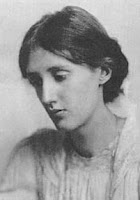
Quote of the Day (Virginia Woolf, on How Books Are Made)

“A book is not made of sentences laid end to end, but of sentences built, if an image helps, into arcades or domes.” —English novelist and essayist Virginia Woolf (1882-1941), A Room of One's Own (1929)

Few could construct sentences, let alone books, like Virginia Woolf, born 140 years ago today. She turned out, by this count, 34 books—essays, biographies, novels, and diary entries. As part of the Bloomsbury set of writers, artists and intellectuals, she also made it possible for others to find their creative voices.

Remarkably, she wrote all of this while being afflicted repeatedly with influenza and, ultimately and more damagingly, what are now believed to be episodes of bipolar disorder. The latter condition led her to commit suicide in 1941.

Woolf is one of the few authors whose work has become voluminous enough and life documented sufficiently to warrant not one, but several blogs devoted to her and/or the Bloomsbury circle, including Blogging Woolf.

Thursday, June 17, 2021

Quote of the Day (Pat Conroy, on How ‘Books Are Living Things’)

“Books are living things and their task lies in their vows of silence. You touch them as they quiver with a divine pleasure. You read them and they fall asleep to happy dreams for the next 10 years. If you do them the favor of understanding them, of taking in their portions of grief and wisdom, then they settle down in contented residence in your heart.”—Novelist Pat Conroy (1945-2016), My Reading Life (2010)

Wednesday, June 2, 2021

Quote of the Day (Jerry Seinfeld, on Twitter, ‘A Horrible Performing Interface’)

“I don’t hear the laugh [on Twitter]. Why waste my time? It’s a horrible performing interface. I can’t think of a worse one. I always think about people that write books. What a horrible feeling it must be to have poured your soul into a book over a number of years and somebody comes up to you and goes, 'I loved your book,' and they walk away, and you have no idea what worked and what didn’t. That to me is hell. That’s my definition of hell." —Stand-up comedian and actor Jerry Seinfeld, quoted in Don Amira, “Talk: Jerry Seinfeld Says Jokes Are Not Real Life,” New York Times Magazine, Aug. 19, 2018

Hmm…Does this reflect his own experience with books, like Seinlanguage?

Tuesday, April 27, 2021

Quote of the Day (Folk Music’s Eric Andersen, on How Books Opened ‘Palatial-Sized Windows for Me’)

“I’m pretty much self-taught in the literary jewel-eye of interest department. My dad retired early and went back to college to study under Robert Creeley at the University of Buffalo. My small circle of musical high school friends and I created folk groups with guitars and banjos and harmonies. We also loved poetry. Rimbaud, Baudelaire, and the Beats including Ferlinghetti. I read a lot of Russian literature on my own. Kerouac’s On the Road was a big deal to any kid like me who harbored dreams of travel and adventure. Books gave you the sense there was a big world out there beyond your backyard waiting for you to visit and take part. Books opened giant palatial-sized windows for me. Where most of my high school friends enjoyed armchair lit. adventures, they would eventually finish their education, get jobs, make families, settle down in the straight, striving secure square life with dreams of serenity. I took every word of these books personally and acted on it. I got away. But alone, on the road would soon come the high lonely risk of getting drafted in a bogus war. Later would come Eliot, Kafka, Ibsen, Hamsun, Joyce and Burroughs. And I loved Whitman.”—Singer-songwriter Eric Andersen quoted in John Kruth, “Eric Andersen: Beat Sensibility in a Folksinger Crowd,” PleaseKillMe blog, Apr. 20, 2021

A documentary about Andersen, “The Songpoet,” will play on PBS’ “All Arts” station this week. I have not previously listened to his music, but based on the interview in the link above, maybe I should pay more attention. In any event, I will try to catch this show.

(The image accompanying this post, of Andersen on Apr. 20, 2006, came from Infodek at English Wikipedia.)

Wednesday, April 7, 2021

Quote of the Day (T. M. Luhrmann, on the Sensory Experience of Listening to a Book)

“What happens when you hear a text rather than read it? The obvious thing is that you can do something else with your eyes. That is why I can listen to books when I garden. My hands and eyes can work. And so listening to a book is a different sensory experience than reading it. The inner imagining of the story becomes commingled with the outer senses — my hands on the trowel, the scent of tansy in the breeze. The creation of this sensory richness was in fact an explicit goal of the oral reading of the Bible in the medieval European cloister, so that daily tasks would be infused with Scripture, and Scripture would be remembered through ordinary tasks.”— American psychological anthropologist T. M. Luhrmann, “Audiobooks and the Return of Storytelling,” The New York Times, February 23, 2014

Saturday, January 30, 2021

Quote of the Day (Samuel Butler, on ‘The Oldest Books')

''The oldest books are still only just out to those who have not read them.''—British author Samuel Butler (1835-1902), Samuel Butler's Note-Books, edited by Geoffrey Keynes and Brian Hill (1952)

Thursday, April 2, 2020

Quote of the Day (Edith Wharton, on “The Value of Books’)


“What is reading, in the last analysis, but an interchange of thought between writer and reader? If the book enters the reader's mind just as it left the writer's -- without any of the additions and modifications inevitably produced by contact with a new body of thought -- it has been read to no purpose…. The value of books is proportionate to what may be called their plasticity—their quality of being all things to all men, of being diversely moulded by the impact of fresh forms of thought. Where, from one cause or the other, this reciprocal adaptability is lacking, there can be no real intercourse between book and reader. In this sense it may be said hat there is no abstract standard of values in literature: the greatest books ever written are worth to each reader only what he can get out of them. The best books are those from which the best readers have been able to extract the greatest amount of thought of the highest quality; but it is generally from these books that the poor reader gets least.”—American novelist and short-story writer Edith Wharton (1862-1937), “The Vice of Reading,” in Edith Wharton: The Uncollected Critical Writings, edited by Frederick Wegener (1996)

Thursday, December 19, 2019

Quote of the Day (Patti Smith, on Her NJ Cultural Upbringing)


“In our house, we had very little except for books. We had no money. But in 50s America people would dump books. Whole libraries. Or someone died. So we had beautiful books because my family would go to a church bazaar and buy them for pennies. Really, no one wanted them.” —Singer-songwriter, poet, and memoirist Patti Smith, on her cultural upbringing in southern New Jersey, quoted in John Heilpern, “Conversation: Out to Lunch With Patti Smith,” Vanity Fair, November 2015

(The image accompanying this post, of Patti Smith performing at New York’s Bowery Ballroom, was taken by her sister, Kimberly Smith, on Dec. 31, 2007.)

Tuesday, July 9, 2019

Quote of the Day (Franz Kafka, on the ‘Books That Wound and Stab Us’)


“I think we ought to read only the kind of books that wound and stab us. If the book we are reading doesn't wake us up with a blow on the head, what are we reading it for? ...we need the books that affect us like a disaster, that grieve us deeply, like the death of someone we loved more than ourselves, like being banished into forests far from everyone, like a suicide. A book must be the axe for the frozen sea inside us.”—German-speaking Bohemian Jewish novelist and short-story writer Franz Kafka (1883-1924), letter to Oskar Pollak, Jan. 27, 1904, in Letters to Friends, Family and Editors, translated by Richard and Clara Winston (1987)

Tuesday, January 29, 2019

Quote of the Day (Margaret Atwood, on the Survival of the Book)


“Every prediction—radio would kill books, it didn’t; television would kill movies, it didn’t; e-reading will kill books, it hasn’t—these predictions have all been wrong. You’re never going to kill storytelling, because it’s built into the human plan. We come with it.”—Canadian novelist Margaret Atwood quoted in Lily Rothman, “Margaret Atwood on Serial Fiction and the Future of the Book,” Time, Oct. 8, 2012