Showing posts with label American Films. Show all posts

Wednesday, September 9, 2026

Flashback, September 2016: Musical Throwback ‘La La Land’ Builds Premature Momentum for Oscar Season

In an effort to build industry word-of-mouth before awards season, the musical dramedy La La Land premiered to North American audiences for the first time in September 2016, at the Telluride and Toronto International Film Festivals, earning such rapturous approval that it became the film to beat for Best Picture Oscar.

The film’s promoters forgot an important lesson, however: don’t peak too soon lest naysayers pick it apart and allow competitors to overtake it. So it proved in the end the following winter, when La La Land walked off with six Oscars except the one most coveted: Best Motion Picture of the Year.

All of that seemed far away when these early audiences responded positively. At Telluride, for instance, the film was greeted with two mid-movie ovations (following the freeway and Griffith Park sequences) and another 20-second one at the end.

What elicited the affection of these and later audiences? Certainly stars Emma Stone and Ryan Gosling, displaying the same chemistry they brought to Crazy Stupid Love and Gangster Squad, as well as a months-long pre-shooting dedication that allowed them to surmount their lack of much prior vocal and dance training.

But the film also functioned as an irresistible double love story: not just between the two attractive young people at its center, but with the city that served as the focus of their entertainment dreams.

Writer-director Damien Chazelle and cinematographers Linus Sandgren and Tom Cross might not have produced the grittiest cinematic depiction of Los Angeles, but they did produce one of the most heartbreaking: a place that forces you to choose between love and ambition. “That's L.A.,” says Ryan Gosling’s Sebastian, a jazz pianist struggling to open his own club. “They worship everything, and they value nothing."

For one reason or another, I didn’t watch La La Land when it was released. It might have stayed that way except that, a couple of weeks ago, I noticed on YouTube a clip of an upbeat early song from the film, “Someone in the Crowd,” featuring Stone’s Mia stepping out with her roommates to attend a Hollywood party where they can be seen and network. 

I was hooked, and I’m sure you would be, too, if you haven’t seen the movie already.

Neither Stone nor Gosling are professional singers or dancers, so you won’t find the pyrotechnics in a Cabaret, All That Jazz, or Chicago. But you won’t find the cynicism rampant in those Bob Fosse musicals, either. This is unapologetic, heart-on-its-sleeve romanticism, with the lovers literally soaring above ground in Griffith Observatory in the “Dancing in the Stars” scene.

Moreover, Stone and Gosling, having trained intensively for their roles (with Gosling, a neophyte on the piano, practicing for months so he could perform the jazz tunes himself with no CGI or hand double) acquit themselves marvelously. 

And Chazelle, with help from choreographer Mandy Moore, have drawn the best possible lessons from those MGM musicals with Fred Astaire and Gene Kelly, as well as the poignant French 1964 “sung-through” musical, The Umbrellas of Cherbourg.

What led Moonlight to overtake La La Land in the Best Picture contest?

All the advance word-of-mouth for the latter also provided opportunities for backlash, focusing on how the film seemed crafted to capitalize on Academy voters' penchant for rewarding movies about actors (most notoriously, Shakespeare in Love over Saving Private Ryan); on how it was more a retro musical than a movie with original content; and how, in violation of jazz history, it depicted a white musician induced to compromise his pursuit of pure craft by an African-American tastemaker (John Legend, inexplicably playing guitar onscreen rather than his familiar piano).

On the other hand, Moonlight came to embody an underdog spirit—particularly following the November 2016 Presidential election, when the film’s entirely African-American cast (a first in the Academy’s nomination history) and its LGBTQ theme represented defiance of what Hollywood deemed Donald Trump’s reactionary politics.

I have not seen Moonlight so I can’t comment on its merits versus La La Land. But the atmosphere of fear now sweeping the entertainment industry constitutes a far different environment from what existed a decade ago, it’s possible that a different Oscar voting outcome might occur today.

I suspect that the moviegoing public would, if given a chance, vote for La La Land, in any case. Box-office grosses are never to be confused with value. 

But during their theatrical runs, La La Land grossed $504.6 million worldwide, while Moonlight pulled in a considerably more modest $65.3 million, even with the help of that Best Picture statuette from the Academy.

Monday, September 7, 2026

Song Lyric of the Day (Dolly Parton, on the Indignity of ‘Working 9 to 5’)

“Working 9 to 5, what a way to make a living
Barely getting by, it's all taking and no giving.”—American Grammy-winning singer-songwriter, actress, and philanthropist Dolly Parton (1946-2026), “9 to 5,” from her studio LP 9 to 5 and Odd Jobs (1980)
 
Last week, almost immediately after the death of Dolly Parton, ABC ran in prime time the most successful of her few movies, 9 to 5.
 
As I mulled over the lyrics of the title tune, I thought the network could have waited another week, because this 1980 farce was more appropriate for Labor Day and the memory of the star was so vivid, even overwhelming, that people won’t forget her any time soon.
 
So I thought of reproducing a small sample of her lyrics. Which of my readers hasn’t identified, at one point or another in their careers, the sentiment in these verses?
 
(The image accompanying this post, of Dolly Parton accepting the Liseberg Applause Award 2010, was created on Nov. 16, 2010, by Curtis Hilbun.)

Saturday, August 8, 2026

Movie Quote of the Day (‘Stand by Me,’ on Friends)

The Writer [voiceover, by Richard Dreyfuss]: “It happens sometimes. Friends come in and out of your life, like busboys in a restaurant.”—Stand by Me (1986), screenplay by Raynold Gideon and Bruce A. Evans, adapted from the Stephen King novella “The Body,” directed by Rob Reiner

The coming-of-age drama Stand by Me was released 40 years ago today. Technically, its $52.3 million domestic box-office gross would not put it in blockbuster territory, but it earned a tidy profit because of its low $8 million, enabling Rob Reiner to make more and bigger films.

After viewing the finished product, King told Reiner it was the best adaptation of any of his films to that time. Audiences today are likely to respond with the same powerful emotion that the novelist did.

Though the main plot of the movie is set in 1959, its themes are universal: loss of innocence, family neglect, and, most poignantly, the transience of childhood friendships.

Even Facebook goes only so far in retaining early bonds: distance—in geography, stations in life, and, sadly these days, politics—serves as an aching reminder of all we have lost over the years.

But we have those friends when we need them the most, as we are sometimes thrown into confusion in growing up as we discover the world and start to discover ourselves. The quartet at the heart of this film are, then, just stand-ins for ourselves.

For an especially enthusiastic take on the film, see this 2017 guest post by Jessica Prescott on the blog “Hamlette’s Soliloquy.”

Monday, June 22, 2026

Quote of the Day (Matt Whitaker, on God and a Streep-Related Commandment)

“You shall not bow down to any statue, or worship any image, or green-light any Hollywood bio-pic about the LORD. For then some producer will say, ‘Let's see if Meryl's avail?’ And, if she be avail, she'd probably be great. She's always great. But I, the LORD, am a jealous God. And I sometimes get the feeling that you like Meryl more than you like me.”—Humorist Matt Whitaker, “Shouts and Murmurs: Commandments of the Lord Who Created Meryl Streep,” The New Yorker, Jan. 7, 2019

All hail Meryl Streep today, on her 77th birthday! As Whitaker puckishly implies, she’s been Hollywood’s go-to actress for virtually any role you can imagine (three Oscar victories and 21 nominations!), courtesy of a near-flawless command of foreign accents and a willingness to physically transform herself into nearly anything.

Was there ever any real doubt about her coming back to her role as Miranda in The Devil Wears Prada 2? The real question is if we can imagine any role of a female of a certain age with her not in it?

Savor Prada 2 while you can, Streep-philes: you’ll have to wait till 2027 for her next screen appearance, in the Greta Gerwig-helmed Narnia: The Magician’s Nephew.

Sunday, June 21, 2026

This Day in Film History (‘Virginia Woolf’ Erodes Censorship Barriers)

June 21, 1966—Mike Nichols was so worried about the reaction to his film directing debut, Who's Afraid of Virginia Woolf?, that he left the Pantages Theater early with the movie’s editor, Sam O'Steen.

Nichols need not have been concerned about the popular or critical reception to his adaptation of one of the most acclaimed yet controversial plays of the postwar period. 

With the draw of real-life couple Elizabeth Taylor and Richard Burton, this scalding marital drama may have been, at $7.5 million, the most expensive black-and-white movie ever produced, but its $10.3 million box-office take ensured profits for Warner Bros.

Over the winter, Hollywood poured more honors on the film, with 13 Academy Award nominations, including for every category in which it was eligible—the first time this had occurred since Cimarron in 1931. Subsequently, wins went to Taylor (her second Best Actress win), Sandy Dennis for Best Supporting Actress, and Haskell Wexler for Best Cinematography.

From the moment Edward Albee’s play opened on Broadway in 1962, it was considered a hot property—but also, in some quarters, too hot to handle. Its frequently profane language and sexual explicitness unnerved the trustees of Columbia University enough that they overruled the recommendation of its Pulitzer Prize panel that the award go to the playwright.

Acquiring the property was unusual for Jack L. Warner, an aging mogul with conservative tastes that increasingly veered towards prestige musical blockbusters like My Fair Lady and Camelot.

At least sone among the studio hierarchy felt qualms about the finished product, which retained much of Albee’s incendiary dialogue. At one early screening, Life Magazine reported, one Warner executive groaned when the lights came up, "My God! We have a $7 million dirty movie on our hands!"

They were right to be concerned. Though the Production Code that had restricted profanity and sex onscreen for the prior three decades was coming under increasing fire from filmmakers and critics, it still presented roadblocks.

The Catholic Legion of Decency, which aimed to identify and boycott any movie it deemed morally objectionable, represented an especially significant roadblock to widespread distribution and popular acceptance of the film. Archbishops and priests promoted pledges by the faithful to avoid any cinema that the organization condemned.

Nichols had fought constantly with screenwriter Ernest Lehman to stick as closely as possible to Albee’s original dialogue and plot. He had survived being removed when generous starting hours for Taylor and Burton left the production 30 days behind schedule and with double the budget. He was not about to let the picture sink before it had a good chance of being seen by the public.

When the 80 judges for the Catholic Legion panel met, Nichols promised Warner execs, he would have his good friend Jacqueline Kennedy—practically a venerated figure after her husband’s assassination—sit behind prominent clerics like “Monsignor What’s-His-Face” and pronounce at the picture’s conclusion, “How Jack would have loved it."

The plot worked, as the Legion assigned Virginia Woolf a new rating—A-IV (“morally unobjectionable for adults, with reservations")—which took into account the work’s moral seriousness while signifying that its often scabrous language and subject matter were not for the squeamish.

After haggling with Warner Bros. over its content, the Motion Picture Association of America (MPAA) used a similar strategy as the Legion, designating the film as the first to bear the notice, "No one under 18 will be admitted unless accompanied by his parent." Its first attempt at a rating system followed two years later.

While the censorship walls crumbled rapidly on the nation’s cinemas in the late 1960s, it took a bit longer for the old restrictions to fade on television. I well remember the first time the film aired on CBS in February 1973.

Then 13 years old, I wondered exactly what was being signaled when the “Tiffany Network” issued its pre-viewing disclaimer urging parents and “sensitive viewers” to use “judgment and discretion.” I soon received what The New York Times’ Howard Thompson termed “an adult earful.”

Nowadays, in whatever medium it appears, it is seldom that such editorial handwringing occurs. Although CBS aired the show starting at 9 pm, when many kiddies would be fast asleep, Turner Classic Movies, for instance, has been known to show it during daytime. 

(A waggish filmmaking friend of mine once noted that TCM never had to worry about children watching their movies, as the cable channel’s average viewing age was 65!)

Viewers who couldn’t get beyond the blistering language that caused so much sturm und drang were likely to miss the symbolism of the names given the feuding, sadistic middle-aged academic couple at the heart of the play and film: George and Martha.

Like the first American President and his wife, Albee’s couple were unable to conceive—certainly not a baby, perhaps only drink-induced disorder and destruction among fellow academics ostensibly oriented towards reason.

Wednesday, January 28, 2026

Movie Quote of the Day (‘Almost Famous,’ on ‘The Only True Currency in This Bankrupt World’)

Lester Bangs [played by Philip Seymour Hoffman]: “The only true currency in this bankrupt world is what you share with someone else when you're uncool.”— Almost Famous (2000), written and directed by Cameron Crowe

Sunday, December 28, 2025

Movie Quote of the Day (‘Metropolitan,’ on Jane Austen)

[Two of the more intellectual members of the “Sally Fowler Rat Pack” of debutantes and their dates are discussing novels they’ve recently read.]

Audrey Rouget [played by Carolyn Farina, right]: “By Tolstoy, War and Peace and by Jane Austen, Persuasion and Mansfield Park."

Tom Townsend [played by Edward Clements, left]: "Mansfield Park? You've got to be kidding.”

Audrey: “No.”

Tom: “But it's a notoriously bad book. Even Lionel Trilling, one of her greatest admirers, thought that.”

Audrey: “Well, if Lionel Trilling thought that, he's an idiot.”

Tom: “The whole story revolves around, what? The immorality of a group of young people putting on a play.”

Audrey: “In the context of the novel it makes perfect sense.”

Tom: “But in the context of the novel, then nearly everything Jane Austen wrote is near ridiculous from today's perspective.”

Audrey: “Has it ever occurred to you that today, looked at from Jane Austen's perspective, would look even worse?”— Metropolitan (1990), written and directed by Whit Stillman

I couldn’t help feeling amused by last week’s conjunction of events: Turner Classic Movies’ scheduling of Whit Stillman’s movie during the holiday season, and this past month’s 250th anniversary of the birth of Jane Austen.

But I really chuckled when I heard this exchange. In a 2017 appearance at Arizona State University, Stillman disclaimed any notion that his first film, an indie movie darling set during Christmas break, was an adaptation of Mansfield Park, let alone that Austen had “inspired” this film.

Whatever. Given that the filmmaker's last movie to date, Love and Friendship (2016), was an adaptation of Austen’s unfinished epistolary novel Lady Susan, I don’t think he would deny that she was a formative influence on his sensibility.

Take another look, then, at the above sample from Stillman’s unabashed talkfest. What a slyboots he is—ribbing the very book that furnished the ethical conflict of his own movie.

I must confess that when I first saw this comedy-drama 35 years ago, I felt deep ambivalence. 

My upbringing was blue-collar ethnic, not WASP upper class, and if I spoke the way that Audrey and Tom do here (let alone their earnest philosophical friend Charlie about “Fourierism”), my friends would have handed my head to me. 

In fact, I wondered back then how many students even at elite college campuses talked about such subjects in their dorms instead of their classrooms.

But the more I thought about this movie’s young people, the less removed they seemed from my own experience.

Pampered and privileged as these preppies were, they shared many of the insecurities of my lower-middle-class set: clinging to one’s social circle, longing for someone who may or may not like you in return, wondering where the money would come to pay for the clothes and activities that would keep you in your clique, and making sense of your parents (or, as the cynic Nick says, “The most important thing to realize about parents is that there is absolutely nothing you can do about them”).

The very thought of it might puzzle my group—and the Sally Fowler Rat Pack subset of what Charlie christens “the Urban Haute Bourgeoisie”—but the values that Jane Austen extols in her social satires apply as much to all classes and regions in modern America as in the novelist’s Regency England: sincerity, thoughtfulness, and decency.

Saturday, December 27, 2025

Flashback, December 1990: ‘The Godfather Part III’ Ends Saga in a Dying Fall

The Godfather Part III arrived in American theaters over the 1990 holiday season burdened with reports of a troubled production that eventually outweighed the hopes for a repeat of its two Oscar-winning predecessors. 

Though not a disaster, it didn’t live up to box-office expectations either, grossing approximately $136.9 million worldwide against a $54 million budget—hardly the record-shattering blockbuster that the original was.

Much of the pre-release bad press concentrated on the decision by director Francis Ford Coppola to cast daughter Sofia in the pivotal role of Michael Corleone’s daughter Mary. This derision had an element of Schadenfreude, in the way that many critics have of taking an award-winning filmmaker down a peg after a string of successes.

More in a minute on alternatives to Sofia Coppola. But there was another casting choice—a refusal to bring back a key cast member from the earlier films—that had just as critical an impact on the project.

Viewers expecting to see Robert Duvall as consiglieri Tom Hagen were in for a big letdown. The actor, nominated for Best Supporting Actor in the role in The Godfather Part I, wanted more than the $1 million he was offered for this second sequel, believing it wasn’t close to what Al Pacino ($5 million) and Diane Keaton ($1.5 million) would be receiving.

Coppola, facing financing and scheduling restrictions by studio Paramount Pictures, couldn’t accommodate the demand. But he incurred stiff creative consequences for rewriting Hagen out of the script.

It wasn’t just that Hagen’s straight-arrow son, Fr. Andrew Hagen (played by John Savage), was only a shadow of his dad, given how little he figured in the final cut. It wasn’t even that the bland WASP lawyer character invented to replace Hagen, B.J. Harrison (played by George Hamilton), was likewise a pale reminder of Hagen.

No, it meant that Michael couldn’t turn to Hagen as his natural choice to run the foundation meant to launder the Corleone family’s blood-stained reputation, but instead would select Mary. 

Moreover, the new movie would abruptly short-circuit a running thread of the first two films without explanation: Hagen’s struggle to balance his intense loyalty as an adopted member of the Corleones with his conscience.

Though Duvall was sorely missed, it was by casting his daughter that Coppola turned himself into the pinata for critics. In his defense, it was a decision made under tremendous duress.

Julia Roberts was originally cast as Mary Corleone, but had to withdraw because of scheduling conflicts in finishing the film that would lift her to superstardom, Pretty Woman.

Her replacement, Winona Ryder, was a seasoned actress who could have brought heat to the love scenes with illegitimate cousin Vincent Mancini (Andy Garcia, in an explosive Oscar-nominated performance), and personified an independence strongly suggestive of her mother, the family outsider Kay Adams-Corleone.

But what was described in press reports as “nervous exhaustion” (i.e., working nonstop on several films back to back) led to a prolonged medical absence for the actress.

Coppola could have waited for Ryder to recover, or he could have gone with two other rising young actresses, Laura San Giacomo (recently in Sex, Lies, and Videotape) or Annabella Sciorra (Jungle Fever). But the director had decided that Mary Corleone should be a teenager, and in looking around for a member of that age group who saw someone close at hand: Sofia.

Sofia Coppola was 19 years old at the time of production, with neither experience nor interest to date in becoming an actress. Her mother Eleanor, a documentary filmmaker who had observed and chronicled the excesses of her husband, feared that this was another one of his mistakes.

With a production deadline bearing down on him and a belief that she was closer to his conception of Mary Corleone, Francis chose to go with her, perhaps believing he could elicit a fine performance from the neophyte. The decision was reminiscent of John Huston’s in casting his similarly inexperienced teen daughter, Anjelica Huston, in the 1969 movie A Walk With Love and Death.

But Francis Ford Coppola was dealing not with a one-off art house historical drama as Huston was but a high-stakes movie franchise. Sofia became collateral damage.

The vacuums caused by the absence of Duvall and Ryder led to frenzied rewrites, a process that had begun a decade before Coppola and novelist-screenwriter Mario Puzo formally committed to the project. By the time it was over, 16 script variations had been produced.

All this rewriting resulted in problems with plot and characterization. The real-life scandal that became intertwined with Michael Corleone’s effort at redemption—the Vatican Bank—wasn’t introduced until 40 minutes into the film. And why did Connie Corleone (played by Talia Shire) evolve from the wayward and outraged sister of Michael in Parts I and II to one not only wholly supportive but exceeding him in calculation and cunning in Part III?

Given all of these issues, as well as Coppola’s acceptance of the project as a means of extricating himself from his financial reverses of the prior decade, the wonder is not merely that The Godfather Part III was made at all but that it turned out as well as it did, with seven Oscar nominations including Best Picture. (Inexplicably, Pacino wasn’t nominated for Best Actor.)

Pacino, Keaton and Garcia turned in superb performances, the cinematography was excellent, and, for all its imperfections, the Puzo-Coppola screenplay contained its share of excellent lines (e.g., Michael’s oft-quoted, “Just when I thought I was out, they pull me back in”).Coppola’s 2020 re-edit prompted a more positive reappraisal of this conclusion to this indispensable crime family epic.

Friday, November 28, 2025

Quote of the Day (A. S. Hamrah, on ‘Wicked’ and Its Parts)

“Wicked has dropped Part One from its title in its promotional campaign, part of a trend of trying to hide that new films are merely the first part of a series that will decline in quality as it goes on.”— Film critic A. S. Hamrah, Last Week in End Times Cinema (2025)

With the premiere of Part Two of Wicked, there hasn’t been anything so disquieting since Norman Mailer concluded his 1,200-page novel Harlot’s Ghost with the words “To be concluded.” (Fortunately, he never came up with the promised sequel.)

Consider this: the original Wizard of Oz was a blessedly concise 1 hour and 42 minutes. Part One alone of Wicked was a full hour longer. And the only song I can recall is “Defying Gravity.”

If you haven’t guessed by now, I’m sitting out Part Two.

Friday, November 14, 2025

Flashback, November 1960: ‘BUtterfield 8,’ The Film Hated by Its Stars and Author, Opens

 A common adage holds that nobody ever went broke underestimating the taste of the American public. Today’s case in point: BUtterfield 8, which MGM released 65 years ago this month.

It’s hard to find anyone today with much good to say about the film. When it came out, critics and even those most closely associated with the outcome of the movie felt just as strongly about the movie:

*Star Elizabeth Taylor took the role of promiscuous party girl Gloria Wandrous because she had to, in order to fulfill the last in a three-picture deal.

*Singer Eddie Fisher, who got his supporting role (his first movie acting credit) only at the insistence of his wife Taylor, never took another onscreen—perhaps out of embarrassment, perhaps because Hollywood regarded it as proof positive that he was best suited for his normal profession;

*Author John O'Hara could be forgiven for his usual cantankerous attitude this time, as he correctly believed that the Charles Schnee-John Michael Hayes screenplay had badly oversimplified his Depression-era novel.  Admirers like myself badly miss a cinematic equivalent of his panoramic view of class-ridden Manhattan in the Prohibition Era, as well as the bitter lament of his Irish-American alter ego, James Malloy, about being viewed as less than American by the WASP elite. (See my blog post from 14 years ago on the real-life scandal that O'Hara used as his springboard.)

With all the disgust these figures felt, American moviegoers reacted differently. BUtterfield 8 earned $10 million at the box office, which, on a budget of approximately $2 million, made it one of the biggest hits of 1960. And, in the new year, Hollywood gave Taylor her the first of two Oscars for a role in a motion picture that was little short of pornography.

The Production Code Administration, Hollywood’s censorship arm, had made it virtually impossible for more than two decades to bring O’Hara’s book to the screen. Although Hayes observed late in his life that in 1960 films didn’t encounter as many difficulties, that might have been in this case because the screenplay eliminated the novel’s references to abortion and lesbianism.

There was also the matter of how to describe Gloria’s occupation: was she a prostitute or not? Certainly in the case of the movie, many have assumed that she was, even though she ostensibly modeled dresses in restaurants and other upscale settings. 

But, particularly because of the opening scene, in which her married lover Weston Liggett left her money from the night before (to pay for the dress he tore in a drunken fit) and a joke by another lover that all the men she’s been with “meet once a year at Yankee Stadium,” the thought lingered among many that she was paid for her services.

(By the way, for the benefit of younger readers, the first two capital letters in “BUtterfield” are not a typo. They refer to how numbers were remembered in those days—thus, “BU” represents 28.)

Conventional wisdom holds that Taylor was awarded her Best Actress Oscar in sympathy for a life-threatening bout of pneumonia that resulted in an emergency tracheotomy. I won’t appraise the merits of the other nominees in the category. But it’s doubtful that they had to surmount as much as Taylor—a subpar screenplay and an extremely miscast co-star (Laurence Harvey).

The opening scene, unfolding with hardly a word for nearly 10 minutes, depends entirely on Taylor’s movements and expressions as she transitions from troubled sleep to anger at the departed Liggett. And her confession to her platonic male friend Steve of the sexual abuse she suffered as a child is searing.

Taylor reportedly did not get along well with director Daniel Mann. (One story goes that, when he handed her two eggs in their shells and told her to cook them in the next scene, Taylor—whose schooling on the MGM lot evidently did not include home economics—responded, “But what do I do with them?”)

Nevertheless, I like to think that, with her great sense of humor, Taylor would have guffawed at the notion that, even with a tawdry melodrama that brought such a sorry end to the studio she had called home for 17 years, she had achieved a career triumph in BUtterfield 8.

Friday, September 5, 2025

Movie Quote of the Day (‘My Darling Clementine,’ on Love)

Sheriff Wyatt Earp [played by Henry Fonda]: “Mac, you ever been in love?”

Mac [played by J. Farrell MacDonald]: “No, I've been a bartender all me life.”— My Darling Clementine (1946), screenplay by Samuel G. Engel and Winston Miller, directed by John Ford

This bit of dialogue—not in the original script for this classic western—has been headlined, in this YouTube clip, as the “Greatest Bartender Line of All Time.” I heartily concur.

Wednesday, March 26, 2025

Movie Quote of the Day (‘The Man Who Would Be King,’ on What a Whiff of Power Can Do)

[Two soldiers, dismissed from Her Majesty’s service in India, have traveled to remote Kafiristan, where they conquer opposition and set themselves up as overlords. One, Danny, has not only had himself crowned king and masqueraded as a god, but now also desires to take a wife so he can establish a dynasty, breaking an agreement with friend Peachy that they would abstain from sex and alcohol.)

Peachy Carnehan [played by Michael Caine]: “What about the contract?”

Danny Dravot [played by Sean Connery]: “The contract only lasted until such time as we was kings, and king I've been these months past! The first king here since Alexander, the first to wear his crown in twenty-two hundred and...”

Peachy: “Fourteen.”

Danny: “Fourteen years! Him... and now me! They call me his son and I am... in spirit anyway. It's a hugeous responsibility. The bridge we're building, it's only the first of many. They'll tie the country together. A nation I shall make of it, with an anthem and a flag. I shall treat on equal terms the viceroy and other kings and princes. When I've accomplished what I set out to do, I'll stand one day before the queen. Not kneel, mind you, but stand like an equal. And she'll say: ‘I'd like you to accept the Order of the Garter as a mark of my esteem, cousin.’ She'll pin it on me herself. It's big. I tell you, it's big!”

Peachy: “And I tell you, you need a physic!”— The Man Who Would Be King (1975), screenplay by John Huston and Gladys Hill, based on the short story by Rudyard Kipling, directed by John Huston

Decades after seeing the film for the first time, I caught up again with this great adventure tale early last night on TCM. Once again, it did not disappoint.

The tales and poetry of Rudyard Kipling have rightfully been criticized for their racism, but in this story he warned of the dangers facing the greatest empire in the world in the Victorian Era: power and the loss of moral authority over distant subjects (what political scientist Joseph Nye calls “soft power”).

I don’t know how many Americans watching this magnificent buddy-movie adaptation by John Huston applied these themes to their own country in 1975, the year they lost Vietnam. But Kipling’s cautionary horror story should resound even more loudly in our contemporary moment.

If power can intoxicate the likes of Danny Dravot—a vagabond still trying to live up to the moral code of a soldier—think how much more it can affect the judgment of a leader with a lifetime of defying laws and mores, but now with increasingly fewer institutional checks on his authority and ambition to expand his imperial reach.

And how much greater will be the downfall of the current successors to Danny and Peachy, the comrade-in-arms who realizes too late the madness of the man he had unstintingly supported?

Saturday, February 8, 2025

This Day in Film History (Jack Lemmon, ‘America’s Everyman,’ Born)

Feb. 8, 1925— Jack Lemmon came by his flair for the dramatic right from the start, when his flamboyant mother—"Tallulah Bankhead on a road show"—gave birth to her actor son while in an elevator in Newton, Mass.

His mother never had another child after that experience, he chuckled in later years.

Audiences saw themselves in Lemmon to such an extent that a documentary on his career was called “American’s Everyman.”

But it was his intelligence, intense preparation, improvisational skills, and ability to get along with directors with different working methods that made him a favorite with colleagues as well as audiences, leading to eight Academy Award nominations—and two victories—to go along with two Emmys, Kennedy Center honors, and a lifetime achievement award from the American Film Institute.

I remember when I read the news of his death back in 2001 and feeling stupefied that this actor I had watched since childhood would no longer be making any films. What impressed me especially about his career was how well he moved from primarily comic parts (Mister Roberts, Some Like It Hot) to dramatic ones (Save the Tiger, The China Syndrome). Among today’s actors, I think that only Tom Hanks has handled such a transition so adroitly.

Two films that I saw as pivotal in Lemmon’s career change came in the early Sixties.

With The Apartment (1960), Billy Wilder called on him to make several head-spinning changes from hilarity to near-tragedy, most notably when his drunken Chuck Baxter does the cha-cha as he tosses his jacket onto his bed—only to do a terrified double-take when he realizes that the co-worker he adores is passed out there after swallowing sleeping pills.

Two years later, in Days of Wine and Roses, the humor and charm that Lemmon endows PR man Joe Clay is critical to keeping the audience’s sympathy as he cajoles his wife into taking drinks so he won’t be alone—a decision with leads them on a downward spiral that threatens their marriage and lives.

The actor threw himself so thoroughly into the role that, when Clay experiences the DT’s while in a straitjacket, crew members had to shake the actor to snap him out of his hysterics.

In the 1970s, he made something of a specialty of the middle-aged man at bay—what critic Judith Crist termed a "harassed man — outflanked, outranked and outmaneuvered"—in films like The Out-of-Towners, The Prisoner of Second Avenue, The China Syndrome, and the film that won him his Best Actor Oscar, Save the Tiger.

Some more bits of trivia about Lemmon:

*While deeply affected by what he learned about alcoholism in Days of Wine and Roses, it took him another 20 years before he could quit drinking for good.

*Though he readily admitted, in this 1989 “Desert Island Disk” interview, to never learning to read music, he was an accomplished, self-taught pianist who demonstrated his talent in 10 of his 60 films, as noted in Fred Wasser’s 2011 NPR report.

*Wilder and Lemmon made seven films together, including the director’s last, Buddy Buddy (1981).

*He was often cast with Walter Matthau and even directed him in Kotch (1971).

Tuesday, December 10, 2024

Quote of the Day (Francis Ford Coppola, on ‘This Thing Called My Life’)

“I'm starting to think that this thing called my life is a movie I'm making. I'm going to write the ending of it shortly, but I don’t know what it’s going to be.”—Oscar-winning American filmmaker Francis Ford Coppola, “The Gambler,” WSJ. , October 2024

Another force—God—will be the one to decide the final scene to the movie of his life, but the Almighty is likely to be more merciful and less fickle than Hollywood producers or even American filmgoers to daring, passionate, complicated Francis Ford Coppola. 

No matter the disappointing response to his latest, if not last, film this fall, the sci-fic epic Megalopolis, Coppola is assured a place in film history for, if nothing else, The Godfather Saga. His reception of Kennedy Center honors virtually certifies that.

Two speakers at yesterday’s ceremony helped to explain the enormous risks that alternately raised his career to undreamed-of heights and threatened to bring it asunder.

George Lucas: ““Here’s the thing: When you spend enough time with Francis, you begin to believe that you can jump off cliffs too.”

Al Pacino said the filmmaker was ready to break the first rule of Hollywood: Never put your own money in your movie projects.

Sunday, November 24, 2024

Quote of the Day (Elmore Leonard, on ‘Contention’ in the Old West)

“He had picked up his prisoner at Fort Huachuca shortly after midnight and now, in a silent early morning mist, they approached Contention.

“Entering Stockman Street, Paul Scallen glanced back at the open country with the wet haze blanketing its flatness, thinking of the long night ride from Huachuca, relieved that this much was over. When his body turned again, his hand moved over the sawed-off shotgun that was across his lap and he kept his eyes on the man ahead of him until they were near the end of the second block, opposite the side entrance of the Republic Hotel.

“He said just above a whisper, though it was clear in the silence, ‘End of the line.’”—American fiction writer and screenwriter Elmore Leonard (1925-2013), “Three-Ten to Yuma,” originally published in Dime Western Magazine (1953), reprinted in The Complete Western Stories of Elmore Leonard (2004)

In popular culture, even place names can be enough to foreshadow peril, and more: Starkville, the depressed Berkshire village of Edith Wharton’s wintry novella, Ethan Frome; Perdition, the Illinois town that might represent sanctuary or damnation in the Tom Hanks film The Road to Perdition; and Contention, the Old West train stop where thieves and killers stalk a cash-strapped lawman and his smug prisoner in this fine Elmore Leonard short story.

I haven’t seen the 2007 remake starring Russell Crowe and Christian Bale. But the sense of atmosphere of Leonard’s story is also present in the acclaimed 1957 movie adaptation with Glenn Ford and Van Heflin (left to right in the accompanying image) in the principal roles.

Even where the action breaks off in the quote above that begins this story, the reader senses that the overnight ride was fraught with danger for Paul Scallen, as he transports outlaw Jim Kidd to the train station that will take them to Yuba, where the criminal will be tried. The silence mentioned here is merely the calm before the storm. We wonder if this will be the “end of the line” for the taciturn Scallen, too.

Leonard’s editor at Dime Western certainly made him work for the $90 received for this submission, pressing for more details: “You can do it better. You’re not using all your senses. It’s not just a walk by the locomotive. What’s the train doing? How does it smell? Is there steam?”

It all pays off on the printed page, and Leonard retained the lessons he learned here for the remaining six decades of his writing career. Maybe that’s part of the reason why, though he turned towards crime fiction in later years, he retained an abiding affection for the western.

Wednesday, November 20, 2024

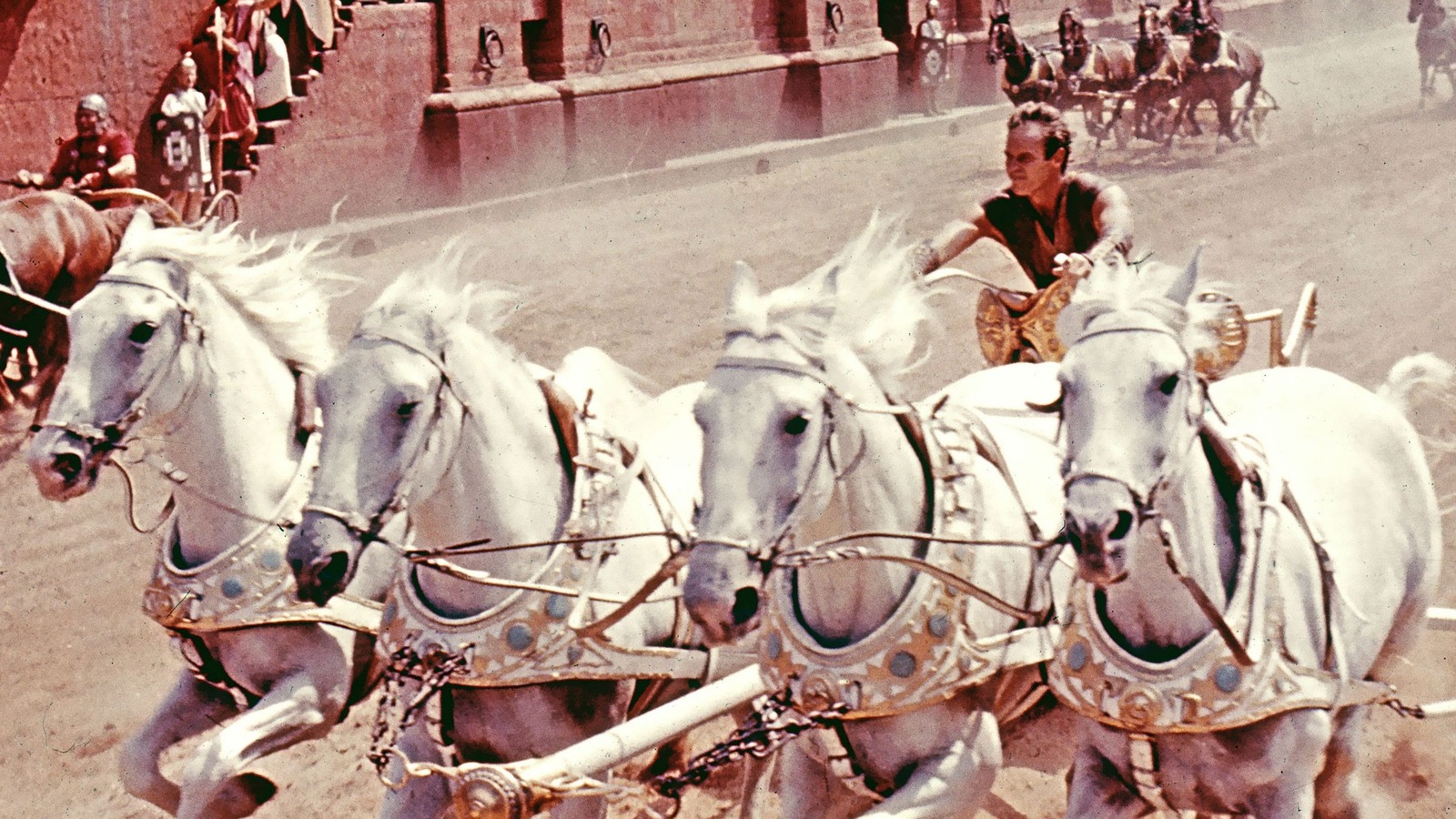
Flashback, November 1959: ‘Ben-Hur’ Remake Charges to Front of Nation’s Box Offices

Sixty-five years ago this week, struggling MGM bet that the market for cinematic biblical epics was not yet exhausted. The game paid off handsomely when the release of Ben-Hur—the sound adaptation of the best-selling novel of the 19th century—reaped box-office gold, saving the studio from bankruptcy.

In looking through my past blog posts, I was surprised to discover that, though I had written about much connected to this property—General Lew Wallace’s 1880 novel, a director whose one-reel 1907 short triggered a landmark copyright decision, and a 1925 budget-busting silent epic—I’d never written about the version that thousands have seen, in theaters and on television, for the past three generations.

This post, then, is my attempt to rectify this situation and to give this movie all the honor it deserves.

The 1959 remake became one of the most honored films in Hollywood history, netting Oscars for Best Picture, Best Director (William Wyler), and Best Actor (Charlton Heston). The 11 it netted in all set a record for the time that has only been equaled since then by Titanic in 1997 and The Return of the King in 2003.

It is also among the most influential movies in screen history. Most recently, Francis Ford Coppola listed it among the 20 films that inspired the epic he released a few months ago, Megalopolis.

Yet another director-producer’s debt to the film is more obvious. The first installment in “Star Wars” saga, The Phantom Menace, features a pod race that is a homage to the archetypal chariot race of Ben-Hur.

Even more so, the first trilogy in George Lucas’ bestselling series, focusing on Anakin Skywalker, bears strong similarities to Lew Wallace’s hero: another slave who makes a splash by competing in a great race, but never really feels entirely at home in the society that now embraces him, and is consumed by revenge for much of the action.

Ben-Hur also left its mark on the evolution of the film epic itself. Without ever stinting on pyrotechnics (it became the first film shot with Panavision lenses to win the Best Cinematography Oscar), it veered sharply from the sword-and-sandals movies associated with Cecil B. DeMille (The Ten Commandments), Howard Hawks (Land of the Pharoahs), and King Vidor (Solomon and Sheba).

Wyler delegated direction of the chariot race sequence to Andrew Marton and Yakima Canutt, while concentrating with his usual perfectionism on the actors’ performances. His creation of a more intimate, character-driven epic would release later releases such as Lawrence of Arabia, Doctor Zhivago, Young Winston, Reds, and, only a year later, Spartacus.

(In fact, Kirk Douglas only pursued the latter property when he lost out in the competition to play Ben-Hur to Heston, being offered instead the consolation prize of the titular hero’s friend-turned-enemy, Messala—a role that he considered nothing more than a second-rate villain.)

This desire to focus on characters rather than spectacle has led some viewers to regard the hour-and-a-half remaining after the chariot race to be anticlimactic. But this misunderstands the nature of the property.

The movie took its cue from the subtitle of the Wallace novel, “A Tale of the Christ,” tracking the miracle following Christ’s crucifixion that eventually frees Judah of the bitterness that has spurred his quest even as it deformed his life.

In their quest for character development, Wyler and producer Sam Zimbalist (who died of a heart attack in Rome just as the movie neared completion) employed six different screenwriters: Karl Tunberg, Gore Vidal, Christopher Fry, S. N. Behrman, Maxwell Anderson, and Ben Hecht.

Decades after the film’s release, Vidal caused a stir with his suggestion of a gay subtext in the Judah-Messala relationship. Audiences at the time were less likely to notice such elements than today, and in any case both Wyler and Heston denied them when asked about it in later years.

More likely, contemporary audiences would have responded to the Cold War resonance of the plot.

Judah’s refusal to renounce his Jewish heritage and pursue Roman glory with Messala triggers his family’s fall from wealth and influence, not unlike how rejection of informing consigned a host of Hollywood talent to blacklisting in the McCarthy Era.

At the same time, the presence of Rome as an authoritarian power imposing its will on a restless foreign people would have reminded many of the similar role played by the Soviet Union.

Monday, November 4, 2024

Movie Quote of the Day (‘Tootsie,’ on How a Woman Experienced ‘A Wonderful Party’)

Sandy Lester [played by Teri Garr]: “Well, good night, Michael. It was a wonderful party. My date left with someone else. I had a lot of fun. Do you have any Seconol?”—Tootsie (1982), story by Don McGuire and Larry Gelbart, screenplay by Larry Gelbart and Murray Schisgal, with an uncredited Barry Levinson, Robert Garland, Robert Kaufman, and Elaine May

Remembering Teri Garr (1944-2024), Oscar-nominated for her role in this classic comedy. 

Friday, August 9, 2024

Movie Quote of the Day (‘Licorice Pizza,’ With a ‘70s Hollywood Player in All His Wild-Eyed Glory)

Jon Peters [played by Bradley Cooper]: “Do you like peanut butter sandwiches?” — Licorice Pizza (2021), written and directed by Paul Thomas Anderson

You may not realize this at first glance, Faithful Reader. But onscreen, this may be the oddest line in a movie that continually comes out of left field.

“Jon Peters,” the character who says it, is, like the real person he so strongly resembles, a Hollywood hairdresser-turned-producer who for several years was the creative and romantic partner of Barbra Streisand.

Before production began, screenwriter-director Paul Thomas Anderson approached Peters—now, at 79, retired—to see if he would mind being represented in Licorice Pizza.

Anderson had good reason for such caution. In his younger days, Peters gained a reputation for volatility, even in a town known for screaming and more forms of bullying than could ever be dreamed of in a schoolyard.

This movie would by no means depict Peters as an avatar of benevolence. Instead, he would come off as egotistical, loud, bombastic, profane, crude, sexist, promiscuous, and manic, given to—let’s see—shouting at an assistant and teenagers, throwing a trash can through a plate-glass window, and—as you can see in the accompanying image—shamelessly flirting with a much younger woman right before the horrified young guy who wants her himself.

(Not surprisingly, seven years ago, Peters informed The Hollywood Report that he was “the Trump of Hollywood.”)

And even physically—especially physically—Peters couldn’t claim it wasn’t him. With his dark hair, trim beard, polyester suit, and glowering eyes, Bradley Cooper would be a dead ringer for the real thing.

Maybe Peters figured he would have no ground to stand on if he ever brought a case for defamation. Considering the tales springing from memoirs and sexual-harassment litigation about him over the years, any lawsuit would be ready-made for dismissal because he did not have a reputation irretrievably damaged to begin with.

In any case, Peters didn’t object to what Anderson had in mind, but made one request, according to the director’s November 2021 interview with Brent Lang in Variety: Please use the above line—which, you’ll be surprised to know, was his standard, successful come-on to ladies back in the day.

I don’t know about you, but I did a double-take when I read this. Rumored to have inspired Warren Beatty’s libidinous beautician in Shampoo, Peters has been linked, in addition to Streisand, to Lesley Ann Warren, Kim Basinger, Sharon Stone, and Pamela Anderson.

Years ago, young men would have killed to know his go-to words for opening a lady’s heart. And now, after finding out, they can only think, you mean, this is it?

(The image accompanying this post shows Bradley Cooper as Peters, Cooper Hoffman as youthful entrepreneur Gary Valentine, and Alan Haim as—well, “Alana,” being complimented by Peters for truck-driving skills that Gary clearly doesn’t have.)