Showing posts with label Totalitarianism. Show all posts

Tuesday, December 5, 2023

Quote of the Day (Masha Gessen, on How Midcentury Totalitarianism Led to Unusual Soviet Population Policies)

“For decades now, the Soviet Union had been trying, and failing, to recover from the catastrophic population loss caused by the Second World War and the Gulag extermination system. The thrust of the population policies initiated by [Soviet leader Nikita] Khrushchev was to get as many women as possible to have children by the comparatively few surviving men. The policies dictated that men who fathered children out of wedlock would not be held responsible for child support but the state would help the single mother both with financial subsidies and with childcare: she could even leave the child at an orphanage for any length of time, as many times as she needed, forfeiting her parental rights. The state endeavored to remove any stigma associated with resorting to the help of orphanages, or with single motherhood and having children out of wedlock. Women could put down a fictitious man as the father on the child's birth certificate—or even name the actual father, without his having to fear being burdened with responsibility.”— Russian-American journalist, author, translator, and activist Masha Gessen, The Future Is History: How Totalitarianism Reclaimed Russia (2017)

The massive Soviet casualties in WWII (27 million) and the Gulag, labor colonies, and prisons from 1931 to 1953 (1.7 million) are only dimly known to the wide American public. Even less understood are the consequences of this for subsequent government policy.

Masha Gessen’s careful analysis of all this, in the broader context of the broad-based psychological despair experienced by so many in Russia, reveals something eye-opening about how totalitarian rule (in the form of one country waging war not only on another but even on its own citizens) creates ripple effects that need to be analyzed and absorbed. 

It may be some time before we can fully grasp what is going on now in Russia under Vladimir Putin and China under Xi Jinping. But it is surely not the "strength" that they proclaim or their acolytes in the West blindly accept.

Thursday, June 29, 2023

Quote of the Day (George Orwell, on Totalitarianism and ‘The Continuous Alteration of the Past’)

“From the totalitarian point of view history is something to be created rather than learned. A totalitarian state is in effect a theocracy, and its ruling caste, in order to keep its position, has to be thought of as infallible. But since, in practice, no one is infallible, it is frequently necessary to rearrange past events in order to show that this or that mistake was not made, or that this or that imaginary triumph actually happened. Then again, every major change in policy demands a corresponding change of doctrine and a revelation of prominent historical figures. This kind of thing happens everywhere, but is clearly likelier to lead to outright falsification in societies where only one opinion is permissible at any given moment. Totalitarianism demands, in fact, the continuous alteration of the past, and in the long run probably demands a disbelief in the very existence of objective truth.”—English novelist and essayist Eric Blair, aka George Orwell (1903-1950), “Books v. Cigarettes,” originally published in 1946, later reprinted in Essays (Everyman Library, 2002)

George Orwell wrote these words with two totalitarian rulers in mind: Adolf Hitler and Joseph Stalin. Hitler’s dream of a thousand-year Reich crumbled at the end of WWII, and the Soviet Union that Stalin turned into a superpower collapsed from within more than 40 years later.

But Vladimir Putin has learned the lesson these two dictators taught about using fake history to control the present moment. He exploited fear and resentment over the loss of national power to manipulate his people.

Lucian Kim’s March 2022 article for the Wilson Center explored Putin’s “dangerous hobby”: a grasp of history “highly selective and distorted by politics” (a blueprint for control, I might add, that is increasingly envied, if not emulated, by Western proto-strongmen). Kim’s analysis of the Russian leader’s obsession with the wrong lessons of the past is best summed up with respect to Ukraine:

“If Russians are not allowed to condemn past crimes committed in their name, they will not be able to liberate themselves from the Soviet mindset. And as long as they are not free of the Soviet past, Russians will be unable to accept the paradox that the Soviet Union could be both liberator and occupier of half of Europe—and that they themselves were prisoners in their own country.”

(Jordan M. Poss’ blog post from May of last year contains another interesting reflection on “Orwell on History and ObjectiveTruth.”)

Wednesday, August 10, 2022

Quote of the Day (Hannah Arendt, on How ‘Anything Can Happen’ Without a Free Press)

“The moment we no longer have a free press, anything can happen. What makes it possible for a totalitarian or any other dictatorship to rule is that people are not informed; how can you have an opinion if you are not informed? If everybody always lies to you, the consequence is not that you believe the lies, but rather that nobody believes anything any longer. This is because lies, by their very nature, have to be changed, and a lying government has constantly to rewrite its own history. On the receiving end you get not only one lie—a lie which you could go on for the rest of your days—but you get a great number of lies, depending on how the political wind blows.

“And a people that no longer can believe anything cannot make up its mind. It is deprived not only of its capacity to act but also of its capacity to think and to judge. And with such a people you can then do what you please.”— German-born political philosopher Hannah Arendt (1906-1975), to French writer Roger Errera in 1974, in “Hannah Arendt: From an Interview,” The New York Review of Books, Oct. 26, 1978

Wednesday, April 20, 2022

Quote of the Day (Alexander Solzhenitsyn, on ‘Unlimited Power’)

“Unlimited power in the hands of limited people always leads to cruelty.”—Russian Nobel Literature laureate Alexander Solzhenitsyn (1918-2008), The Gulag Archipelago 1918–1956: An Experiment in Literary Investigation (1973)

It was one of the great ironies and tragedies of the life of Alexander Solzhenitsyn that the Russian novelist, who endured imprisonment, harassment, and exile at the hands of the Communist regime, was blind to the growing menace to his country posed by a former KGB operative.

Wrapping himself in the intense love of country and faith in God felt by Solzhenitsyn and so many of his countrymen—all the while ensuring that the material needs of the populace were met more than they had been in generations—Vladimir Putin consolidated absolute power by degrees. With an additional dollop of ego-stroking, he managed to fool even the great Russian writer and dissident into believing that he was merely restoring national greatness.

Too bad Solzhenitsyn could not have pondered again his own words about what happens when “unlimited power” is placed in the hands of people without the capacity to withstand temptation. But those of us in the West should not go away thinking it can’t happen here. It has, and may yet again.

Tuesday, December 7, 2021

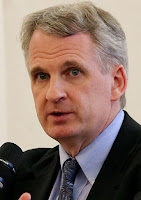
Quote of the Day (Timothy Snyder, on Globalization, Totalitarianism, and History)

“Both fascism and communism were responses to globalization: to the real and perceived inequalities it created, and the apparent helplessness of the democracies in addressing them. Fascists rejected reason in the name of will, denying objective truth in favor of a glorious myth articulated by leaders who claimed to give voice to the people. They put a face on globalization, arguing that its complex challenges were the result of a conspiracy against the nation. Communists ruled for longer, for nearly seven decades in the Soviet Union, and more than four decades in much of Eastern Europe. They proposed rule by a disciplined party elite with a monopoly on reason that would guide society toward a certain future according to supposedly fixed laws of history….

“Americans today are no wiser than the Europeans who saw democracy yield to fascism, Nazism, or communism in the 20th century. Our one advantage is that we might learn from their experience. Now is a good time to do so.”—Yale historian Timothy Snyder, On Tyranny: Twenty Lessons fromthe Twentieth Century (2017)

The accompanying photo of Timothy Snyder was taken Mar. 31, 2016, by Frauemacht.

Thursday, November 7, 2013

Quote of the Day (Albert Camus, on the Need for Eternal Vigilance)


"He knew what those jubilant crowds did not know but could have learned from books: that the plague bacillus never dies or disappears for good; that it can lie dormant for years and years in furniture and linen-chests; that it bides its time in bedrooms, cellars, trunks, and bookshelves; and that perhaps the day would come when, for the bane and the enlightening of men, it would rouse up its rats again and send them forth to die in a happy city."--Albert Camus, The Plague (1947; trans. Stuart Gilbert)

One hundred years ago today, Albert Camus—the Nobel Prize-winning novelist, journalist, playwright, and philosopher—was born in French-held Algiers, a land he prized for holding “stones, flesh, stars, and those truths that the hand can touch.” That poverty-stricken but visually sensuous environment catalyzed the same kind of belief in physical reality and suspicion of “isms” that Ernest Hemingway wrote about, with such memorable disillusionment, in A Farewell to Arms: “I was always embarrassed by the words sacred, glorious, and sacrifice and the expression in vain….There were many words that you could not stand to hear and finally only the names of places had dignity. Certain numbers were the same way and certain dates and these with the names of the places were all you could say and have them mean anything.”

Camus’ childhood environment provided creative fodder to which he repeatedly returned, in the same way that film director Francois Truffaut obsessively returned to the sights and sounds of his youth. I don’t think it’s an accident that as a result, both men developed a humane outlook on life that eventually put them at odds with the intellectual comrades-in-arms of their youth: Jean- Paul Sartre and Jean-Luc Godard, respectively. The Marxism of the latter two men—and particularly, their justification of anything, including violence and head-spinning ideological reversals—created painful, decisive breaks in the relationships.

The novel The Plague might at first be thought of, reductively, as an allegory on the appearance (and, as the above quote hints, scary re-appearance) of totalitarianism in its various forms. It gains texture from an actual setting—the coastal town of Oran, in Algeria—and from faith (by no means simple—Camus’ Dr. Rieux, like his creator, carries on minus a belief in Christianity he has lost along the way) in life-affirming actualities, typified by the following remark: “Well, personally, I've seen enough of people who die for an idea. I don't believe in heroism; I know it's easy and I've learned that it can be murderous. What interests me is living and dying for what one loves.”

The photo accompanying this post summons up the writer as impossibly glamorous, the "Don Draper of existentialism," in the words of The New Yorker's Adam Gopnik. At odds with that image are the novelist's words--hard-bitten, compelling, all the more committed to truth by being informed by bitter experience. 

The new, 50th-anniversary issue of The New York Review of Books contains an essay by novelist Claire Messud on Camus’ anguish over—and eventual isolated silence about—the Algerian War of independence that racked France in the late 1950s and early 1960s. Messud correctly praises him for the “honesty and consistency” with which he simultaneously urged France to make good on its longstanding promise of assimilating Arabs and denounced all resort to terrorist violence.

At the time of his fatal auto accident, at age 47, in 1960, Camus was painfully isolated from the left over what they viewed as his hopeless naivete. His admonition against terror, however, looks more compelling with each day, as does his powerful denunciation of atrocities perpetrated in the name of defeating it: “we must refuse to justify these methods [reprisals and torture] on any grounds whatsoever, including effectiveness. Once one begins to justify them, even indirectly, no rules or values remain.”

Tuesday, June 11, 2013

Quote of the Day (Milan Kundera, on the ‘Struggle of Man Against Power’)


"The struggle of man against power is the struggle of memory against forgetting."--Milan Kundera, The Book of Laughter and Forgetting, translated by Michael Henry Heim (1979)