
Showing posts with label Fathers. Show all posts
Showing posts with label Fathers. Show all posts
Friday, December 17, 2021
Movie Quote of the Day (‘A Christmas Story,’ on How Ralphie’s Old Man Was Like the Old Masters of Painting)


Tuesday, October 1, 2019
Quote of the Day (Saul Bellow, on a 'Surly' Father in Interwar Chicago)
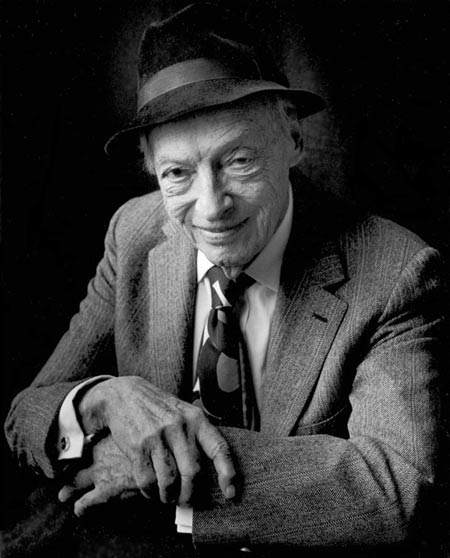
“Surly Max Zetland gave his family ‘everything,’ he
said. Old Zetland had been an immigrant. His start in life was slow. He learned
the egg business in the poultry market on Fulton Street. But he rose to be
assistant buyer in a large department store downtown: imported cheeses, Czech
ham, British biscuits and jams--fancy goods. He was built like a fullback, with
a black cleft in the chin and a long mouth. You would wear yourself out to win
this mouth from its permanent expression of disapproval. He disapproved because
he knew life. His first wife, Elias's
mother, died in the flu epidemic of 1918. By his second wife old Zetland had a
feebleminded daughter. The second Mrs. Zetland died of cancer of the brain. The
third wife, a cousin of the second, was much younger. She came from New York;
she had worked on Seventh Avenue; she had a past. Because of this past Max
Zetland gave way to jealousy and made nasty scenes, breaking dishes and
shouting brutally. ‘Des histoiress,‘
said Zet, then practicing his French. Max Zetland was a muscular man who
weighed two hundred pounds, but these were only scenes--not dangerous. As
usual, the morning after, he stood at the bathroom mirror and shaved with his
painstaking brass Gillette, made neat his reprehending face, flattened his hair
like an American executive, with military brushes. Then, Russian style, he
drank his tea through a sugar cube, glancing at the Tribune, and went off to
his position in the Loop, more or less in Ordnung. A normal day.”—Nobel
Prize-winning American fiction writer Saul Bellow (1915-2005), “Zetland: By a Character Witness,” in Collected Stories (2001)
Saturday, February 2, 2019
Song Lyric of the Day (David Gates, Summing Up How I Feel About My Dad)

“I
would give everything I own,
Just
to have you back again.”—David Gates, “Everything I Own,” from the Bread LP Baby I'm-a Want You (1972)
For
nearly 50 years, I had interpreted Bread’s “Everything I Own” as a song of
romantic loss. Then, after listening to a different hit from this Seventies MOR
band on YouTube, I became curious about this live version of the tune,
performed solo by Gates more than two decades after it rose up the charts.
Listening
to his introduction, I was astonished to hear the singer-songwriter say he had
written it not after the loss of a wife or sweetheart, but after the death of
his father. This time, I paid attention more closely to the lyrics. Yes, I
could see that this time.
I
wondered how Gates could have expressed my feelings now, exactly one year after
the death of my father (pictured). But I guess that’s why we have musicians: to
wring harmony out of our individual emotional confusion, to find the words to
say simply what we don’t know how to.
Thursday, October 20, 2016
Quote of the Day (John le Carre, on His Con-Man Dad and Writing)
 “Ronnie the con man could spin you a story out of
thin air, sketch in a character who did not exist, and paint a golden opportunity
where there wasn't one… if all that isn't part and parcel of the writer's art,
tell me what is.”—John le Carre, The Pigeon Tunnel: Stories From My Life (2016)
“Ronnie the con man could spin you a story out of
thin air, sketch in a character who did not exist, and paint a golden opportunity
where there wasn't one… if all that isn't part and parcel of the writer's art,
tell me what is.”—John le Carre, The Pigeon Tunnel: Stories From My Life (2016)
“Ronnie"’s son is David Cornwell, but readers know
him better as spy novelist John le Carre,
born 85 years ago yesterday.
Deceit and betrayal lie at the heart of the
espionage trade, and nobody might have been better at inculcating the traits of
mind needed for it than David’s father, a con man extraordinaire who cheated
people right and left—even friends and family—of their money, with occasional
breaks for prison and bankruptcy.
When le Carre became rich as a result of The Spy Who Came in From the Cold, he
had to deal with a string of his father’s unpaid hotel bills. At one point,
Ronnie even seduced a woman by claiming to be his famous son!
Le Carre aficionados have already known the basics
of this story since the publication of one of his more autobiographical novels,
A Perfect Spy, but a chapter in his
newly released The Pigeon Tunnel lays
out in considerably more detail a legacy of Dickensian shame over a father who
always seemed in trouble.
(For more on le Carre’s theme of betrayal, see this prior post of mine on Tinker Tailor Soldier Spy, the first
installment of his superb “Quest for Karla” trilogy about the hunt for a mole
at the highest reaches of Britain’s intelligence system—and the consequences of
it.)
Wednesday, August 3, 2016
Movie Quote of the Day (‘Nothing in Common,’ As Father and Son Face Off)

Max
Basner (played by
Jackie Gleason): (snarling): “Why
don’t you get yourself a regular car?”
David
Basner (played by
Tom Hanks): “It’s a jeep, Dad. I look good in it.”
(They climb
in, Max doing so uneasily.)
Max:
“This goddamn car. You have to be a mountain climber to get in it.”
(David puts on
the radio to fill the silence. Max thrusts a big, fat, smelly cigar toward him.)
Max:
“Want one of these? They’re Honduran.”
David
(sullenly): “No.”
Max:
“You can’t get the Cubans anymore.”
David
(hoping to put this to rest): “No,
thank you.”
(The silence
resumes, finally broken by Max.)
Max (morosely):
“I lost my lines. They fired me.”
[David gets
out of the Jeep and walks around angrily for a minute, then gets back in.]
David:
“What are you gonna do?”
Max:
“I know you hate me. But you have to help me.”— Nothing in Common
(1986), screenplay by Rick Podell and Michael Preminger, directed by Garry
Marshall
When Garry Marshall passed away a week and a half ago, the
director-producer-writer-actor was recalled most often for several TV series (Happy Days, Laverne and Shirley, The Odd
Couple, Mork and Mindy) and films
(Pretty Women, Runaway Bride, The Princess
Diaries). But for me, the work that lingers in my memory the longest is the
dramedy Nothing in Common, released
30 years ago this week.
Although only Marshall’s third film to that point,
he demonstrated a sure touch with a variety of actors: an insecure model unsure if she could establish herself as an
actress (Sela Ward), an up-and-coming star (Tom Hanks), and an aging legend who needed to be treated with care
(Jackie Gleason). He needed all of
this skill in serving a script that threaded together a romantic comedy and
deeply serious drama.
On one level, the film can be enjoyed as one of the
best screen treatments of the creative exhilaration of the advertising world,
focusing on how Hanks’ David Basner woos clients as easily as women. It’s
breezy and insouciant, a throwback to the Rock Hudson-Doris Day comedies of the
late 1950s and early 1960s.
It takes a long while for the yuppie David to
realize that life is not that easy. That recognition arrives courtesy of what
he has not bothered to notice—has not really wanted to notice—on his headlong path to success: that the marriage
of his parents (played by Gleason and Eva Marie Saint) has come apart.
The beginning of the above exchange between David
and Max hints at part of the reason for the crumbling marriage: Max’s
irascibility. But David’s resentment at being drawn into the parental quarrel,
we’ll soon learn, increases because of guilt over traits shared with his
father: lack of commitment and a wandering eye.
In his cinema swan song, Gleason employed none of
the attributes that had endeared loud-mouthed Ralph Kramden to audiences in The Honeymooners, such as his helpless,
inept dreaming and constant sheepish begging of forgiveness from wife Alice.
Even in this scene, when we realize the extent of Max’s emotional
extremity—getting fired from his job, like another used-up salesman, Willy
Loman—we know that this not-very-good father was temperamentally unsuited for
his sales specialty: children’s clothing.
And Max's cigar: It sums up an awful lot
about the attitudes and appetites that have brought him to his current pass,
one so desperate that he has to beg help from the son he really has never
communicated with. Within the immediate context of this scene, it signals both
his in-your-face personality and his half-hearted, clumsy attempt to ingratiate
himself with David. Before long, though, the gesture says even more about the
self-indulgence that imperils first his marriage, then his health.
How much of himself an actor brings to a part is a
complicated question, and Gleason’s role in this movie is a case in point. He ate
and drank to excess, cheated on his wives, was an absentee father, and could be
cruel to others involved in his shows. It was as if he felt bound to inflict on
others the hurt he experienced when his father abandoned the family. If it sounds familiar, it should: Max seems an awful lot like him, but without the transcendent acting talent. (In fact, the screenwriters of Nothing in Common, Rick Podell and Michael Preminger, drew on much of this unhappy background when they created the 2002 TV biopic Gleason, starring Brad Garrett.)
Yet that talent is impossible to discount, and
perhaps, at some level, Gleason understood all too well how Max must feel. In
his 2012 memoir, My Happy Days in Hollywood,
Marshall noted that Gleason was thoroughly professional and uncomplaining during
shooting, despite considerable physical frailty. (He died of cancer a year
after the film’s release.) The actor concentrated on his work and did an exemplary job in humanizing without sentimentalizing this most difficult of men.
When Nothing in Common was filmed in the mid-1980s, “selfish” was associated so frequently with “yuppie” that it might as well have been a barnacle stuck to the noun. If Hanks’ David is not outright selfish, he is certainly self-absorbed. While the film initially earns comic mileage from his attitude (“Does self-involvement count?" he responds when a lover asks if he’s involved with anybody), a reckoning will be in order.
What could make such a person snap out of this
emotional constriction? Ties of family so strong they override years of
distance, misunderstanding and wariness. Until the 2007-09 financial crisis,
probably nothing forced baby boomers out of their careerist zone so much as the
need to care for their aging parents.
Nothing
in Common was Marshall’s attempt to execute the same kind of
change in direction that Neil Simon was performing around this time with Chapter Two and his Eugene Jerome
autobiographical trilogy: comedy not merely shot through with one-liners, but
filled with rue. Audiences did not respond as enthusiastically as they did to
his preposterous prostitute-as-Cinderella tale, Pretty Woman.
But, in addition to providing Gleason with a memorable fadeout and Ward with a good career launching pad, the film served notice that Hanks—not unlike
Jack Lemmon in The Apartment—could
master drama as easily as comedy. Moreover, in depicting the discomfort and
agony of a Me Generation forced to choose between career aspiration and
unwanted personal responsibility, it still rings today with powerful truth.
Subscribe to:
Posts (Atom)


