
Showing posts with label Style. Show all posts
Showing posts with label Style. Show all posts
Wednesday, October 30, 2024
Quote of the Day (Isaac Babel, on the Impact of Literary Style)


Saturday, June 3, 2023
Quote of the Day (Ernest Hemingway, With One of the Great Openings in American Literature)
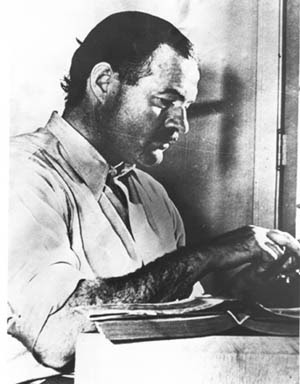
In a post from nine years ago, I discussed how,
by force of will—anywhere from 39 attempts (the author’s estimate) to 70—Ernest Hemingway came up with an ending to A Farewell to Arms that
finally satisfied him.
I don’t know if Hemingway struggled quite so much with
his opening to this novel from his golden period, but I do know that it is
magical in a way that his bleak conclusion isn’t, and probably couldn’t be.
The cadences of the sentences—filled with short words,
but featuring multiple clauses that add complexity—feel inspired by the King
James Bible in their constant repetition of “and.” The details of the landscape
were born of close observation by a writer who, on childhood fishing trips with
his father, developed a lifelong love for nature.
Put all of this together and the results are lyrical.
But Hemingway has also slipped in, as naturally as the pebbles and dust he
notices, three symbols that will dominate the rest of the novel: the plain, the
mountains, and the river.
The plain is the scene of suffering and death, created
in this case by the havoc caused by World War I. Even the movement of troops
through the village disturb the natural order, raising dust on the trees. The
mountains come to represent refuge and home, the transitory “separate peace”
that narrator Lt. Frederic Henry and his lover Catherine Barkley treasure.
The river signifies rebirth, a departure from the
devastation of war into a new realm of freedom and love, where Frederic will
dive to escape the carnage and madness of war.
World War I wounded civilization as a whole and
Hemingway in particular. The wound to the then 18-year-old ambulance driver on
the Italian front was physical (fragments from a mortar shell entered his right
foot and knee, striking his thighs, scalp and hand—and, most ominously, the
first in a series of concussions) and psychological (a belief that violence
could intrude at any time on life).
For all the granular physical description in the
opening of A Farewell to Arms, it paradoxically gains power through the
blurring of other details. “In the summer of that year”—which year? “A
village”—which one? Likewise, the river and mountains go unnamed. It is all so
mysterious that the reader wants to know more, but at the same time the
experience has become universal, beyond a particular time and place.
Although Hemingway has been frequently criticized for
his treatment of the women in his life and his fiction, two female writers were
looked beyond his blustering macho and found inspiration in the powerful
opening of A Farewell to Arms. Joan Didion analyzed it in a 1998 essay
for The New Yorker, but had already hailed it in a 1978 interview for
The Paris Review:
“He taught me how sentences worked. When I was fifteen
or sixteen I would type out his stories to learn how the sentences worked. I
taught myself to type at the same time. A few years ago when I was teaching a
course at Berkeley I reread A Farewell to Arms and fell right back into
those sentences. I mean they're perfect sentences. Very direct sentences,
smooth rivers, clear water over granite, no sinkholes.”
Equally seismic was the impact on the Irish writer
Edna O’Brien, one of Hemingway’s most perceptive and eloquent advocates in the
Ken Burns biography of the Nobel laureate. In her own 1984 interview with The
Paris Review, she explains how she first encountered this passage:
“Shortly after I arrived in London I saw an
advertisement for a lecture given by Arthur Mizener [author of a book on F.
Scott Fitzgerald, The Far Side of Paradise] on Hemingway and Fitzgerald.
You must remember that I had no literary education, but a fervid religious one.
So I went to the lecture and it was like a thunderbolt—Saul of Tarsus on his
horse! Mizener read out the first paragraph of A Farewell to Arms and I
couldn’t believe it—this totally uncluttered, precise, true prose, which was
also very moving and lyrical. I can say that the two things came
together then: my being ready for the revelation and my urgency to write.”
Tuesday, January 24, 2023
Quote of the Day (Pat Conroy, on Why ‘Good Writing is the Hardest Form of Thinking’)

Tuesday, November 1, 2022
Quote of the Day (Moliere, on ‘Artificial Style’)

Has neither taste, nor honesty, nor passion;
It's nothing but a sort of wordy play,
And nature never spoke in such a way."— French playwright, actor, and theater manager Jean-Baptiste Poquelin, aka Moliere (1622-1673), The Misanthrope, translated by Richard Wilbur (1666)
Tuesday, January 25, 2022
Quote of the Day (Virginia Woolf, on How Books Are Made)
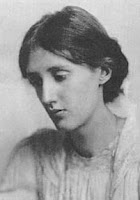
Few could construct sentences, let alone books, like Virginia Woolf, born 140 years ago today. She turned out, by this count, 34
books—essays, biographies, novels, and diary entries. As part of the Bloomsbury
set of writers, artists and intellectuals, she also made it possible for others
to find their creative voices.
Remarkably, she wrote all of this while being
afflicted repeatedly with influenza and, ultimately and more damagingly, what
are now believed to be episodes of bipolar disorder. The latter condition led
her to commit suicide in 1941.
Woolf is one of the few authors whose work has become voluminous enough and life documented sufficiently to warrant not one, but several blogs devoted to her and/or the Bloomsbury circle, including Blogging Woolf.
Wednesday, January 19, 2022
Quote of the Day (Matthew Arnold, on ‘The Only Secret of Style’)

Saturday, April 17, 2021
Quote of the Day (John Updike, on the ‘Rainbow Edge’ to Prose)

Tuesday, June 20, 2017
Quote of the Day (Ursula K. Le Guin, on ‘The Sound of the Language’)

“The sound of the language is where it all begins.
The test of a sentence is, Does it sound right? The basic elements of language
are physical: the noise words make, the sounds and silences that make the
rhythms marking their relationships. Both the meaning and the beauty of the
writing depend on these sounds and rhythms.”—Ursula K. Le Guin, Steering the Craft: A 21st-Century Guide to Sailing the Sea of Story (1998)
Saturday, March 5, 2016
Quote of the Day (Ross Macdonald, on a Woman With Style)
 "She had the kind of style that didn't go on
with her make-up, and she was about my age. As a man gets older, if he knows
what is good for him, the women he likes are getting older, too. The trouble is
that most of them are married." ― Ross Macdonald, The Zebra-Striped Hearse (1962)
Saturday, May 23, 2015

Thursday, January 16, 2014
Quote of the Day (Laurence Sterne, on 2 Sorts of Eloquence)
 "There are two sorts of eloquence. The one
indeed scarce deserves the name of it, which consists chiefly in laboured and
polished periods, an over-curious and artificial arrangement of figures,
tinselled over with a gaudy embellishment of words, which glitter, but convey
little or no light to the understanding. This kind of writing is for the most
part much affected and admired by people of weak judgment and vicious taste….
The other sort of eloquence is quite the reverse of this; and which may be said
to be the true characteristic of the holy Scriptures; where the excellence does
not arise from a laboured and far-fetched elocution, but from a surprising
mixture of simplicity and majesty, which is a double character, so difficult to
be united, that it is seldom to be met with in compositions merely
human."—Laurence Sterne,
"Sermon 42: Search the Scriptures," 1760, in The Works of Laurence Sterne: Sermons (1790)
(The image of the Tristram Shandy novelist accompanying this post is the 1760 Sir
Joshua Reynolds painting in London’s National Portrait Gallery.)
Subscribe to:
Posts (Atom)


