
Showing posts with label George Washington. Show all posts
Showing posts with label George Washington. Show all posts
Monday, February 16, 2026
Quote of the Day (Ron Chernow, on George Washington’s ‘One Major Blunder As President’)


Saturday, June 14, 2025
This Day in Architectural History (Pierre L'Enfant, Visionary Capital Planner, Dies Lonely Death)
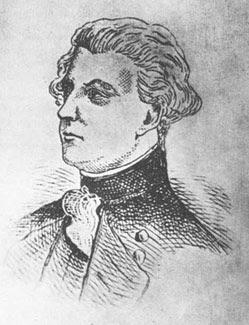
A trained
painter who, like the Marquis de Lafayette, left his native France in a burst
of youthful idealism to join the American colonies in their fight for freedom, L'Enfant
caught the attention of George Washington with his draftsmanship skills while
serving in the Continental Army Corps of Engineers. He not only endured the
brutal winter at Valley Forge but suffered a grievous leg wound at the Battle
of Savannah and spent six months as a prisoner of war after being captured at
the Battle of Charleston.
After the
war, L’Enfant worked on the insignia and diploma for the Society of Cincinnati
and the design for New York’s Federal Hall. In 1789, even before Congress had
formally approved a capital district for the nation, L’Enfant was lobbying
Washington with his proposal for creating it.
Only 11 months
after obtaining his prestigious architectural commission, L’Enfant was off the
project—depending on who you believe, having resigned or been fired. In a way,
the manner of his departure doesn’t matter, because, following continual
clashes with the three supervisory commissioners of the new federal District of
Columbia, he would have been gone in just a matter of time.
Perhaps
taking a cue from his adored commander in the war, Washington, L’Enfant had
neither requested nor been given a salary for his work in planning the
district. But, as the years went by and his income from other projects
dwindled, he felt the urgent need to press his claims.
It did not
help that when he had left, he had annoyed many with his egotism, his overbearing
ways, and his failure to adequately communicate his vision. He had ordered the
demolition of a property belonging to a prominent resident; delayed producing a
map for the sale of city lots; spoke and wrote English poorly; and, when he
walked away from the project in a huff, taken all the plans with him.
For his
last 15 years, the unmarried and childless L’Enfant lived as a charity case on
the estate of his benefactor, William Dudley Digges. Long before he was buried
in an unmarked grave on the plantation, he had haunted key figures in the city
he designed through rambling letters and appearances, wearing his blue
Continental Army uniform, in which he fruitlessly pressed his case for proper
remuneration for his work. (He wanted $95,000 for his architectural services;
Congress would go no higher than $3,800.)
The fulfillment
of L’Enfant’s vision for the city—and his honor for creating it—did not occur
until early in the 20th century. The centennial celebration of Washington’s
founding led the McMillan Commission—a panel of architects and planners
appointed by the U.S. Senate—to consider how to beautify a metropolis that had
fallen victim to decentralized, private land development.
The commission
members sought to adapt L’Enfant’s original scheme in the light of the “City
Beautiful” movement coming into being.
At the same
time, a parallel movement grew to remember L’Enfant in the fashion he craved
during life. His remains were exhumed, transported in in a casket draped with
the American flag to the U.S. Capitol (where he became the first foreign-born
man to lie in state) before being taken by military escort to Arlington National Cemetery. There he was buried overlooking the city he had created.
Some
aspects of L’Enfant’s plan, such as a waterfall flowing down Capitol Hill,
never came to fruition. But others eventually were adopted, including:
*the seat
of government on Capitol Hill;
*the mall
connecting Capitol Hill to what he called “The President’s House” and we call the
White House;
* a
four-quadrant grid, with north-south and east-west streets crossed by grand
diagonal avenues, creating public squares and beautiful buildings in what consisted
of hills, forests, marshes and plantations.
Monday, February 17, 2025
Quote of the Day (George Washington, on Disunity and ‘Arbitrary Power’)

He certainly had his faults, but George Washington has long held an honored place in this country’s history for his vision, wisdom, and integrity.
The above quote demonstrates why, as does his example of renouncing power and returning to private life when he could easily have become a dictator.
Like many Americans, I have taken for granted that
important documents like the above source from our nation’s past would not only
be preserved but disseminated in digital form for all of us to ponder.
The way things are going, who knows what will be
maintained anymore? Oh, you hadn’t heard that the Presidential administration
that came to power in January is forcing out the top leadership at the National Archives?
This is as good a time as any to remember George
Orwell’s warning about history in 1984: “Who controls the past controls
the future. Who controls the present controls the past.”
Wednesday, May 10, 2023
Quote of the Day (George Washington, on ‘Virtue and Happiness’)

In New York City nearly 235 years ago, George
Washington demonstrated the qualities Americans hoped for in their President.
In a New York City courtroom yesterday, a former and still-aspiring occupant of his office was found to be notably wanting in virtue and sense of duty.
It was frustrating to watch this latter individual
fill that job with neither a sense of decorum nor of honesty. But maybe now,
the “eternal rules of order and right” that Washington hailed will at long last
begin to be vindicated.
Monday, February 21, 2022
Quote of the Day (Alexis Coe, on George Washington’s Teeth)
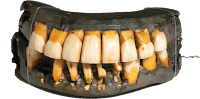
After 12 years of elementary and high school, most
American kids don’t know much about George Washington. What they think
they know turns out to be a good deal less, or at least more complicated, than
they anticipate—and certainly in the case of three matters.
Yes, Washington owned slaves. But, as noted by Pulitzer Prize-winning biographer James Thomas Flexner, he became, unlike Southern
planters of his age (including Jefferson), more rather than less bothered by
the so-called “peculiar institution” over time.
He not only provided in his will for his slaves’ eventual
manumission, but rented most of Mount Vernon to avoid the debt that
increasingly encumbered fellow plantation aristocrats and limited their ability
to free their own slaves.
And yes, as commander in chief of the Continental
Army, Washington crossed the Delaware River to attack British forces at Trenton.
But, as I learned in a visit to Highland, the Virginia
home of another President in that crossing, James Monroe (then a junior
soldier), Emanuel Gottlieb Leutze’s iconic 1851 painting got almost everything about that event wrong.
(Most obviously, that pose on the edge of the rowboat?
It wasn’t a rowboat but a flat boat, and one strong wave would have sent Washington, leaning forward precariously in front, plunging into the river’s icy
depths, never to emerge alive.)
Which brings us to the third—and dumbest—item: George’s
teeth. It’s always fascinated me how endlessly and boringly fixated
Americans are about his choppers. (When I visited Mount Vernon several years
ago, this was among the most frequently asked questions the staff encountered.)
Gilbert Stuart’s endlessly reproduced image of the first President concentrated attention on this facial defect—even though the painter tried to downplay George’s sunken cheeks around the teeth by stuffing his mouth with cotton for what certainly must have been a long, uncomfortable portrait sitting.
As you’ll see in the image accompanying this post,
the teeth were not, for sure, the kind of pearly whites that celebrities flash from
the red carpet.
But it wasn’t until the 19th century—after poor
George had died—that America had its significant “firsts” in dentistry: a book
on the subject published here (1801), a dentist recommending dental floss (1815),
a dental school (1840), and a public demonstration of ether anesthesia (1846). So
what did you expect in his time?
And another thing: while George had only one of his original
teeth by the time of his death, and the dentures he did have caused him
tons of discomfort, they weren’t wooden, okay? They were, as Ms. Coe
notes, primarily ivory.
The rather exotic animal sources that she mentions were
supplemented by gold, lead, and human teeth that Washington paid for—including those of his own
slaves.
I get it that Americans want to know something about
heroes like Washington (and the other great February President honored this day,
Lincoln) that reveal them as human beings rather than statues, with all kinds
of imperfections just like you and me. Nobody could be that good.
But I also wish kids (and yes, their parents) remember
what gets lost in our time of trivia and revisionism—why Washington’s contemporaries
turned to him for leadership, and why we continue to honor him:
*A lifelong commitment to learn and maintain good
manners (the better to restrain a ferocious temper);
*A willingness to serve his country when called to duty;
*Sacrifices he shared with his common soldiers;
*Heeding others when they had better ideas than his
own;
*Spotting and encouraging smart younger men like
Alexander Hamilton;
*Telling the truth and not stealing from the public
purse; and,
*Yielding power willingly, without resort to violence or corruption—virtually unheard of among world leaders at the time, and, as even Americans know all too well since January 6, 2021, not to be taken for granted even here now, as we near 250 years since Washington staked everything he had—including his life—for a new republican experiment.
(See Adam Littlestone
Luria’s excellent New York University Law Review blog post on the “stable
and enduring politics” that Washington sought to create.)
Thursday, December 24, 2020
This Day in Medical History (Benjamin Rush, Reforming Doctor Who Signed Declaration of Independence, Born)

Last week, I wrote a post about another underrated Founding Father: John Jay. But, in its way, Rush’s career was more varied,
more interesting—and more tragic. After all, how many other figures are
considered so crucial to the origins of abolitionism, prison reform,
psychiatry, eugenics, and substance abuse treatment—or been forced to put many
of his concepts into practice by treating his own mentally ill son?
As a member of the Continental Congress whose
activities ranged across multiple fields, Rush may have been surpassed only by
two friends who also signed the Declaration, Benjamin Franklin and Thomas
Jefferson. He embodied the best notions of the American Enlightenment for his belief in republicanism, toleration, scientific progress, and the elevating impact of education.
Yet, though regarded as the most famous and brilliant American
physician of his time, his renown faded somewhat in the two centuries after his death
for three reasons: his relatively brief political career, a longtime lack of
access to his copious writings, and out-of-context misunderstandings about some
of the more controversial aspects of his medical career.
In recent years, Rush has become the focus of some
long-overdue scholarly attention. First, Stephen Fried’s highly acclaimed biography of the doctor appeared two years ago. Second, the current
COVID-19 pandemic has led scholars to re-examine Rush’s controversial role in a
major epidemic of his career: a Yellow Fever outbreak in Philadelphia.
Though not the sole physician who signed the
Declaration, Rush was the only one to receive a university education in
medicine (the College of Philadelphia, then the University of Edinburgh).
From his late 20s on, he became active in politics: persuading the recent English immigrant Thomas Paine to call his incendiary pro-revolutionary pamphlet Common Sense; discussing how to advance the new movement while dining at Philadelphia’s City Tavern with John Adams, Thomas Jefferson and George Washington; and, after signing the Declaration, leaving his pregnant wife behind to serve as physician in chief of the military hospital of the Middle Department of the Continental Army.
In the latter frenetic period, Rush was a trusted
confidante and admirer of Washington: witnessing him clutching a page saying
“Victory or death” (the watchword for the attack) before crossing the Delaware at the Battle of Trenton;
treating the dying Gen. Hugh Mercer at the Battle of Princeton; slipping out of
the clutches of the British after being briefly captured at the Battle of
Brandywine; and writing an essay on
improving soldiers’ medical care that Washington pressed on his
subordinates.
But before long, Rush would also display the habit of
caustic, impolitic and sometimes indiscreet writing that attracted a host of
enemies. He became appalled by medical treatment of soldiers at the hands of
his superior, John Shippen, then at the Continental Congress for clearing him
of wrongdoing.
Rush made an even more significant enemy when he
penned an anonymous letter to Patrick Henry that was critical of Washington. Henry disregarded Rush’s plea to burn the letter immediately,
instead passing it along to the general. Washington was so angry at Rush’s
duplicity that the doctor felt compelled to resign his post.
In the 1780s, students rather than soldiers became the
primary focus of Rush’s attention. At the University of Pennsylvania, he served in a number of capacities over the years, including professor of
chemistry, professor of the theory and practice of medicine, and professor of
the institutes of medicine and clinical practice. Unlike many of the other
Founding Fathers, Rush was egalitarian in outlook, believing that a good
education should be enough to qualify candidates for public office.
All the while he was lecturing to enthralled students (more than 3,000 in his 45-year career),
Rush was maintaining a vigorous publication schedule (an estimated 85 significant publications, including the first American chemistry textbook) and becoming what would
now be thought of as a public intellectual on health and educational matters:
* He founded Dickinson College in Carlisle,
Pennsylvania (1783), Franklin College (now Franklin and Marshall) at Lancaster (1787),
and the College of Physicians (also 1787);
* He sought, at Pennsylvania Hospital, the nation's first hospital, to get better
funding for the mentally ill, and to stop the shameful practice of warehousing
them;
* He called for treating addiction as a medical
problem years before this became standard practice;
* He sought to reconcile two modes of beliefs that he
heartily embraced: rationalism and religion;
* He proposed a national system of public education
with a federal university to train public servants; and
* He advocated for the education of women.
On top of all these efforts, Rush not only called for
an end to slavery but, differing from the conventional wisdom of the time,
declared that there was nothing physically different about African-Americans
that would prevent them from achieving as much as whites.
Unfortunately, Rush endangered his reputation for
being in the vanguard of progressive thought—not to mention his professional credibility—by his role in Philadelphia’s yellow fever epidemic of 1793. (A thorough but critical examination of his role is provided by Robert L. North's "Benjamin Rush, MD: Assassin or Beloved Healer?" in a 2000 article for the Baylor University Medical Center Proceedings.)
At the start of the epidemic, Rush’s standing with the
public actually rose, as he was one of the few physicians even to stay in the
city to treat patients. But no approach he tried with patients seemed to work.
At this point, recalling a 1744 medical paper, Rush
hit on the expedient of bloodletting and purging. Even when that didn’t work,
he only resorted to it all the more often. (Ironically, Rush had stumbled onto
they key to yellow fever outbreaks—his notes refer at one point to “Moschetoes”
that were “uncommonly numerous”—but he never made the connection to the
disease’s origin.)
William Safire’s novel Scandalmonger (2000)
takes the viewpoint of Rush’s enemies by depicting him as a "murderous
quack" and "Dr. Death," but it leaves out an important bit of
context: Nobody else at the time had the least idea of what caused the
disease. But the damage to the esteemed doctor’s credibility was done. He
felt compelled to withdraw from some of his positions, and even his practice
suffered for a time.
Adams’ appointment of his old friend as Treasurer of
the U.S. Mint enabled Rush to rebuild his reputation even as he re-entered public
service. He remained wed, fatally, to his old idea on fever—when stricken with
typhus in 1813, he instructed that he be treated through bloodletting and
purging—but at his death, a grateful populace turned out en masse to pay tribute to one
of Philadelphia’s most honored citizens.
In his 2018 biography, Rush: Revolution, Madness,
and Benjamin Rush, the Visionary Doctor Who Became a Founding Father,
Stephen Fried explained how the physician-patriot’s intimate connection to the
leading lights of his time led to his relative undervaluation by decades of historians.
At his death, descendants of several prominent families had reason not to have
his correspondence or journal entries cited by biographers--materials that would have confirmed his central in the American Revolution:
*Jefferson’s family did not want airing of his
skepticism about the divinity of Christ—opinions that could have been
misconstrued to suggest he was an atheist—or his request to the doctor for the
best way to treat his hemorrhoids;
*Adams’ descendants were sensitive about revealing
the President's anguish over a son’s descent into and death from
alcoholism—a pattern that repeated itself with one of the children of John Quincy
Adams; and
*Rush’s family was not keen about divulging
the reason behind his disrupted friendship with George Washington, now firmly
established as the Father of His Country.
Even as he struggled with the personal tragedy of his son John--a physician who, after killing a friend in a duel, became so mentally unstable he needed to be placed under his father's care-- Rush, in his last decade, performed one of his greatest services to posterity by relentlessly urging old friends Adams and Jefferson to repair the breach that had developed because of their competition for the Presidency.
That reconciliation not only helped heal old wounds between the
proud old patriots but led to one of the most extraordinary bursts of
correspondents among two ex-Presidents—creating a treasure trove that scholars
have used since to better understand the extraordinary generation that produced
such revolutionaries as Adams, Jefferson and mutual friend Rush.
Thursday, July 9, 2020
This Day in Colonial History (Washington Escapes Ambush of British in Pennsylvania Wilderness)

July 9, 1755—Marching through the thick forests of
Western Pennsylvania with too few advance scouts, approximately 1,500 British
troops were attacked, then defeated by an outnumbered force of 900 Indians,
French, and Canadians.
The panicked redcoats hardly even bothered to protect
their mortally wounded leader, General Edward Braddock, the recently
appointed commander in chief of all British troops in North America. The
stinging defeat did, however, provide excellent experience for a 23-year-old
Virginian hired by Braddock as a volunteer aide-de-camp, George Washington.
The debacle near present-day Pittsburgh wasn’t
supposed to turn out this way. Braddock was a soldier with 45 years’ experience.
Moreover, his troops were among England’s best, drilled to maintain cohesion
along the combat line and looking forward to reaching Fort Duquesne—the opening
wedge in their attempt to supplant France as the dominant power in North
America.
But, under fire from the French and their Indian
allies using trees and rocks for cover, with their own scarlet uniforms serving
as excellent targets, His Majesty’s troops found their training of little use
in a new kind of asymmetrical warfare. After three hours, with 60 of 80
officers killed or wounded, they broke under the pressure, leaving wagons, provisions,
clothing, and personal effects in their wake.
By the time they stumbled away from the Battle of the Monongahela, half of Braddock’s army had been killed or wounded,
shocking the British public and their American colonies.
Braddock was not without virtues or insights. He did,
after all, spot talent in young Washington, even though the Virginian had, in
effect, inadvertently started the French and Indian War in a skirmish in the
woods of the Ohio Valley. (See David Preston’s discussion in the October
2019 issue of Smithsonian Magazine.) And he was justly annoyed by the
lack of material support he was provided when he first reached the colonies (a situation quickly redressed by horses and wagons rounded up by
Pennsylvania’s Benjamin Franklin).
But each day, Braddock proved that his inflexibility
was matched only by his irascibility. And, by the end of the campaign and his
life, he would have proof that he was mistaken in believing that colonists’ “slothful
and languid disposition renders them very unfit for military service.”
In his Pulitzer Prize-winning biography of Washington, Douglas Southall Freeman summarized succinctly the limitations
of Braddock in a foreign environment:
“Braddock, of course, was entirely ignorant of the
type of combat that prevailed in America. What was worse, he was not a man to
learn. He lacked all originality of mind and exemplified the system that
produced and schooled him, a system traditional, methodical and inflexible. A
man of his training was not apt to fail to do everything the regulations and
the accepted tactics prescribed. It was still less likely he would do anything
more. Trained for war on the continent of Europe, where the masters employed
their art, Braddock believed that the tactics in which he had been drilled for
forty years were close to perfection…. As a matter of fact, few of the
political elders who had the temerity to talk to Braddock about his chosen art
of war had any personal experience in frontier fighting. Young men like Washington
scarcely counted until they proved themselves.”
Proving himself was what Washington ended up doing in multiple
ways in the ambush. Despite having two horses shot from under him, as well as
four bullets flying through his hat or uniform, he helped Braddock rally his
men; managed to get his wounded commander across the river with the yells of
nearby Native Americans ringing in his ears; dug a makeshift grave for
Braddock, then covered the evidence of it so the commander’s remains would not
be desecrated by his foes; and coordinated the stunned army’s retreat, ensuring
its remnants would fight another day.
Though a wave of second-guessing ensued after the
battle over why the English forces as a whole performed so badly, young Washington
emerged from the catastrophe with an enhanced reputation for coolness and
bravery under fire. He finished his service in the French and Indian War as the
highest-ranking officer among the Virginia troops, positioning him to be named
commander in chief of the Continental Army when hostilities broke out between
Britain and its colonies in 1775.
But the Battle of the Monongahela influenced Washington’s
career in other key ways, too, through the lessons he took away:
*Native Americans were a powerful force that would
have to be dealt with—diplomatically if possible, militarily if necessary.
During the American Revolution, Iroquois attacks led Washington to authorize Gen. John Sullivan to crush harassment by the
Indians and their Loyalists in southern New York. As President, he sought
unsuccessfully to institute a just Indian policy, trying to simultaneously ward off British incitements of Indian raids and settlers' incursions into Indian lands in the Northwest Territory.
*The advice of aides was not to be dismissed lightly.
At critical junctures, Braddock, believing that he knew best, ignored the
advice of subordinates, including about the need to bolster their number of
Indian scouts. In contrast, when he commanded the continentals, Washington was
cautious and deliberate to a fault, listening carefully at councils of war.
*Inadequate attention to detail could harm an army.
An officer noted that Braddock was “very indolent and seemed glad for anybody
to take business off his hands.” In the crucial run-up to battle, his failure
to ensure proper reconnoitering ensured that he would blunder into the
wilderness. Freeman was scathing about this failure: “Great dangers often are
rendered small by vigilance; lesser dangers always are enlarged by negligence.”
Washington—who managed his plantation from afar as well as his army during the Revolutionary War—would never
make the same mistake.
*British forces were not invincible. Always a realist, Washington knew just how great the odds were that he could
defeat the far numerically superior British forces. But his experience with Braddock surely also convinced him that
Britain commanders’ overconfidence rendered them vulnerable.
*Military intelligence was crucial. At the Monongahela,
the French commander had used intelligence supplied by his network of
intelligence scouts to expertly deploy his troops. Braddock’s failure to match
this made his defeat inevitable. On the other hand, Washington’s constant
attention to this in the American Revolution meant that he could shift the odds against victory more in
his service.
*Surprise, even against a heavily favored foe,
could carry the day. Shock helped break the will of Braddock’s troops. Two
decades later, at the Battle of Trenton, Washington ensured the survival of the
patriot cause with a dawn attack on British troops still hung over from
Christmas revelry the night before.
Thursday, June 4, 2020
Photo of the Day: The Potomac River, As Viewed From Mount Vernon

I took this picture in November 2010, while visiting
Mount Vernon, George Washington’s estate in Alexandria, VA.
Ignore the apocryphal tale about Washington tossing
a silver dollar across this waterway (more likely, it was the narrower Rappahannock
River). It is an undeniable truth that in every other way that counted, the Potomac River remained central to his life.
He located his business—his plantation—here.
Believing the Potomac to be “the Nation’s River,” he helped formation a company that sought to link it to the Ohio River, binding the
different sections of the young republic in a web of commerce.
And I have to believe, looking out from the back of
his home, that Washington appreciated the sheer beauty of this landscape, and
sought, every time he had the chance to grab greater power, to forsake it all
for the chance to return here.
Monday, February 17, 2020
Photo of the Day: A Leader With a Sense of Right and Wrong

I have encountered this bronze equestrian statue of George Washington several times while walking near New York’s Union Square Park.
My most recent sighting not only led me to take this photo, but to think about
why it resonates with me so much.
The oldest statue in New York City’s parks
collection, this creation by Henry Kirke Brown (1814-1886) has withstood a great deal—the elements, of course, and
movement from a traffic island at the southeast corner of the square to its
central location in the south plaza. But it remains a point of reference for
New Yorkers—most dramatically after 9/11, where it became a de facto shrine.
When I did a Google search to find out the number of
statues in this country in honor of this iconic figure, the results amounted to
a collective throwing up of the hands. You might as well try to count the
number of grains of sand by the ocean. Heck, there’s even a monument to the
first American President in London’s Trafalgar Square.
That last bit of unlikely recognition might owe
something to the same instinct that led King George III to exclaim that the
former American commander-in-chief’s renunciation of the Presidency after two terms “placed him
in a light the most distinguished of any man living...the greatest character of the age."
Okay, now how many statues of Benedict Arnold
are there in the United States? Less than a quarter of a statue. The national park containing Saratoga battlefield in upstate New
York honors the “memory of the most brilliant soldier of the Continental army,
who was desperately wounded on this spot, winning for his countrymen the
decisive battle of the American Revolution, and for himself the rank of Major
General.”
Because Benedict Arnold tried to betray his country
three years after Saratoga by handing West Point over to the British, the whole
man could not be honored, not even named, only that part of him displaying courage—his boot.
Over time, Americans have become fascinated by our
rogues while taking our heroes for granted—even feeling the need to take them
down a peg. And so, the man once hailed by one of the men he commanded in the
American Revolution, “Light-Horse Harry” Lee, as “first in war, first in
peace, first in the hearts of his countrymen” is having his contributions
slighted, when not outright forgotten.
Right-wing Republicans delight in
mocking progressives for their politically correct tendency to remove statues.
They have a point—until, that is, some of them reveal who their real
idea of a hero is.
And so, a few weeks ago, listening to one of the
Sunday morning news shows, I heard an admirer of the current White House
incumbent hail him as our greatest President—ever.
(By the way, I refuse in this post to include the
incumbent’s name. It only feeds his maniacal desire for attention. Instead,
I’ll refer to him with an epithet first used by Spy Magazine three
decades ago that serves equally well today: “short-fingered vulgarian”—SFV for short.)
No matter how ludicrous, ignorant, insane—okay,
downright morally offensive—that judgment might be, this woman is by no means
an outlier in the current GOP. A poll this past December by The Economist/YouGov found that a majority (53%) of
GOP respondents think SFV is a better president than Abraham Lincoln. If that’s
how they feel about the incumbent versus Honest Abe, another Republican, I’m afraid
that poor George doesn’t stand a chance.
It's worthwhile, then, going over again why
Americans valued the example of Washington for so long—and why Arnold was
loathed.
The difference between the traitor and the hero—as
well as their motives—are summed up extremely well in Nathaniel Philbrick’s Valiant Ambition: George Washington, Benedict Arnold, and the Fate of the American Revolution:
“[Benedict] Arnold had never worried about the
consequences of his actions. Guilt was simply not a part of his make-up since
everything he did was, to his own mind, at least, justifiable….[But]
Washington's sense of right and wrong existed outside the impulsive demands of
his own self-interest. Rules mattered to Washington. Even though Congress had
made his life miserable for the last four years, he had found ways to do what
he considered best for his army and his country without challenging the
supremacy of civil authority. To do otherwise, to declare himself, like the
seventeenth-century English revolutionary Oliver Cromwell, master of his army
and his country, would require him to become 'lost to my own character.’”
By a stroke of luck, Arnold narrowly evaded being
brought to justice for colluding with a foreign power. Boiling with resentment,
set on recrimination, he felt unleashed as a newly commissioned Brigadier
General in the British army, laying waste to Virginia.
In the end, it did him no good. The British lost. Reviled
alike by the countrymen whose trust he betrayed and the foreign handlers whose
favors he bargained for, Arnold died, feeling more unappreciated than ever, two
decades later, unforgiven for wildly conflating the public interest with his
own private one.
That “sense of right and wrong” that mattered so
much to his old commander—well, for a certain part of the populace that once hailed the stress on "characters" only a couple of decades ago, it seems so old-fashioned, much like the 110 “Rules of Civility,” which Washington copied out as a schoolboy and spent the rest of his
life practicing.
We are going to see soon if we continue to live in
Washington’s America or the one desired by Arnold—animated by greed, dancing to
the tune of outside forces who abominate democracy.
If we ever erect a statue in honor of the SFV so
preferred by so many Republicans, I suggest that it be, in the manner of
Arnold’s at Saratoga, not a Washington-style equestrian figure but something
more appropriate—an upraised middle finger.
Subscribe to:
Posts (Atom)


