Showing posts with label Virtue. Show all posts

Sunday, October 26, 2025

Quote of the Day (William Shakespeare, Valuing Virtue Over Vengeance)

“
Though with their high wrongs I am struck to th' quick,
Yet with my nobler reason 'gainst my fury
Do I take part. The rarer action is
In virtue than in vengeance.” —English playwright-poet William Shakespeare (1564-1616), The Tempest (1611)

Wednesday, July 16, 2025

Quote of the Day (Adam Smith, on ‘The Virtues of Sensitivity and Self-Control’)

“Just as taste and good judgment, when considered as qualities that deserve praise and admiration, are supposed to imply an uncommon delicacy of sentiment and acuteness of understanding, so the virtues of sensitivity and self-control are thought of as consisting in uncommon degrees of those qualities. The likeable virtue of humaneness requires, surely, a level of sensitivity far higher than is possessed by crude ordinary people. The great and exalted virtue of magnanimity undoubtedly demands a much higher degree of self-control than the weakest of mortals could exert. Just as the common level of intellect doesn’t involve any notable talents, so the common level of moral qualities doesn’t involve any virtues. Virtue is excellence—something uncommonly great and beautiful, rising far above what is vulgar and ordinary. The likeable virtues consist in a degree of sensitivity that surprises us by its exquisite and unexpected delicacy and tenderness. The awe-inspiring and respectworthy virtues consist in a degree of self-control that astonishes us by its amazing superiority over the most ungovernable passions of human nature.”— Scottish economist and philosopher Adam Smith (1723-1790), The Theory of Moral Sentiments (1759)

These days, Adam Smith’s economic precepts in The Wealth of Nations (1776) are much more likely to be followed than the moral ones propounded here. Indeed, those virtues may be more flouted by the rich, famous, and powerful than by ordinary citizens. So much the worse for all of us.

Sunday, December 29, 2024

Spiritual Quote of the Day (David French, on Unity Through the Pursuit of Virtue)

“The American church is torn apart by conflict over theology. It should be united by a pursuit of virtue. The church that truly influences a nation will be one that focuses on doing good more than on being right.”—Opinion columnist David French, “Some Think What You Preach Matters More Than What You Do. It Doesn’t,” The New York Times, Aug. 4, 2024

Sunday, October 20, 2024

Quote of the Day (James Madison, on Voting for ‘Men of Virtue and Wisdom’)

“I go on this great republican principle, that the people will have virtue and intelligence to select men of virtue and wisdom. Is there no virtue among us? If there be not, we are in a wretched situation. No theoretical checks—no form of government can render us secure. To suppose that any form of government will secure liberty or happiness without any virtue in the people, is a chimerical idea.” —Founding Father and 4th President of the United States James Madison (1752-1836), “Judicial Powers of the National Government,” June 20, 1788, Founders Online, National Archives [Original source: The Papers of James Madison, vol. 11, 7 March 1788–1 March 1789, ed. Robert A. Rutland and Charles F. Hobson. Charlottesville: University Press of Virginia, 1977, pp. 158–165.]

Sunday, May 26, 2024

Spiritual Quote of the Day (St. Francis de Sales, on Protecting Against a Vice by a Contrary Virtue)

“When attacked by some vice, we must practice the contrary virtue as much as we can and refer all the others to it. By this means we will vanquish our enemy and at the same time advance in all the virtues. Thus if assaulted by pride or anger, I must devote and direct all my actions to humility and meekness and adapt all exercises of prayer, the sacraments, prudence, constancy, and sobriety to this end. To sharpen his tusks the wild boar rubs and polishes them with his other teeth and thus files and sharpens them all. So also a virtuous man undertakes to perfect himself in the virtue most needed for his own protection must file and polish it by exercise of the other virtues.” —St. Francis de Sales (1567-1622), Bishop of Geneva and Doctor of the Church, Introduction to the Devout Life, translated by John K. Ryan (1609)

Sunday, October 8, 2023

Spiritual Quote of the Day (Alexander Pope, on ‘Virtue’s Prize’)

“What nothing earthly gives or can destroy,
The soul's calm sunshine and the heartfelt joy,
Is Virtue's prize. A better would you fix?
Then give humility a coach and six,
Justice a conqueror's sword, or truth a gown,
Or public spirit its great cure, a crown.
Weak, foolish man! will Heav'n reward us there
With the same trash mad mortals wish for here?”—English poet Alexander Pope (1688-1744), “An Essay on Man” (1733)

Wednesday, May 10, 2023

Quote of the Day (George Washington, on ‘Virtue and Happiness’)

“[T]here is no truth more thoroughly established, than that there exists in the economy and course of nature, an indissoluble union between virtue and happiness, between duty and advantage, between the genuine maxims of an honest and magnanimous policy, and the solid rewards of public prosperity and felicity: Since we ought to be no less persuaded that the propitious smiles of Heaven, can never be expected on a nation that disregards the eternal rules of order and right, which Heaven itself has ordained: And since the preservation of the sacred fire of liberty, and the destiny of the Republican model of Government, are justly considered as deeply, perhaps as finally staked, on the experiment entrusted to the hands of the American people.” —President George Washington (1732-1799), “First Inaugural Address,” April 30, 1789

In New York City nearly 235 years ago, George Washington demonstrated the qualities Americans hoped for in their President.

In a New York City courtroom yesterday, a former and still-aspiring occupant of his office was found to be notably wanting in virtue and sense of duty.

It was frustrating to watch this latter individual fill that job with neither a sense of decorum nor of honesty. But maybe now, the “eternal rules of order and right” that Washington hailed will at long last begin to be vindicated.

Wednesday, November 4, 2020

Quote of the Day (Patrick Henry, on the Use Americans Make of Their Blessings)

“Whether this [American independence] will prove a blessing or a curse, will depend upon the use our people make of the blessings which a gracious God hath bestowed on us. If they are wise, they will be great and happy. If they are of a contrary character, they will be miserable.—Righteousness alone can exalt them as a nation. Reader! whoever thou art, remember this; and in thy sphere, practise virtue thyself, and encourage it in others.”—American lawyer and patriot Patrick Henry (1732-1799), in the concluding lines of a note found with his will after his death, quoted in William Wirt, Sketches of the Life and Character of Patrick Henry (1817)

Tuesday, September 11, 2018

Quote of the Day (Socrates, on Why ‘Virtue is Not Given by Money’)


“I do nothing but go about persuading you all, old and young alike, not to take thought for your persons or your properties, but and chiefly to care about the greatest improvement of the soul. I tell you that virtue is not given by money, but that from virtue comes money and every other good of man, public as well as private. This is my teaching, and if this is the doctrine which corrupts the youth, my influence is ruinous indeed. But if anyone says that this is not my teaching, he is speaking an untruth. Wherefore, O men of Athens, I say to you, … either acquit me or not; but whatever you do, know that I shall never alter my ways, not even if I have to die many times.”—Athenian philosopher Socrates (469 BC-399 BC), quoted by Plato, Apology, translated by Benjamin Jowett (1891)

We know Socrates for the line, “The unexamined life is not worth living.” But neither, he makes plain here, is a shallow, materialistic one. 

That lesson has, of course, been forgotten in contemporary Washington, city of power, ambition, and the money that accrues to this. Another lesson, it seems, must also be learned all over again: that there are some principles worth staking one’s life for.

Thursday, March 8, 2018

Quote of the Day (Thomas Babington Macaulay, on Virtue and Power)


“The highest proof of virtue is to possess boundless power without abusing it.”—English historian and Whig politician Lord Thomas Babington Macaulay (1800-1859), 1843 review of Lucy Aikin’s Life and Writings of Addison, in Critical and Historical Essays (1852)
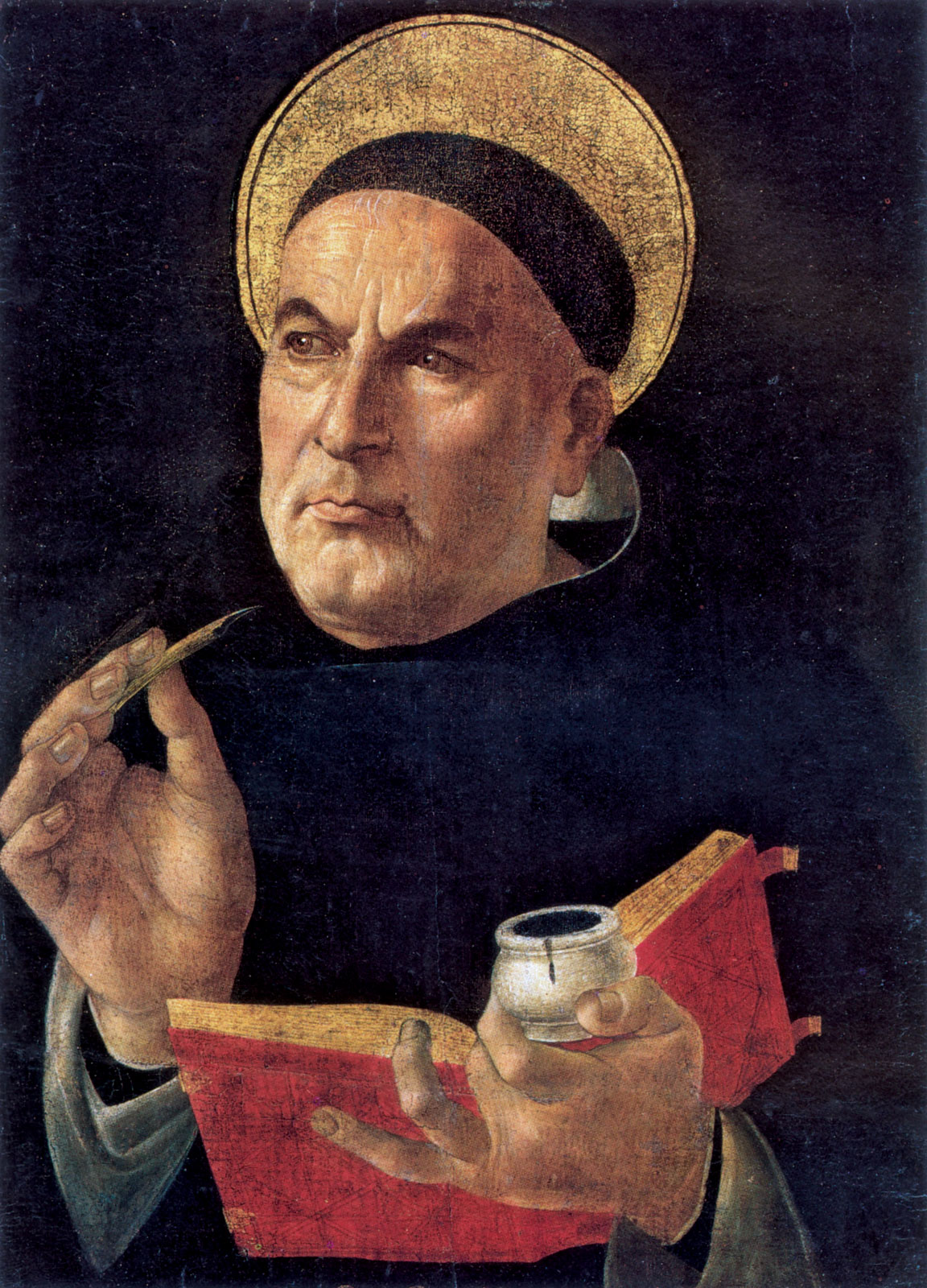
Good luck trying to find such a person—especially these days.

Sunday, January 7, 2018

Quote of the Day (St. Thomas Aquinas, on Passions and ‘Perfection of Moral Virtue’)


“Perfection of moral virtue does not wholly take away the passions, but regulates them.”— Italian theologian and Doctor of the Church St. Thomas Aquinas (1225-1274), Summa Theologica, Volume 1, translated by Fathers of the English Dominican Province (2007)

Sunday, October 8, 2017

Quote of the Day (Gerard Manley Hopkins, on Violence, Insolence and Pride)


“Violence is admired and, above all, insolence and pride. But it is our baseness to admire anything evil. It seems to me we should in everything side with virtue, even if we do not feel its charm." —English Jesuit and poet Gerard Manley Hopkins (1844-1889), letter to English poet-critic Coventry Patmore, Sept. 12, 1883, in A Hopkins Reader, selected by John Pick (1953)

Sunday, September 3, 2017

Quote of the Day (St. Thomas Aquinas, on What Makes a Leader Happy)


“It is implanted in the minds of all who have the use of reason that the reward of virtue is happiness. The virtue of anything whatsoever is explained to be that which makes its possessor good and renders his deed good. Moreover, everyone strives by working well to attain that which is most deeply implanted in desire, namely, to be happy. This, no one is able not to wish. It is therefore fitting to expect as a reward for virtue that which makes man happy. Now, if to work well is a virtuous deed, and the king’s work is to rule his people well, then that which makes him happy will be the king’s reward….Happiness, we say, is the ultimate end of our desires. Now the movement of desire does not go on to infinity else natural desire would be vain, for infinity cannot be traversed. Since, then, the desire of an intellectual nature is for universal good, that good alone can make it truly happy which, when attained, leaves no further good to be desired. Whence happiness is called the perfect good inasmuch as it comprises in itself all things desirable. But no earthly good is such a good. They who have riches desire to have more, they who enjoy pleasure desire to enjoy more, and the like is clear for the rest: and if they do not seek more, they at least desire that those they have should abide or that others should follow in their stead. For nothing permanent is found in earthly things. Consequently there is nothing earthly which can calm desire. Thus, nothing earthly can make man happy, so that it may be a fitting reward for a king.”—Doctor of the Church St. Thomas Aquinas (1225-1274), De Regno (“On Kingship”), translated by Gerald B. Phelan, revised by I. Th. Eschmann, O.P. (1949)