Showing posts with label Pulitzer Prize. Show all posts

Thursday, September 3, 2026

This Day in Literary History (Alison Lurie, Smart, Tart Pulitzer Winner, Born)

Sept. 3, 1926—Alison Lurie, who used her longtime career in academe as material for critically acclaimed fiction, including the Pulitzer Prize-winning 1984 novel Foreign Affairs, was born in Chicago.

I first encountered the work of Lurie in the mid-Seventies, with her biting academic satire The War Between the Tates. Though she had written four prior novels, this was the first to attract widespread attention—enough for it to land on the bestseller lists and to be adapted into a 1977 TV movie starring Elizabeth Ashley, Richard Crenna, and Annette O'Toole.

For anyone wanting to know what how the nation’s campuses were roiled in the late Sixties by the Vietnam War, women’s lib, and the sexual revolution, this insider’s take, with its cool irony, remains an excellent place to start.

Many neophyte authors follow the mantra “write about what you know,” but I was unaware until I started researching this post just how closely Ms. Lurie followed that.

Several of her novels (including The War Between the Tates) feature characters from Corinth University, a school that shares a classical association and upstate New York setting with the institution where Ms. Lurie taught for decades, Cornell University.

Her female protagonists (the same age, within a few years, of Ms. Lurie) are often involved with children’s literature—her academic specialty. She couldn’t help but regard with tart disdain how these books were viewed by her colleagues, as in this passage from Foreign Affairs:

“For the truth is that children’s literature is a poor relation in her department –indeed, in most English departments: a stepdaughter grudgingly tolerated because, as in the old tales, her words are glittering jewels of a sort that attract large if not equally brilliant masses of undergraduates. Within the departmental family she sits in the chimney-corner, while her idle, ugly siblings dine at the chairman’s table –though, to judge by enrollment figures, many of them must spout toads and lizards.”

With all of that said, readers should be careful not to construe her fiction as directly autobiographical. Maintaining the kind of ironic distance she was able to keep towards her characters would have been difficult, if not impossible, if they derived entirely from her experiences and emotions.

For instance, like Erica Tate in The War Between the Tates, Lurie suffered through the collapse of her marriage to another academic. But, while the marital conflict in the novel was brought to a boil by an extramarital affair, Lurie’s marriage deteriorated as her first husband underwent a conversion to Roman Catholicism—a spiritual orientation that, as the child of religious skeptics, she had little or no use for.

Over the years, I have wondered why Ms. Lurie was unable to sustain her mid-career popularity. Some of it may relate to the fact that creators of so-called “literary fiction” don’t work in genres where they can become “brand authors.”

But I suspect most of the problem instead rests with her frequent recourse to the academic environment she knew so thoroughly—a setting outside the experience of many common readers in the U.S. Throughout most of her career, her popularity was higher in the U.K., where writers such as A.S. Byatt, Kingsley Amis, David Lodge, and Iris Murdoch have enjoyed success with “campus novels.”

Readers who do try Ms. Lurie will find a fiction writer able to put her literary influences to use in contemporary contexts:

*Her consistently wry narrative voice (you can practically see her narrators raise their eyebrows) is reminiscent of Jane Austen.

*With his “international novels” (featuring encounters between innocent Americans and more jaded British), interest in artists, and midlife fascination with the supernatural, Henry James provided Lurie with another template.

*And her intense study of children’s literature led Lurie to plumb the complex personalities and frequent fears of the very young.

Above all, Lurie exemplifies the tendency of so many writers—no matter their time or nation—to write from a personal wound. With Lurie, that wound began even before childhood, in birth. As she wrote in a 1982 essay for The New York Times Book Review:

“I was a skinny, plain, off-looking little girl, deaf in one badly damaged ear from a birth injury, and with a resulting atrophy of the facial muscles that pulled my mouth sideways whenever I opened it to speak and turned my smile into a sort of sneer. I was clever, or, as one of my teachers put it, ‘too clever for her own good,’ but not especially charming or affectionate or helpful. I couldn't seem to learn to ride a bike or sing in tune, and I was always the last person chosen for any team.”

The precocious but lonely child took refuge in books, especially, at that young age, fairy tales. To her joy, she discovered her own personal superpower: “With a pencil and paper I could revise the world.”

It made the difference in her life, which ended six years ago in a hospice in Ithaca, NY.

Lurie would be delighted to know that admirers of her fiction are celebrating the centenary of her birth on both sides of the Atlantic this month. In New York City, the 92nd Street Y will host “Alison Lurie at 100” on Tuesday, September 15, featuring authors Bruce Handy, Joanna Rakoff, and Micah Perks in conversation with Cody Upton.

And in London, the British Library hosts “An American in London: A Celebration of Alison Lurie” on September 29, with speakers including Amanda Craig, Elly Griffiths, and Dame Margaret Drabble.

Monday, May 4, 2026

Flashback, May 1926: Miffed Sinclair Lewis Nixes Pulitzer for ‘Arrowsmith’

After bypassing Sinclair Lewis twice in the past half-dozen years, the Pulitzer Prize board –whether in recognition of present merit or compensation for past mistakes—awarded him the fiction prize for Arrowsmith in early May 1926.

Whether out of genuine principle or annoyance over his Main Street being passed over in 1920 for Edith Wharton’s The Age of Innocence or, in 1922, his Babbitt for Willa Cather’s One of Ours, Lewis rejected the citation. It may have been the most resounding rebuke of a cultural institution before George C. Scott and Marlon Brando refused to accept their Best Actor Oscars in the early 1970s.

Privately, Lewis told publisher Alfred Harcourt that he intended to turn it down because of “the Main Street burglary.” While some observers suspected peevishness on his part, Lewis gave a more high-minded public justification.

The terms of the Pulitzer called for the award to go to work that represented “the wholesome atmosphere of American life, and the highest standard of American manners and manhood”—precisely the grounds on which Main Street and Babbitt, with their withering satire, had been bypassed before.

Those terms, Lewis wrote in his letter of rejection, “would appear to mean that the appraisal of the novels shall be made not according to their actual literary merit but in obedience to whatever code of Good Form may chance to be popular at the moment.”

With three bestselling, highly acclaimed novels to his credit, Lewis wielded a great deal of credibility, particularly when he framed his rejection in the context of his also declining election to the National Institute of Arts and Letters. His refusal of the Pulitzer and the $1,000 that went with it earned front-page notice in The New York Times.

As there always are in such cases, cynics wondered if there was more to the situation than Lewis explained, and their case was bolstered four years later, when he accepted the Nobel Prize for Literature—particularly because, in turning down the Pulitzer, he had stated that “All prizes, like all titles, are dangerous.” [emphasis added]

Arrowsmith may have been the most universally appealing of Lewis’ novels to this point, featuring a protagonist who, though flawed, was an idealistic, science-oriented doctor dedicated wholly to the pursuit of knowledge and truth.

While not dispensing with the author’s gift for satire (in this case, targeting medical quackery, public-health bureaucrats, and doctors who shamelessly pursuit financial success at the expense of patients), it gave readers a chance to admire a major character unreservedly.

As the son and brother of doctors, Lewis came by his interest in the medical profession naturally. But what many critics and ordinary readers may not have realized at the time is that the career of Martin Arrowsmith drew on Lewis’ recent friendship with 35-year-old microbiologist and pathologist Paul De Kruif—one that became so close that it evolved into a genuine working collaboration.

As James Tobin explains in this blog post, Lewis even suggested to De Kruif that he be listed as co-author, with the two splitting royalties 50-50. The doctor, as much stunned by the generous offer as aware that Lewis’ name constituted the proposed project’s main selling point, thought that the split should be 75% to 25% in Lewis’ favor.

In the end, either Lewis’s publisher or the author himself rejected the microbiologist’s request for a single line on the title page: “In collaboration with Paul De Kruif.”

Instead, Lewis set out his debt to De Kruif in a different fashion, acknowledging his help “not only for most of the bacteriological and medical material in this tale but equally for his suggestions in the planning of the fable itself  – for his realization of the characters as living people, for his philosophy as a scientist.”

In the end, it wasn’t insufficient acknowledgement of his creative input that fractured De Kruif’s relationship with Lewis, but at least several incidents of the latter’s erratic, often alcohol-fueled misbehavior that at last couldn’t be ignored.

Nevertheless, his association with the now-prizing author benefited De Kruif enough that he came to write a bestselling nonfiction account of medicine later that year, Microbe Hunters, launching a second career for him as a popular writer of medical histories, biographies, and public-health advocacy.

After winning the Nobel Prize, as his alcoholism worsened, most critics agreed that the quality of Lewis’ work suffered, and his reputation took a further hit with Mark Schorer’s 1961 biography. But periodically, readers who have returned to the novels written at his peak discover their continuing relevance, and Arrowsmith is no exception.

As I mentioned in this post from late last year, though not read as widely as two other novels published in 1925, F. Scott Fitzgerald’s The Great Gatsby and Theodore Dreiser’s An American Tragedy, it shared with them a searing criticism of American materialism at the height of the Roaring Twenties.

More than a few 21st-century patients will nod appreciatively at how, in med school, Arrowsmith listens to a professor who extols the value of salesmanship to his students—including the value of convincing patients of the need for dubious small but money-making operations.

They will also detect the early baleful influence of Big Pharma in the Hunziker Company’s harassment of Arrowsmith’s mentor, the German scientist Max Gottlieb, for his reluctance to market an antitoxin he’s developed until he’s absolutely certain of its effectiveness—and, since COVID-19, they will shudder on the enormous pressures and responsibilities felt by Arrowsmith as he battles the outbreak of bubonic plague on an island in the West Indies.

Sunday, October 12, 2025

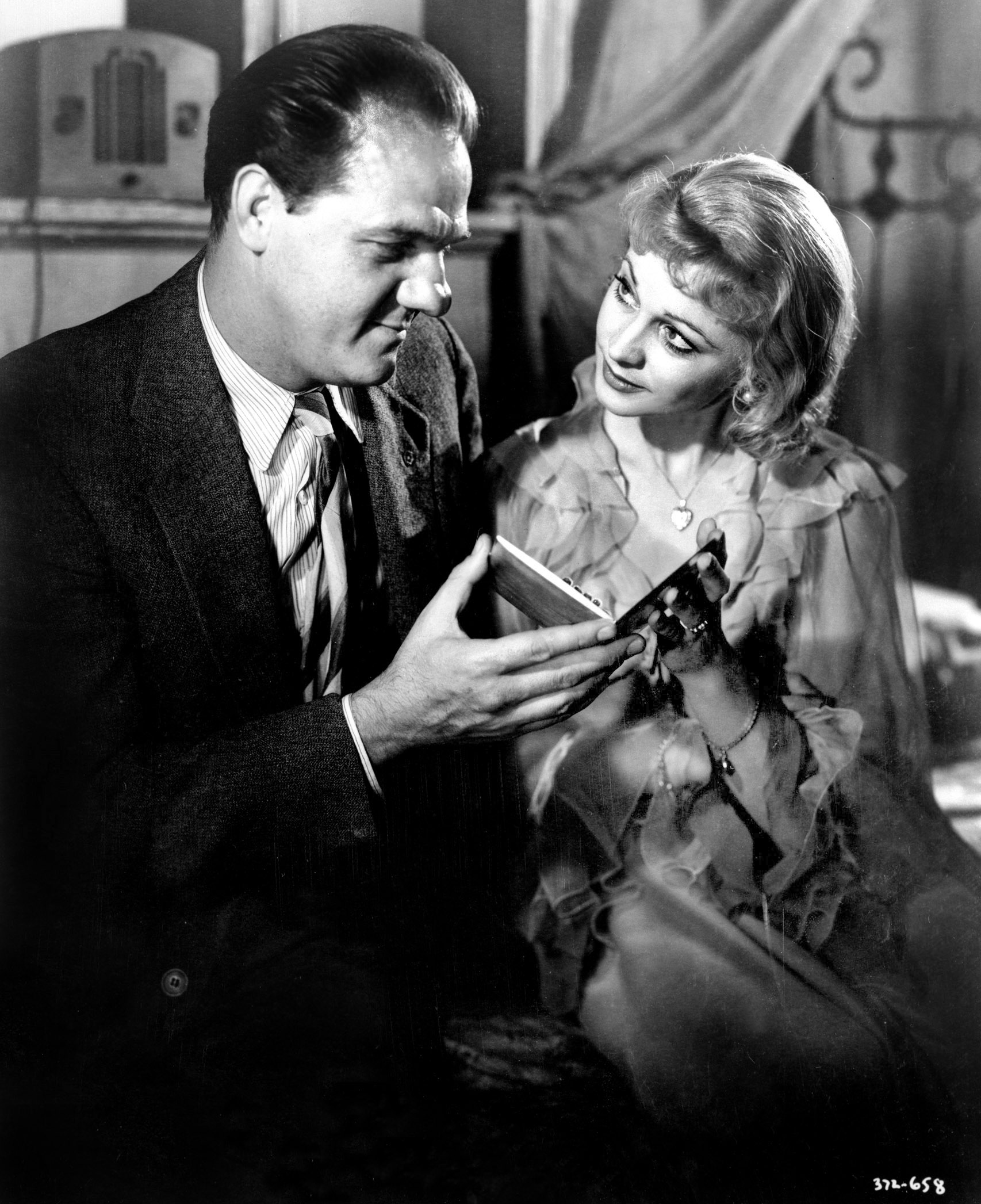
This Day in Theater History (George Kelly Reaches Career Peak With ‘Craig’s Wife')

Oct. 12, 1925—After years of developing his craft from vaudeville skits to full-length comedies, playwright-director George Kelly triumphed in the next stage of his evolution as a playwright-director with Craig’s Wife.

The drama opened at Broadway’s Morosco Theatre in the first of 360 performances, staged by Kelly himself. And, in what many observers believed was a consolation prize for being bypassed the prior year, Columbia University awarded him the highest prize in American theater, the Pulitzer Prize, midway through its run.

Coming on the heels of his prior Broadway success, the comedy The Show-Off, Kelly should have been able to look forward to additional adoring audiences. But, at age 38, he would never create another hit. When he died 50 years later, he was all but forgotten—a fate that largely continues to this day. (Many familiar with the life story of Grace Kelly know that she made her professional acting debut at age 19 in her uncle's satire, The Torch-Bearers.)

In a post from last spring, I wrote about the 1936 film adaptation of this domestic drama, starring Rosalind Russell. I intend to write yet another post, on the 1950 remake starring Joan Crawford, later this year.

But the play itself is little seen these days. Even a couple of other plays by Kelly, Philip Goes Forth and The Fatal Weakness, have been mounted in the late dozen years by the estimable Off-Broadway troupe The Mint Theater.

Why did Kelly fall off his high place in American theater?

*Audiences rejected his continued turn toward drama. Kelly’s next three plays, Daisy Mayme, Behold the Bridegroom, and Maggie the Magnificent, flopped. Even before the Great Depression ensued, audiences preferred his comedies.

*Changing times brought changing audience and critical tastes. Once Kelly returned to comedy in 1931 with Philip Goes Forth, theatergoers were more open to plays by the likes of Clifford Odets that addressed the multiple crises affecting the nation. Kelly decamped for remunerative but unsatisfying work in Hollywood as a screenwriter. When he returned to Broadway later in the Thirties and Forties, he continued to work in the vein of the character-driven, “well-made play” tradition, at a time when younger playwrights like Tennessee Williams and Arthur Miller were experimenting with different stage forms.

*His economic and social conservatism left him out of sync with the times. Kelly despised the New Deal and regarded the politically progressive Group Theater as faddish. A deeply religious Roman Catholic, he was similarly dismissive of psychology and the greater sexual frankness associated with Williams and William Inge.

*He had rigid views of how his plays should be staged. Kelly insisted not only that he direct his own plays but that actors interpret his lines exactly as he dictated them. This did not allow for much in the way of innovation or in allowing the introduction of collaborators who could approach his work with a fresh eye.

*In particular, “Craig’s Wife” is often regarded as misogynistic. The title character of Kelly’s most honored work made a fetish of her home, to such an extent that it destroyed her marriage and left her isolated at the play’s end. The 1936 film version introduced elements that would motivate her unrelenting materialism, but these are largely absent from the play itself.

*He had no interest whatsoever in promoting himself. It wasn’t only that Kelly felt that his work should speak for itself, but he desired to maintain his private life. Not only would there be no interviews during his career, but, with the destruction of nearly all his personal papers a few years before his death, no opportunity for a posthumous biography that might intrigue readers with previously guarded secrets. In the years since Kelly’s death in 1974, it has become increasingly believed that those “secrets” related to his sexual orientation. A lifelong bachelor, Kelly introduced William Eldon Weagley as his “valet,” even to his Philadelphia-based siblings, but their 55-year relationship strongly suggests that the playwright was gay.

Saturday, September 23, 2023

Quote of the Day (Edna St. Vincent Millay, with a Different Experience of Fall)

“In the fall of the year, in the fall of the year,
I walked the road beside my dear.
The rooks went up with a raucous trill.
I hear them still, in the fall of the year.
He laughed at all I dared to praise,
And broke my heart, in little ways.”—Pulitzer Prize-winning American poet and playwright Edna St. Vincent Millay (1892-1950), “The Spring and the Fall,” in The Harp-Weaver and Other Poems (1922)
 
A century ago this month, Edna St. Vincent Millay became the first woman to receive the Pulitzer Prize for Poetry. “The Spring and the Fall” was part of the collection that won her the honor.
 
This poem, which I came across in a school reader from 70 years ago, reminded me of why I have enjoyed Millay. Read in its entirety, it touches on the “ecstatic passion [and] skepticism of enduring love” that, New Yorker reviewer Maggie Doherty wrote in May 2022, represented the “great themes” of the lyric poet.

Over the last century, she has somewhat fallen out of favor with critics, despite Nancy Milford’s well-received 2001 biography, selections from the poet’s diaries published last year, and the heroic efforts of the Edna St. Vincent Millay Society to preserve Steepletop, her longtime home in Austerlitz, NY.
 
No matter. Millay may be one of those authors, like the novelist Thomas Wolfe, who survive, barely, on high school and college curricula, but continue to find readers somehow.

You can find many interesting posts on Millay on the blogosphere, but you might find especially thoughtful this February 2021 post from the Farnsworth Art Museum that feature Maine poets reading letters and poems that focus on Millay’s exploration of loss and renewal—as well as their own poems in response to the COVID-19 pandemic, personal loss, and the threat of global climate change. 

It’s a welcome reminder that, despite the intensely intimate nature of Millay’s early, best-known work, she became increasingly engaged with national and world issues as time went on.)

Tuesday, January 31, 2023

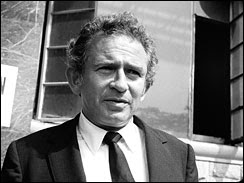
This Day in Literary History (Norman Mailer, Controversial 2-Time Pulitzer Winner, Born)

Jan. 31, 1923— Combative in war and peace alike, Norman Mailer, who won Pulitzer Prizes for two works that straddled fiction and nonfiction, The Armies of the Night and The Executioner’s Song, was born in Long Branch, NJ.

With his first novel, The Naked and the Dead, Mailer, along with Irwin Shaw (The Young Lions) and James Jones (From Here to Eternity), formed a trio of WWII veterans who wrote sprawling fictional accounts that attempted to capture both their personal experiences and the disruptive impact of the conflict on American servicemen.

The three measured themselves against Ernest Hemingway’s achievement with A Farewell to Arms. But most critics agree that, despite massive sales, none matched the impact of that landmark WWI novel.

At this point, Jones’ account is best remembered indirectly, through the 1953 Best Picture Oscar-winning film adapted from it. Shaw, producing novels commercially successful if uneven in quality, has found a secure niche for his many superb short stories.

Mailer’s case for literary posterity is trickier. His ambition and bravado were every bit as immense as his talent. He was never afraid to dare greatly, even if he risked looking foolish—which he did, repeatedly, and with all too few signs of having learned from his experiences.

David Denby’s December critical reappraisal of Mailer in The New Yorker argued that the novelist never really got over the war, in which his military service forced a never-ending feedback loop with an aggressive stance against the postwar world:

“The enormous success of The Naked and the Dead left Mailer uneasy. He had no idea how he was going to live up to it. Seemingly on top of the world at twenty-five, he feared many things. In his novel, the Harvard-educated liberal allows himself to be trapped by power. Mailer, in his own eyes, needed to escape the traps not only of his soft middle-class Jewish background but also of postwar America--the desire for ‘security,’ the endless consumerism, and what he took to be the country's humiliating spiritual mediocrity. It's as if he were still in the jungle, pulling artillery through the night. He had made himself into a novelist in the Pacific, and now he brought the war home, fighting on two fronts—against what he disliked in himself and against those menaces of the nineteen-fifties, ‘conformity’ and ‘adjustment.’ He acted out his rebellion in a continual performance with phallus, fists, booze, and sustained ass-in-chair writing sessions—a pressure at times noble, at times foolish, and certainly rough on other people as well as on himself. He became an egotist of a peculiarly self-afflicting sort, both calculating and spontaneous, provoking many blows, all of them deserved, all of them welcomed. For the author of The Naked and the Dead, the truce never arrived.”

At his best, in person, Mailer could make self-deprecating jabs at his considerable ego and awe listeners with jeweled phrases that came effortlessly to hand—as I witnessed firsthand when I covered his appearance in a seminar at Columbia University’s Writing Division in the School of the Arts back in February 1981.

*He thought while writing The Naked and the Dead that it was "the greatest book since War and Peace and maybe even better," but now admitted wryly that his idea of the book "was higher than it deserved.”

*He chuckled at Truman Capote’s claim that he relied on his photographic memory in lieu of taking notes for In Cold Blood: “I love Truman Capote in 82 ways, but he's a terrible liar. I know he doesn't remember conversations we've had two or three days ago."

*He had used point of view in his own work either as an obtrusive ego, "a burning type of light," or an invisible, disembodied "voice coming over the hill."

At the same time, Mailer pointed out a reason for both his remarkable productivity starting in the 1960s and his prodigal misuse of this creative energy: “I made three movies in the Sixties—directing, writing, and starring in them—and they all failed. I lost $300,000. I've been in debt ever since."

As Mailer was telling the writing students this, he was only months away from a supporting role in yet another movie: philandering architect and murder victim Stanford White, in Milos Forman’s adaptation of E.L. Doctorow’s Ragtime.

One can’t resist thinking that Mailer identified with the intersecting creativity, lust and violence in this figure at the heart of one of the most notorious scandals in early 20th-century America. If he had never equaled Hemingway’s feat of fashioning a virtually new writing style, he had Papa beat in the number of wives (six versus four) and children (nine versus three).

(Knowing the wink-wink style of so much of the Gilmore Girls TV series, I can’t help thinking a similar spirit was at play when it titled one episode, “Norman Mailer, I’m Pregnant!”)

Besides a scandalous private life, another major factor that may ultimately lower his critical reputation could be the baggy monsters of novels that he cranked out starting with The Executioner's Song: Ancient Evenings, Harlot’s Ghost, and Oswald’s Tale.

Over 30 years ago, while interviewing for a copyediting job at a magazine with a reputation for publishing high quality, I was told by a senior editor just how far my authority would extend: “You’ll have to keep in mind who you’re dealing with when you make suggestions in a manuscript. Listen: Norman Mailer will make more from a single article here than you will with your entire yearly salary.”

How many editors, even ones with considerably higher reputations than I would have had starting out, shied away from battling with Mailer? They could go mano-a-mano line by line, chapter by chapter with a manuscript, or they could watch him take his wares to someone else willing to let him write whatever tripe he liked. Neither alternative was appealing.

But with the novelist dead 15 years now, The Mailer Wars are beginning in earnest now.

On one side you have broadsides like this from “One-Way Street” blogger Richard Prouty, who, after Mailer’s death in 2007, predicted that his influence would be “nil” and saw “his only truly original creation” being “journalism mixed with self-aggrandizement, a combination…that can be described as literature as performance art.”

On the other side are defenders like English and film professor Phillip Sipiora, who calls Mailer “arguably the foremost public intellectual of the second half of the twentieth century,” and Denby, who writes that it would be “naïve to pretend that he was not a great American writer.”

My own initial instinct, given the sheer quantity of bad, even idiotic, work Mailer produced over nearly six decades in the public eye, is to lean closer to Prouty than Denby or Sipiora.

But it might be more accurate to see him as a kind of American literary counterpart to the actor Richard Burton, another creative figure who wasted his overwhelming talent in scandal and never-ending substandard projects meant to satisfy his craving for fame and money.

An unblinkered assessment would find that, like Burton, Mailer could, at moments, with his energy focused tightly on work at hand, rank with the very best of his contemporaries.

The Armies of the Night may have the best chance of any of his works of continuing to be read and re-read. It masterfully balances opposites: fiction and nonfiction, comedy (his own larger-than-life persona, enlarged even further through referring to himself in the third person) and the deepest seriousness (the stakes of a government not called to account for its mishandling of the Vietnam War), and the yawning, increasingly unbridgeable divide between the student protesters and the working-class soldiers and marshals facing off against them in front of the Pentagon—a harbinger of today’s “woke” left and Trump voters.

And there is the sheer exhilaration of Mailer's high style in passages like this:

“Arrayed against them as hard-core troops: an elite! the Freud-ridden embers of Marxism, good old American anxiety strata—the urban middle-class with their proliferated monumental adenoidal resentments, their secret slavish love for the oncoming hegemony of the computer and the suburb, yes, they and their children, by the sheer ironies, the sheer ineptitude, the kinks of history, were now being compressed into more and more militant stands, their resistance to the war some hopeless melange, somehow firmed, of Pacifism and closet Communism. And their children—on a freak-out from the suburbs to a love-in on the Pentagon wall.”

Saturday, November 19, 2022

Quote of the Day (Tennessee Williams, on the Human Heart)

“What is straight? A line can be straight, or a street, but the human heart, oh, no, it's curved like a road through mountains.” — Blanche DuBois to suitor Harold “Mitch” Mitchell in American playwright and fiction writer Tennessee Williams (1911-1983), A Streetcar Named Desire (1947)

The image accompanying this post comes from the 1951 film adaptation of the Pulitzer Prize-winning drama by Tennessee Williams, with Vivien Leigh as Blanche and Karl Malden as Mitch. Both won Oscars for their performances.


Saturday, October 31, 2020

Flashback, October 1920: Lewis’ ‘Main Street’ Satirizes Small-Town Life

When Harcourt, Brace & Company published the sixth novel by Sinclair Lewis in late October 1920, it hoped for sales of 25,000. But the novel’s reception by critics and readers exceeded even the publisher’s fondest expectations. Buoyed by widespread attention arising from outrage over its attack on small-town life, Main Street sold 180,000 copies within the first six months of 1921 and narrowly missed being awarded the Pulitzer Prize for Fiction.

The novel lifted Lewis—a janitor at Upton Sinclair’s utopian socialist community, Helicon Hall, in Englewood, NJ, 14 years before, and for the past five years author of five novels that, he said, were “dead before the ink was dry”—into the front ranks of American literature. It began a decade that represented his creative zenith, securing for him the Nobel Prize in Literature—the first time that an American had received this honor.

The qualities on display in Main Street—especially, a realistic depiction of everyday life backed by extensive research, and an uncanny “ear” for dialogue—became the hallmarks of Lewis’ style. But much of the attention accorded the novel derived from his willingness to attack a sacred cow—a tendency that made him a favorite of intellectuals and skeptics such as H.L. Mencken but also the bane of more tradition-bound figures such as Columbia University President Nicholas Murray Butler.

Since the founding of the republic, small-town/rural life had been regarded as an antidote to the multiple evils perceived in cities. In contrast, Lewis—who had loathed his childhood in Sauk Centre, Minn.—depicted fictional Gopher Prairie as a generator of vapidity and conformity. It is entirely too set complacent, provincial, even bigoted to be moved when Carol Kennicott, the idealistic young wife of the town doctor, decides to raise its cultural awareness. Gopher Prairie residents, he noted acidly, were:

“staggered to learn that a real tangible person, living in Minnesota, and married to their own flesh-and-blood relation, could apparently believe that divorce may not always be immoral; that illegitimate children do not bear any special and guaranteed form of curse; that there are ethical authorities outside of the Hebrew Bible; that men have drunk wine yet not died in the gutter; that the capitalistic system of distribution and the Baptist wedding-ceremony were not known in the Garden of Eden; that mushrooms are as edible as corn-beef hash; that the word ‘dude’ is no longer frequently used; that there are Ministers of the Gospel who accept evolution; that some persons of apparent intelligence and business ability do not always vote the Republican ticket straight; that it is not a universal custom to wear scratchy flannels next the skin in winter; that a violin is not inherently more immoral than a chapel organ; that some poets do not have long hair; and that Jews are not always peddlers or pants-makers.”

The three-judge panel to select the Pulitzer Prize for Fiction was so taken with Lewis’ devastating satire that they recommended him for the award. Butler’s reversal of that decision and present the award instead to The Age of Innocence by Edith Wharton was greeted with howls of protest (as was the panel’s decision two years later to overlook Lewis again in favor of Willa Cather’s One of Ours).

Contemporary critics are more likely than those of a century ago to praise Wharton’s anatomization of New York’s 1870s aristocracy: Feminist scholarship has opened many eyes to the precarious position of women years ago, and Wharton’s graceful prose style has worn better than Lewis’ blunter presentation.

In the end, much of this reappraisal is ironic: though the social circles examined by Lewis and Wharton could scarcely be more different, they both feature protagonists who, restlessly eyeing their dutiful but dull romantic partners, are easily maneuvered into compromise and defeat by their community. (Wharton herself felt that, in praising her book’s “wholesome” character, Butler had fundamentally her artistic purpose.)

Since the 2016 Presidential campaign, interest has peaked in a dystopian 1935 novel of Lewis’: It Can’t Happen Here.  Already, the novelist’s alcoholism was undermining his creative power. But, for one brief moment, the specter of European-style Fascism being imposed on the U.S. roused Lewis to something like a return to the creative form he enjoyed with Main Street.

Thursday, September 3, 2020

This Day in Media History (Marguerite Higgins, First Woman to Win Pulitzer for International Reporting, Born)

Sept. 3, 1920—Marguerite Higgins, who overcame the rampant sexism of her time and profession to become the first female winner of the Pulitzer Prize in International Reporting, was born in Hong Kong, in the Asia-Pacific Rim where she would establish much of her reputation.

In the Library of America anthology Reporting World War II, Higgins was the last by birth among the approximately 80 writers represented. A day shy of 25 when Japan formally surrendered, she reported on some of the major stories coming out of the latest six months of the European conflict: the refugee crisis and the liberation of the Buchenwald and Dachau concentration camps.

These would have been great scoops for any reporter. They were extraordinary for a recent graduate of the Columbia Graduate School of Journalism and a woman in an unrelieved, unapologetic masculine environment.

But it was in Asia—specifically, in Korea and Vietnam—where Higgins advanced closer to achieving her stated post-collegiate goal of becoming more famous than Dorothy Thompson, perhaps the most influential female journalist of the day. How she moved towards her goal has made her the subject of speculation and even controversy ever since.

Stationed in Tokyo as the New York Herald Tribune’s Bureau Chief, Higgins was ideally situated to cover the outbreak of hostilities in Korea in 1950. Despite her credentials as a war correspondent in WWII, she was initially ordered out of the country by Gen. Walton Walker.

Only a direct appeal to Douglas MacArthur, who had become Commander in Chief of the United Nations Command in Korea, enabled her to report on the conflict. She joined MacArthur's troops on the daring invasion at Inchon that, for a time, changed the direction of the war. In fact, she was the only female reporter to land on Red Beach (“a rough, vertical pile of stones”) with the men.

The Pulitzer Prize committee cited Higgins’ "enterprise and courage" in her coverage of the campaign, noting that she deserved "special consideration by reason of being a woman." But even as she was winning a new level of renown, she was stirring animosity among the largely male cadre of war correspondents that would dog her even beyond her early death.

Thousands of readers were amazed at how Higgins smashed through conventions that restricted women’s chances for achievement; a smaller cadre of colleagues were disgruntled at how they believed she ignored traditional ethical codes in pursuit of her laurels. It is still not easy sorting through these issues more than a half-century after her death.

While displaying outward bravado, Higgins was inwardly driven by an insecurity so unrelenting that it manifested itself as bravery so extreme that some males believe it shaded into foolhardiness. (Among them was Herald Tribune colleague Homer Bigart, who, like Gen. Walker, wanted her out of the country--leading not just to heightened competition between the two journalists but also to a closely watched feud between the two.) 

Such aggressiveness might be taken for granted among male reporters but were eyed critically when exhibited by females—and led to speculation that Higgins was not above stealing colleagues’ scoops.

Another serious charge against her arose from her good looks. Anyone glimpsing the stunning blonde in the attached photo might be forgiven for thinking that Betty Grable or even Marilyn Monroe had suddenly morphed into a top-flight journalist.

Those same people were often convinced that someone that glamorous could not have succeeded through her own efforts, but by sleeping with important men to further her career. 

In the process, these critics ignored factors that facilitated her work—knowledge of French and Chinese; extraordinary sympathy and compassion for young soldiers that sealed their bond with her; and willingness to endure extreme discomfort and danger.

(Ironically, when particularly obsessed with a story, Higgins was so oblivious to how she looked that she neglected to clean her face.)

Opinion remains divided to what extent those charges were true. But, if ruthlessness in pursuing scoops and straying outside traditional sexual norms are to be assessed, many if not most of Higgins’ male rivals would be as guilty as she.

A third charge against Higgins is more troubling: that, through personal associations and ideological preconceptions, she abandoned objectivity in her reporting on the early days of the Vietnam War. 

In 1963, younger reporters such as David Halberstam and Neil Sheehan were making plain in their dispatches that South Vietnamese forces were collapsing in the Mekong Delta. Based on her high-ranking military sources, Higgins disagreed strongly, airing their view that the Viet Cong were being progressively crushed. Any problem in Southeast Asia had resulted from journalists accepting at face value the notion that Buddhists in Vietnam were being oppressed by President Ngo Dinh Diem's "Catholic-dominated government":

"In the fall of 1963 Washington went into the business of hiring and firing governments,” Higgins charged in Our Vietnam Nightmare. “We not only forgot the one overriding priority, the war effort, but also, for the first time in history, conspired in the ouster of an ally in the middle of a common war against the Communist enemy, thus plunging the country and the war effort into a steep spiral of decline."

Higgins was ill-prepared to examine the reality of Vietnam dispassionately. In 1947, she had witnessed how Communists employed deception in taking over Poland. Friendly with both Jack Kennedy and Lyndon Johnson, she had adopted their view of the need to counter Soviet aggression. And, in 1952, she had married William Evens Hall, an Air Force Lt. General.

Vietnam undermined the credibility of a fellow journalist who accepted the government line, columnist Joe Alsop. Long before that happened, a tropical disease contracted in that country led to Higgins’ death in 1966 at age 45. She is one of a handful of war correspondents buried at Arlington National Cemetery.

During her lifetime, Americans became very familiar with the sight of Higgins—in well-attended lectures, her book covers (War in Korea: The Report of a Woman Combat Correspondent and News is a Singular Thing), and TV appearances (in 1956, the quiz show What’s My Line?). 

Though her celebrity has faded, her face and story have still attracted enough posthumous attention to land her on a postage stamp (in 2002) and have made her the best-known character in a little-noticed film about the early days of the Korean War last year, The Battle of Jangsari.

I have not yet seen that movie, but in a sense its most famous cast member, Megan Fox, should be able to identify intensely with Higgins. In both women’s cases, men were so besotted by their looks that they sometimes had a difficult time taking their drive and work seriously. Time will tell how well Fox counteracts that perception.

Wednesday, July 10, 2019

Quote of the Day (Philip Roth, on Legendary Early Pitcher ‘Spit Baal’)


“The trouble with Spit’s spitball was, simply, that nobody could hit it out of the infield, if they could even follow the erratic path of that dripping sphere so as to get any wood on it at all. Once it left Spit’s hand, carrying its cargo of liquid, not even he was sure exactly what turns and twists it would take before it landed with a wet thud in the catcher’s glove, or up against his padded body. As opposition mounted to this spitter that Baal had perfected — it was unnatural, unsanitary, uncouth, it was ruining the competitive element in the game — he only shrugged and said, ‘How am I supposed to do, let ’em hit it out themselves?’ On hot afternoons, when his salivary glands and his strong right arm were really working, Spit used to like to taunt the opposition a little by motioning for his outfielders to sit back on their haunches and take a chew, while he struck out — or, as he put it, ‘drownded’ — the other side. Angry batsmen would snarl at the ump, ‘Game called on accounta rain!’ after the first of Spit’s spitters did a somersault out in front of the plate and then sort of curled in for a strike at the knees. But Spit himself would pooh-pooh the whole thing, calling down to them, ‘Come on now, a little wet ain’t gonna hurt you.’ ‘It ain’t the wet, Baal, it’s the stringy stuff.  It turns a white man’s stomach.’ ‘Ah, ain’t nothin’ — just got me a little head cold. Get in there now, and if you cain’t swim, float.’”—Pulitzer Prize-winning American novelist Philip Roth (1933-2018), The Great American Novel (1973)

Monday, July 17, 2017

Quote of the Day (Dan Morgenstern, on John Coltrane’s Continuing Inspiration)


“[John] Coltrane — and especially the Coltrane of Giant Steps — continues to inspire countless budding saxophonists and players of other instruments as well. His sound, once so harshly criticized and even branded ugly, has become part and parcel of the sound of jazz, and his extensions of the possibilities of his instruments have been absorbed into the working vocabulary of the music, though some of the things he could do with a horn remain out of reach.”— Dan Morgenstern, Living with Jazz: A Reader (2004)

Saxophonist John Coltrane died at age 40 of liver cancer in Huntington, NY, on this day in 1967. If jazz might be said to have a Summa Theologica, it might be Coltrane’s A Love Supreme, his classic 1965 album on the glory of God. This gentle, introspective spirit had great reason to be thankful for God, as—having lost high-profile jobs with Duke Ellington and Miles Davis in the 1950s because of his heroin addiction—he had finally managed to pull himself together and get clean.

His spiritual journey was matched by his ceaseless musical experimentation as a sideman and, after 1960, a bandleader and composer in his own right. His layered “sheets of sound” technique has been described in many ways over the years, but perhaps never so memorably as by Coltrane himself: “I start in the middle of a sentence and move both directions at once.”

In 1995, Coltrane was honored by the United States Postal Service with a commemorative postage stamp. In 2007, the Pulitzer Prize Board awarded him a posthumous Special Citation for his “masterful improvisation, supreme musicianship and iconic centrality to the history of jazz.”