Showing posts with label American Theater. Show all posts

Monday, November 10, 2025

This Day in Theater History (Odets Makes Last Broadway Splash in ‘The Country Girl’)

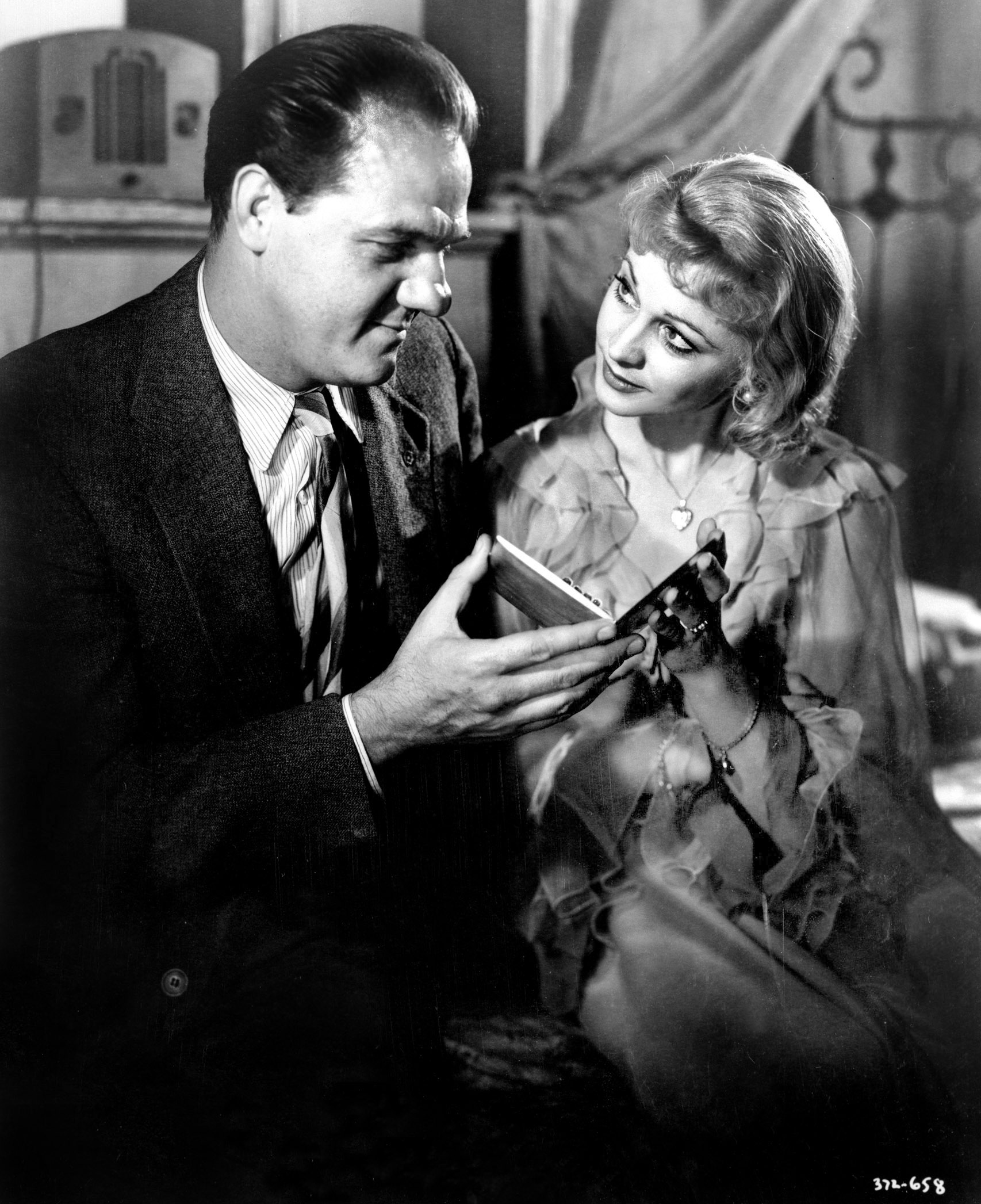
Nov. 10, 1950—Playwright Clifford Odets—onetime hope of the American theater, more recently scorned as a Hollywood sellout—landed his last Broadway success with The Country Girl, which premiered at the Lyceum Theatre.

Though the play ran for 235 performances—which, according to the economics for non-musicals of the time, was enough to secure a profit—it has not been revived as often as other works by major American playwrights, such as Eugene O’Neill, Tennessee Williams, Arthur Miller, and Edward Albee.

Most Americans, if they are aware at all of this drama of an alcoholic has-been reaching again for Broadway stardom, recognize it from the 1954 film starring Bing Crosby, William Holden, and, in her Oscar-winning role, Grace Kelly.

The original play, staged by Odets himself, possessed nothing like the box-office draws of the Paramount movie, though one principal had known renown, and two others would experience it.

*Holden’s role, as hotshot young director Bernie Dodd (with elements of Odets’ friend Elia Kazan), was played by Steven Hill, better known to posterity as the original team leader in the Mission: Impossible TV series and as D.A. Adam Schiff on the long-running Law and Order.

*Georgie Elgin, the alcoholic’s beleaguered wife played by Kelly, was originally performed by Uta Hagen, who won the Tony Award for the role—and would win another, a dozen years later, for Who’s Afraid of Virginia Woolf?, while earning additional recognition as an influential acting teacher.

*The principal actor that I knew the least about was Paul Kelly (no relation to Grace), who may have felt the greatest affinity with his character. Over two decades before, he had served 25 months for manslaughter for killing in a drunken fistfight the husband of his lover (and eventual wife). He had painstakingly rebuilt his career since then, but surely experienced the same regret as Frank Elgin’s over alcohol’s role in derailing his career.

The Country Girl was Odets’ second attempt in as many years to return to the heights of the New York theater scene he had occupied in the mid-to-late 1930s, as a founding member and most significant playwright associated with The Group Theatre.

When he came back to the Great White Way after a financially rewarding but creatively unsatisfactory stint as Hollywood screenwriter and director, he no longer exhibited the concerns with the working classes that animated him previously. But he continued to write about what he knew: in this case, actors.

In The Big Knife (1949), he had implicitly indicted himself for yielding to compromise and temptation—and explicitly assailed the studio system for blackmail and other thuggish methods for keeping stars in line. But even the presence of a real-life Hollywood star (and Odets friend) John Garfield hadn’t been enough to keep the production going beyond three months.

The Country Girl was different, depicting a struggle in which the pressures from without were nothing like the pressures from within faced by

The George Seaton screenplay departed somewhat from the play by making its fragile leading man into a musical-comedy star, making the part more comfortable for recording artist Crosby. But those encountering the drama after seeing the film may be surprised by other changes, both in casting and dialogue.

For one thing, Frank and Georgie have been married about 10 years before the play begins, and the drab existence resulting from his drinking has robbed her of vibrancy and youth. At 31 years old, Hagen would have been closer to the age that Odets had in mind than Grace Kelly, who sought to downplay her glamour and youth by wearing glasses, brown wool, shapeless dresses, and cardigan dresses.

In the years since, actresses who played Georgie have been considerably older than Grace Kelly or even Hagen, including, in TV productions, Shirley Knight (38) and Faye Dunaway (40), and, onstage, Jennifer Jones and Maureen Stapleton (both 47), Christine Lahti (34), and Frances McDormand (51).

Additionally, for whatever reason, Seaton chose not to use as much of what F. W. Dupee called Odets’ “sad and seedy poetry”—idiomatic speech like “tense as a bug in June,” or  “an ulcerated sponge for a brain.” And these days, some ethnic references (for instance, to Chinese laundry workers) are likely to be deleted for stage shows because of political incorrectness.

Odets would likely have responded with dismay to at least some of these changes. Producer Dwight Deere Wiman had postponed the play’s opening for the 1949-50 season to allow the playwright more time to tinker with the dialogue.

For all the time and energy Odets devoted to getting the play right, he still marred it with unnecessary touches—chiefly the complications arising from the Georgie-Dodd relationship, at first a clash of adversaries before becoming a love affair that takes them by surprise.

An anonymous reviewer from Time Magazine adeptly identified the “austere telling without a false word or a florid gesture” that would have sustained Odets’ “compact little tragedy of misunderstanding” between Georgie and Dodd over who was really responsible for Frank’s skittishness, depression and breakdown.

Even so, the drama represented more than what Howard Barnes of the New York Herald Tribune called “a fiercely affectionate anecdote about backstage doings."

There are reasons why, despite critics’ predictable carping that this and other Odets plays are “dated,” directors, dramaturges and actors have not utterly forgotten this drama.

Odets might not be writing anymore about the proletariat he sprang from, and the mechanics of staging a show may have changed (near-endless small “workshopping” instead of short, nerve-racking out-of-town tryouts). 

But theater professionals still know how well he showed the tension inherent in bringing an untried play to the stage, as well as the raging, crippling insecurity that so often dogs actors who depend on the public for approval that can never be enough.

Although the history of the American theater is filled with alcoholics, Odets may have been inspired by a relatively recent example: actress Laurette Taylor, who, after years on the bottle, pulled herself together long enough in 1944 by offering a career-defining performance in The Glass Menagerie

Outside of Eugene O’Neill, it’s hard to think of another play that limns so thoroughly the self-deception of alcoholics and the vortex into which they pull those closest to them.

In the remaining dozen years of Odets’ life, he would never repeat even the moderate success he enjoyed with The Country Wife, let alone enjoy the acclaim and hope generated by the half-dozen 1930s plays running from Awake and Sing to Golden Boy.

Long under FBI surveillance for his relatively brief Communist party membership in the 1930s, he was hauled in 1952 before the House Un-American Activities Committee.

 Responsible for raising two children (including a daughter with severe developmental disabilities) after the death of his estranged wife, he named names, albeit none that hadn’t been provided previously to the committee.

He took one more shot at Broadway with his retelling of Noah and the Flood, Flowering Peach.  But his relationship with producer Robert Whitehead was rockier than the one he had enjoyed with his friend Wiman, and any hope for greater attention to the play vanished when the advisory board for the Pulitzer overruled the jury’s selection of his drama and rewarded it instead to Williams’ Cat on a Hot Tin Roof.

Back in Hollywood, he masterfully rewrote Ernest Lehman’s initial screenplay for Sweet Smell of Success, but the film’s cult classic status did not come till after his death. 

In the hospital with fatal stomach cancer, he was serving as script supervisor for the short-lived (and even less remembered) anthology series, The Richard Boone Show, a vehicle unworthy of his talent.

But long before, he had already recognized the thin line between success and oblivion in The Country Girl.

Sunday, October 12, 2025

This Day in Theater History (George Kelly Reaches Career Peak With ‘Craig’s Wife')

Oct. 12, 1925—After years of developing his craft from vaudeville skits to full-length comedies, playwright-director George Kelly triumphed in the next stage of his evolution as a playwright-director with Craig’s Wife.

The drama opened at Broadway’s Morosco Theatre in the first of 360 performances, staged by Kelly himself. And, in what many observers believed was a consolation prize for being bypassed the prior year, Columbia University awarded him the highest prize in American theater, the Pulitzer Prize, midway through its run.

Coming on the heels of his prior Broadway success, the comedy The Show-Off, Kelly should have been able to look forward to additional adoring audiences. But, at age 38, he would never create another hit. When he died 50 years later, he was all but forgotten—a fate that largely continues to this day. (Many familiar with the life story of Grace Kelly know that she made her professional acting debut at age 19 in her uncle's satire, The Torch-Bearers.)

In a post from last spring, I wrote about the 1936 film adaptation of this domestic drama, starring Rosalind Russell. I intend to write yet another post, on the 1950 remake starring Joan Crawford, later this year.

But the play itself is little seen these days. Even a couple of other plays by Kelly, Philip Goes Forth and The Fatal Weakness, have been mounted in the late dozen years by the estimable Off-Broadway troupe The Mint Theater.

Why did Kelly fall off his high place in American theater?

*Audiences rejected his continued turn toward drama. Kelly’s next three plays, Daisy Mayme, Behold the Bridegroom, and Maggie the Magnificent, flopped. Even before the Great Depression ensued, audiences preferred his comedies.

*Changing times brought changing audience and critical tastes. Once Kelly returned to comedy in 1931 with Philip Goes Forth, theatergoers were more open to plays by the likes of Clifford Odets that addressed the multiple crises affecting the nation. Kelly decamped for remunerative but unsatisfying work in Hollywood as a screenwriter. When he returned to Broadway later in the Thirties and Forties, he continued to work in the vein of the character-driven, “well-made play” tradition, at a time when younger playwrights like Tennessee Williams and Arthur Miller were experimenting with different stage forms.

*His economic and social conservatism left him out of sync with the times. Kelly despised the New Deal and regarded the politically progressive Group Theater as faddish. A deeply religious Roman Catholic, he was similarly dismissive of psychology and the greater sexual frankness associated with Williams and William Inge.

*He had rigid views of how his plays should be staged. Kelly insisted not only that he direct his own plays but that actors interpret his lines exactly as he dictated them. This did not allow for much in the way of innovation or in allowing the introduction of collaborators who could approach his work with a fresh eye.

*In particular, “Craig’s Wife” is often regarded as misogynistic. The title character of Kelly’s most honored work made a fetish of her home, to such an extent that it destroyed her marriage and left her isolated at the play’s end. The 1936 film version introduced elements that would motivate her unrelenting materialism, but these are largely absent from the play itself.

*He had no interest whatsoever in promoting himself. It wasn’t only that Kelly felt that his work should speak for itself, but he desired to maintain his private life. Not only would there be no interviews during his career, but, with the destruction of nearly all his personal papers a few years before his death, no opportunity for a posthumous biography that might intrigue readers with previously guarded secrets. In the years since Kelly’s death in 1974, it has become increasingly believed that those “secrets” related to his sexual orientation. A lifelong bachelor, Kelly introduced William Eldon Weagley as his “valet,” even to his Philadelphia-based siblings, but their 55-year relationship strongly suggests that the playwright was gay.

Thursday, December 28, 2023

This Day in Theater History (Shaw’s ‘Saint Joan’ Hailed as Career Zenith)

Dec. 28, 1923—Even though critics had derided the most recent play of George Bernard Shaw as too verbose and long, the Anglo-Irish playwright’s new comedy-drama was in much the same vein: Saint Joan, which premiered at New York’s Garrick Theatre.

Instead of driving audiences away, however, the six-act (with epilogue), 3½ hour comedy-drama-historical epic about Joan of Arc proved to be a great success. It was acclaimed as the capstone of his nearly three-decade career as a dramatist, propelling him towards the Nobel Prize for Literature in 1925.

At the same time, this success boosted the faith of the playwright in—as well as the box-office take of— the most influential producing company of the 1920s and 1930s, the Theatre Guild, which became the major American sponsor of new work by not only Shaw but also emerging homegrown dramatists such as Eugene O’Neill, Philip Barry, Maxwell Anderson, Robert Sherwood, Sidney Howard, and William Saroyan.

The Guild—which pioneered the subscription plan as a means of assuring a constant stream of avid playgoers more disposed to experimental, challenging fare—had done well with Shaw's Heartbreak House in 1920. But with Back to Methusaleh, a five-play series that represented the closest the playwright came to science fiction, the company lost $20,000—a failure that Shaw attributed to the Guild's management rather than to himself.

In contrast, the Guild's board of directors was more enthusiastic about Saint Joan. But, as the play approached its premiere, the board became concerned that the same issues that plagued its predecessor would hinder the success of this new entry. 

More was riding on the American success of the dramatist whose wife playfully nicknamed "The Genius." The London production of Saint Joan, starring one of Shaw’s favorite actresses, Sybil Thorndike, ended up being delayed until March 1924, so the Guild’s staging became the de facto world premiere, and news about its effectiveness would be transmitted overseas.

As was his wont, Shaw conducted his business with the American theater from across the Atlantic Ocean. 

Despite the importance of America to Shaw’s long-term commercial viability (it represented his largest source of income from 1894 to his death in 1950), the playwright did not visit the nation until 1933, and in general regarded it, according to L. W. Conolly’s Bernard Shaw on the American Stage, with “a toxic mix of contempt and mockery."

Alhough Katharine Cornell, fast acquiring a reputation as one of the greatest American stage actresses, passed on this initial production, the Guild board of directors ended up delighted with the blue-eyed Brooklyn beauty who took on the title role: Winifred Lenihan, who made of it a career triumph.

First after the dress rehearsal, then again after opening night, the Guild noticed that some attendees, especially from the suburbs, were departing early. Their initial cables urged Shaw to cut some of the dialogue to reduce that, but they received no reply. 

Only after the company management prevailed on the 25-year-old Lenihan to send her own cable with a similar request did the playwright respond. They might not have wished they had sent all these messages when they saw Shaw's follow-up.

To Ms. Lenihan, the playwright’s cable was short and ironic: “THE GUILD IS SENDING ME TELEGRAMS IN YOUR NAME. PAY NO ATTENTION TO THEM.” The organization’s management must have winced at his longer, more lacerating letter to them: “You ought to be ashamed of yourselves for getting a young actress into trouble with an author like that…. You have wasted a whole morning for me with your panic-stricken nonsense, confound you!”

In the end, it didn’t matter: the public ignored reviewers who complained about the length by purchasing tickets. Despite his waspish transatlantic exchanges with the Theatre Guild's management, Shaw elected to stay with it as the principal American agent for his plays, with a total of 15 plays under its aegis.

Although Shaw wrote over 60 plays, Saint Joan ranks among his most popular, probably trailing only Pygmalion (which has the benefit of not only inspiring the musical My Fair Lady, but is also logistically easier to mount, with fewer characters and sets).

Over the centuries, Joan has provided fodder for a lengthy parade of novelists and dramatists, including William Shakespeare, Voltaire, Friedrich Schiller, Mark Twain, Bertolt Brecht, Jean Anouilh, and others. But it’s Shaw’s depiction that has captured the popular imagination the most.

In the early postwar period, Saint Joan exerted an unusual appeal for colonial audiences that, like France in Joan’s time, was feeling the stirrings of nationalism. 

Yet even then, in the McCarthy period, it was also seen as a broadside against intolerance, and more recently has appealed to those who sympathize with her plight at the hands of men who hope to squash what Shaw ironically termed “unwomanly and insufferable presumption.”

It is a curious fact of Joan of Arc’s posthumous appeal that two religious skeptics like Twain and Shaw could be so powerfully drawn to the story of this saint. Leave aside the odd contention, in Shaw’s preface to the play, that Joan was “one of the first Protestant martyrs.”

Remember instead: the recollection of Theatre Guild founder Lawrence Langner, in his 1963 memoir, GBS and the Lunatic, that Shaw attributed the enormous speed with which he wrote the play to Joan herself: “As I wrote, she guided my hand, and the words came tumbling out at such a speed that my pen rushed across the paper and I could barely write fast enough to put them down."

In 1934, Shaw predicted correctly, “It is quite likely that sixty years hence, every great English and American actress will have a shot at ‘Saint Joan,’ just as every great actor will have a shot at Hamlet.”

 Among those who have played Shaw’s version of the Maid of Orleans: Katharine Cornell (catching it on the rebound), Wendy Hiller, Zoe Atkins, Judi Dench, Uta Hagen, Joan Plowright, Lynn Redgrave, and Kim Stanley.

I myself have seen two productions: one at Manhattan's Paley Center for Media, a 1967 "Hallmark Hall of Fame" TV presentation starring Genevieve Bujold; the other a 2018 Manhattan Theatre Club performance with Condola Rashad in the title role. 

Both productions shortened the text—an eventuality that Shaw dourly predicted in the preface to the play, when he noted that "well intentioned but disastrous counsellors" would have their way "when I am no longer in control of the performing rights."

Sunday, February 19, 2023

This Day in Irish-American History (Playwright Philip Barry Scores 1st Broadway Hit With ‘You and I’)

Feb. 19, 1923— Starting a career that would see him become an integral part of the “Golden Age of American Theater,” Philip Barry achieved his first Broadway success with a comedy written for a college class that won him a prize—and enough money to assure he could make a living from the theater to marry the woman he loved.

You and I, premiering at the Belmont Theater in its first of 174 performances, launched the 26-year-old playwright on a quarter-century run as one of the leading lights of the Great White Way, with several of his plays—The Philadelphia Story, Holiday, and The Animal Kingdom—adapted into classic films.

Those works, like his first, were comedies of manners in which razor-sharp repartee was joined to piercing insights into the lives of the rich and well-born.

Barry also served as a key signpost of Irish-American success in the worlds of theater and literature. He made his Broadway debut the same year—and with more success—than F. Scott Fitzgerald would achieve with his play The Vegetable; a year after George Kelly enjoyed a long, profitable run with his comedy The Show-Off; and in the same decade that Eugene O’Neill steered American theater away from its former shallowness into more probing, psychologically oriented considerations of the human dilemma.

While the quartet were most consistently popular in the 1920s, the overturning of traditional norms during that time—and the subsequent collapse of the bubble prosperity with the Great Depression—led them to deeper, more pointed examinations of how personal conduct could survive under such an onslaught.

At that point, popular and critical regard for their work became harder to come by.

The unstable Fitzgerald became a casualty of this more negative reevaluation—and O’Neill would require superb posthumous productions of his last plays (The Iceman Cometh, Long Day’s Journey Into Night, and A Moon for the Misbegotten) to remind people of his greatness. Kelly, a member of the famous Philadelphia clan that also produced his brother John, an Olympic medalist and wealthy contractor, and niece Grace, lived with restraint and carefully managed his income.

The fickleness of success seemed far away for Barry when You and I packed the Belmont Theater. His play, colored by the anxiety of long-term failure, simultaneously celebrated a commitment to one’s muse and to one’s heart.

It was a triumph Barry knew intimately. He had followed his ambition to writing drama, even in the face of strong opposition from his brothers, who wanted him to take over the family’s stone-quarry business. He had followed his heart just as strongly, as hinted in his stage directions for the play’s ingenue, based largely on his fiancĂ©e and eventual wife, Ellen Semple—herself a talented artist:

She is about nineteen, slim, of medium height, with a decidedly pretty, high-bred face, lovely hair, lovely hands, soft, low-pitched voice  —whatever she may be saying. Heredity, careful upbringing, education and travel have combined to invest her with a poise far in advance of her years. She has attained the impossible—complete sophistication without the loss of bloom. Her self-confidence is an added charm —free, as it is, from any taint of youthful cocksureness.

The solid Broadway run of You and I also brought much-needed credibility to Barry’s Harvard drama instructor, George Pierce Baker. Barry had revised and renamed this play he had conceived of for Barry’s class, the “47 Workshop.”

By winning the prestigious Richard Herndon Prize for the comedy, the playwright was not only guaranteed a Broadway production, but also was able to vindicate the instructional methods of Baker.

Students in the latter’s class gained practical experience by mounting their plays on a makeshift stage far from the unforgiving eyes of New York critics. Many in the Harvard faculty had viewed Baker’s class with condescension and disdain.

But Barry’s success signaled that such a pedagogical approach could work in a real-world setting, and such other “47 Workshop” alumni as Sidney Howard, S.N. Behrman and Edward Sheldon effectively answered the naysayers, as I noted in this prior post on Baker.

You and I sprang from the urbane, witty side of Barry that not only captivated audiences but won him friends like artist Gerald Murphy, novelist John O’Hara, and Wall Street financier and Secretary of Defense James Forrestal. There was another side—less successful, more experimental and preoccupied with religious and ethical concerns—that came to the fore in later years.

But, in whichever vein he worked, Barry was a diligent craftsman on whom nothing was lost or wasted.

In 2018, You and I enjoyed its first New York revival in 95 years at the Off-Broadway Metropolitan Playhouse. COVID-19 and the social disruptions of the last few years have led to more change in the New York theater scene than I recall during my lifetime. 

But when all is said and done, I hope theater producers and directors will look at Barry with the same fresh eyes they are using to assess everything else with.

Saturday, November 19, 2022

Quote of the Day (Tennessee Williams, on the Human Heart)

“What is straight? A line can be straight, or a street, but the human heart, oh, no, it's curved like a road through mountains.” — Blanche DuBois to suitor Harold “Mitch” Mitchell in American playwright and fiction writer Tennessee Williams (1911-1983), A Streetcar Named Desire (1947)

The image accompanying this post comes from the 1951 film adaptation of the Pulitzer Prize-winning drama by Tennessee Williams, with Vivien Leigh as Blanche and Karl Malden as Mitch. Both won Oscars for their performances.


Sunday, February 28, 2021

Appreciations: Neil Simon’s ‘Prisoner of Second Avenue,’ on the Suddenly Redundant Male Worker

In his heyday, Neil Simon’s niche as Broadway’s king of comedy would have been secure if only for his nearly 50 produced plays. But his extraordinary run of hits over three decades made him the most wildly successful American playwright of the post-World War II era.

Over the last quarter-century, he slipped from that lofty perch. Attempted revivals of both his 1963 hit, Barefoot in the Park, and his more acclaimed Brighton Beach Memoirs foundered.

Mysteriously, whether through the punishing recent economics of mounting a straight play, the bad luck associated with individual productions (Plaza Suite, projected as a star vehicle for real-life couple Matthew Broderick and Sarah Jessica Parker, closed before it could open because of the COVID-19 lockdown), or even the altered tastes of comedy-conscious fans, this former Tony and Pulitzer Prize-winning playwright had become the forgotten man of American theater by his death 2½ years ago.

At first glance, the best prospects for his resuscitated reputation might lie with two of his more acclaimed later works, Lost in Yonkers or the more autobiographical “Eugene Trilogy” (Brighton Beach Memoirs, Biloxi Blues and Broadway Bound). But another, further back in his career, presents a vehicle more relevant to the COVID-19 era.

The Prisoner of Second Avenue, which premiered 50 years ago this coming November on Broadway, marked a notable step in the evolution of the playwright. In the 1960s, while alternating between comedies and musicals, he had stuck to a format marked by nonstop one-liners, incorporating the style he honed as a TV comedy writer for Your Show of Shows and The Phil Silvers Show.

But with a new decade came a growing seriousness, first evidenced in The Gingerbread Lady, about an alcoholic actress. The Prisoner of Second Avenue dug deeper into this new seriocomic vein, uniting Simon’s keener interest in the decay he increasingly glimpsed in New York City with the travails of a middle-aged male suddenly made redundant at the office. Imagine a somewhat more comic Death of a Salesman, but for the white-collar set.

The play was brought back to my attention several months ago when I saw the 1975 film adaptation starring Jack Lemmon and Anne Bancroft (pictured) as, respectively, advertising exec Mel Edison and his concerned wife Edna (assuming the roles played originally on Broadway by Peter Falk and Lee Grant).

When I viewed it on the big screen, it made no lingering impression. Indeed, how much could a teenager always told his life was ahead of him understand an angst-ridden urban professional suddenly aware that half his career, if not more, is over?

Mel’s dilemma registers far more forcefully now. Today, so-called “mature workers” face similar issues: adapting to an office environment and job market increasingly inimical to the middle-aged.

“I’m gonna be 47 years old in January,” Mel complains in the first scene. “Forty-seven! They could get two twenty-three-and-a-half-year-old kids for half my money.”

That fear turns out to be all too prescient. Mel ends up unemployed, as have countless real-life counterparts in the last half-century. Age discrimination remains common even though it had been banned under federal law only a few years before Prisoner of Second Avenue premiered. It may be the most blithely practiced and most persistent form of discrimination left.

Unemployment plunges Mel headlong towards a nervous breakdown. “I don’t know where or who I am any more,” he confesses desperately. “I’m disappearing, Edna. I don’t need analysts, I need Lost and Found.”

Suddenly feeling superfluous, he putters around the apartment for most of the day in his pajamas, isolated save for one dangerous connection to the outside world: talk radio. “How many people you think listen to the radio at ten o’clock in the morning?” he informs Edna. “Everybody is working. But I heard it. And as sure as we’re standing here in the middle of the room, there’s a plot going on in this country.”

When Simon wrote his comedy-drama, Rush Limbaugh and his imitators had not yet reached nationwide audiences, but New York had its own progenitor of right-wing talk radio with Bob Grant—unnamed here, but, as he was already attracting local notoriety at WMCA, the probable inspiration for the paranoid delusions to which Mel is now susceptible. Now “open to channels of information twenty-four hours a day,” Mel is suddenly a stronger believer in “the social-economical-and-political-plot-to-undermine-the-working-classes-in-this-country.”

Simon foresaw the all-encompassing, even contradictory nature of the right-wing conspiracy theories more and more common these last three decades: “It’s not just me they’re after, Edna. They're after you, they’re after our kids, my sisters, every one of our friends. They're after the cops, they’re after the hippies, they’re after the government, they’re after the anarchists, They're after women's lib, the fags, the blacks, the whole military complex.”

“Who?” a bewildered Edna asks. “You mentioned everybody. There's no one left.”

As loving, understanding and resilient as Edna is, she finds it difficult not to pulled into Mel’s emotional whirlpool. In this case, the claustrophobia of their East Side apartment becomes progressively corrosive, as the couple begins sniping at each other.

Even Edna’s attempt to sustain them through her work only exacerbates her husband’s worthlessness as a breadwinner. The relationship, while it guards against loneliness, also irritates because of its by now stifling closeness. More than a few couples, I suspect, will find it an accurate reflection of their own marital tensions.

I wonder now if Lemmon’s prior association with Simon screenplays (The Odd Couple and The Out of Towners) might have misled some critics as to the nature of this role. The earlier characters were first-class neurotics, with a superabundance of internal sensors rendering them helpless before outside stimuli.

In contrast, Mel’s distress is triggered by an outside convulsion—the sudden loss of his job. Three plays later, Simon would create one of the few bombs of his early career with God’s Favorite, a retelling of the Book of Job. But The Prisoner of Second Avenue seems like a practice run for that.

Parallel to Mel’s nervous breakdown is the one that New York, in those pre-fiscal crisis years, was also experiencing. The signs of outward disorder—a breakdown in services, rising crime and civic incivility—are reflected within the Edisons’ building, as they cope with a nonfunctioning elevator, no water, lack of air conditioning or heat, a robbery in their own apartment and obnoxious upstairs neighbors.

In the end, Mel’s initial roar against his crumbling universe (“If you’re a human being you reserve the right to complain, to protest”) is exposed in all its futility. Like the more famous bearer of his surname, he must “invent”—or, in this case, re-invent: a new form of living and acceptance of what lies outside his control.

The Prisoner of Second Avenue has not run on Broadway since it closed in 1973 after nearly 800 performances. To my knowledge, its most high-profile revival since then was not here in the U.S. but in Great Britain in 2010, in a West End production starring Jeff Goldblum and Mercedes Ruehl,

Somehow, this very dark dramedy deserves to be seen again. Though much of the action relies on physical interaction between Mel and Edna that may be difficult to perform under present circumstances, I hope that some creative director will try to reimagine it for the kind of Zoom production that so many theater companies are attempting these days. Audiences will be surprised at how well Neil Simon anticipated our own confinement—as well as how expertly he made us laugh and weep over disruption and isolation.

Saturday, October 10, 2020

Quote of the Day (Helen Hayes, on How a Star May Unbalance a Play)

“It is difficult, if not impossible, for a star to occupy an inch of space without bursting seams, cramping everyone else's style and unbalancing a play. No matter how self-effacing a famous player may be, he makes an entrance as a casual neighbor and the audience interest shifts to the house next door.”— Irish-American stage and film actress Helen Hayes (1900-1993), On Reflection: An Autobiography (1968)

Helen Hayes—born 120 years ago today in Washington, DC—was trying in the above quote to convey her unique burden as “The First Lady of American Theater.” But she may as well have been talking about the psychic (and often physical) demands of any star carrying a play.

Many stars stagger under this yoke. But Hayes was made of tougher stuff. She got her instinct for acting from her mother, Essie, an actress with a third-rate troupe (“the Liberty Belles”) who hoped her daughter could have the stage career she couldn’t, and her unpretentious manner from her father, a salesman for a wholesale meat company.

Until her mid-20s, Helen was under the control of producer George Tyler, who did not allow her to socialize with other actors. Her decision to join Actors Equity, rather than the producer-friendly union that Tyler favored, the Fidelity League, marked the moment of her real independence.

Not long after this, the sheltered actress met, at one of the parties she began to attend, Charles MacArthur, the playwright-screenwriter who co-wrote The Front Page and Twentieth Century. He presented her with a bag of peanuts, telling her, “I wish they were emeralds.”

It was the least likely of matches—the son of a Protestant minister, he had grown up to be a prankster, a tall, charming womanizer, and friend of the Algonquin Round Table wits (including Dorothy Parker, with whom he had an affair leading to an abortion); she, a devout Catholic, convent-educated, awkward when not on stage, and descended from a Famine emigrant. Despite all of their differences, they were devoted to each other, marrying in 1928.

They represented theatrical royalty, an image reinforced in her maturity, with her roles in Victoria Regina, playing the British monarch from teen to ailing old woman, and The White House, appearing as several First Ladies.

Still, she was frank in later life about the difficulties in her marriage, including the loss of their 17-year-old daughter, Mary, to polio and Charlie’s alcoholic spiral after that. (The couple adopted their other child: James MacArthur, “Dano” of TV’s original Hawaii Five-O.)

Helen and Charlie maintained a New York City apartment and the more palatial “Pretty Penny” (nicknamed, the most common story goes, because of its hefty price tag), in Nyack, in Rockland County. (Rosie O’Donnell briefly owned the Italianate-style estate after Hayes’ death.)

Hayes began her 70-year theater career at age six and made her Broadway debut when she was eight. At age 19, with a fistful of credits, her name was suggested to Eugene O’Neill for the principal female role in his autobiographical play The Straw. The playwright, not knowing who she was, was initially skeptical about her ability or insight into his tragedy—not realizing that her Irish background and her parents’ troubled marriage gave her more understanding of his characters than he could ever imagine.

In time, she demonstrated this affinity—and the playwright revised his opinion of her—after her appearance in a radio version of The Straw. Had he lived to see it, O’Neill would also have loved Hayes in the posthumous A Touch of the Poet, as well as her last stage triumph, the 1971 Kennedy Center production of Long Day’s Journey Into Night, when she played the thinly fictionalized version of O’Neill’s morphine-addicted mother. She died at age 92 on St. Patrick’s Day, 1993.

There is another Hayes quote from On Reflection that I am fond of. Decidedly unsentimental, it not only applies to her but also to the nature of creative achievement in general:

“This is the day of instant genius. Everybody starts at the top, and then has the problem of staying there. Lasting accomplishment, however, is still achieved through a long, slow climb and self-discipline.”

(The picture accompanying this post shows Hayes with Gary Cooper in the 1932 screen adaptation of Ernest Hemingway’s A Farewell to Arms. Despite the restrictions of censors, the two stars are better matched and more vibrant than the two who took over their roles in the 1957 remake, Jennifer Jones and Rock Hudson.)

Sunday, December 15, 2019

Theater Review: Tennessee Williams’ ‘The Rose Tattoo,’ From the Roundabout Theatre Co.


At first glance, Marisa Tomei would not seem to be an ideal candidate to play the lead in Tennessee Williams’ 1950 play, The Rose Tattoo. After all, the playwright’s state directions refer to Serafina Delle Rose as “plump,” and the movie star, God bless her, is not yet at the stage where her figure would charitably be labeled zaftig.

But in other ways, the role clung as well to her as the clothes her widowed seamstress character knitted in the Roundabout Theatre Co. revival that closed last week at the American Airlines Theater. Like Serafina, Ms. Tomei is of Sicilian ancestry (even if she is not a native of Italy), unlike the Broadway originator of the role, Irish-American Maureen Stapleton. She is closer to the character’s age, too, than Ms. Stapleton (54 vs. 24). Her screen roles demonstrate her comfort in expressing this character’s erotic instincts. Most of all, she can segue expertly between tragic and comic modes, as Williams could write when inclined (which, more often than not, he wasn’t).

In a sense, it is surprising that Broadway had not gotten around to reviving The Rose Tattoo much sooner. Not only did the role of Serafina win Anna Magnani a Best Actress Oscar in 1955, but the play itself won Williams a Best Play Tony Award.

Yet it took the Roundabout a while to stage it—as the company’s ninth production of a Williams play, it had to wait its turn behind The Milk Train Doesn’t Stop Here Anymore, written when the playwright was well into a creative and popular decline. It might not have made it this time either, except that Tomei and director Trip Cullman had proved that it remained a viable theatrical property with an acclaimed 2016 production at the Williamstown Theatre Festival.

The Rose Tattoo, you see, may well be Williams’ most optimistic play. In Serafina’s hope for a second chance of love after the sudden death of both her husband and the unborn child she lost in shock afterward, the playwright gave dramatic life to his own giddy new lease on life at the start of his relationship with Frank Merlo, who became his most significant and long-lasting romantic partner. 

The Italian-American Merlo also sparked the slightly unusual milieu of this play. Like much of his work, it is set in the South, but the drawling denizens of the region take a back seat this time to Sicilian immigrants on the Gulf Coast. The women of the community, headed by matriarch Assunta (played by an affecting Carolyn Mignini), form a kind of chorus of deep concern surrounding Serafina.

Even with ths different setting and character types, Williams could not help returning to his traditional themes of illusion and constraint-overpowering passion. But this time, a wounded female protagonist realizes that the first must be rejected and the second welcomed in order for her to go on living. 

Serafina’s desperate prayer to the statue of the Madonna she keeps—“Oh, Lady, give me a sign!”—is answered in the most  unlikely way: in the arrival on her doorstep of Alvaro Mangiacavallo (a fine Emun Elliott), whose argument with a traveling salesman has left him with torn clothes. 

Agreeing to mend his company jacket, Serafina lends him her late husband’s rose shirt. Glimpsing his finely muscled torso in the sunlight for the first time, she can’t help gasping, “My husband's body, with the head of a clown!”

This scene, as much as any other in the play, revealed Tomei’s frankly physical approach to the role. She fairly staggered back at the sight of Elliott’s torso, creating raucous laughter. She produced the same effect in another scene in which Serafina struggles none too successfully to wiggle out of her girdle.

The conflicts in Williams’ best-known plays are normally battlefields of the mind, but Serafina, a Sicilian earth mother, wages hers in the here and now: with neighbors who regard the widow as disorderly, with a prospective new lover she is trying to understand, and with a teenage daughter who provokes all her overprotective instincts.

Cullman masterfully used contributions from set designer Mark Wendland to create this community swayed as much by sensuality as by swaying coastal breezes. But his best work was drawing such a funny-sad, vibrant performance from Tomei. 

In the process, the actress not only made an implicit argument for allowing future theatergoers to see Serafina more often onstage, but also for her own return—hopefully soon—to Broadway.

Wednesday, May 2, 2018

Theater Review: Lindsey Ferrentino's ‘Andy and the Orphans,’ From the Roundabout Theatre Co.


The Roundabout Theatre Co. concluded an astonishing run of a new play last week. Even just in terms of the script, playwright Lindsey Ferrentino and director Scott Ellis collaborated on an often funny, more often moving road piece of theater in Amy and the Orphans

But they also spotlighted a different kind of non-traditional casting—a female and male actor afflicted with Down Syndrome, taking turns in the same key role—that, one hopes, will bring greater opportunity for this mentally challenged group.

Throughout most of the run at the Roundabout’s Laura Pels Theatre, Jamie Brewer ("American Horror Story") played Amy, an adult with Down Syndrome, in Amy and the Orphans. Toward the end of the run, however, understudy Edward Barbanell, during Wednesday and Saturday matinees, took over the role, with the production then titled Andy and the Orphans for these occasions.

It was at one of those Saturday matinees that I saw Barbanell. Brewer must have been very fine indeed in the role, because Barbanell excelled as an emotionally complicated character who would exact every bit of any actor’s skill.

The plot unites bicoastally and mentally separated siblings Jacob (Mark Blum) and Maggie (Debra Monk), brought back to their Long Island for the funeral of their father (which itself had followed closely on the death of their mother). 

Before putting their father to rest, they must break the news to their younger sibling Andy, whom they will transport from his group home, “Caring Communities," for the services. Matters become even more complicated when they are joined by Andy’s pregnant legal guardian, Kathy (Vanessa Aspillaga), with wisecracks about her own situations and with pointed reminders that she is far more in touch with the daily needs of their neglected brother than they are.

Flashbacks also depict the now-deceased parents, Bobby (Josh McDermitt, “The Walking Dead”) and Sarah (Diane Davis), as they weigh what to do about infant Andy. Their decision—to commit him to Willowbrook, a New York school for the mentally disabled—left many area residents of a certain age (including this viewer) in the audience with searing memories of headlines about a now-notorious institution.

Although Blum, Monk, and Aspillaga were frequently amusing, McDermitt and Davis were consistently searing as their husband and wife characters went back and forth on a decision that would not only affect the course of their own relationship but the lives of their children.

Roundabout mainstay Scott Ellis kept the play moving swiftly through its 90 minutes without intermission.

The play’s Amy was based on the playwright’s real-life adult Amy, who had the misfortune to live “when medical professionals told my grandparents they had just given birth to a 'Mongolian idiot' who would never learn to read or write.

In the post-show “talkback” with the audience, Barbanell related how he made his case for taking on the role by reciting the “To be or not to be” soliloquy from Hamlet. Natural preparation, it seems to be, with “To be or not to be” also being about how—even if—to endure a world that seems stacked against you at every turn, as his Andy is in the play.

The Laura Pels Theatre has served as a launching pad over the last several years for several new small-scale, but worthy productions by fledging playwrights, such as Meghan Kennedy’s Napoli, Brooklyn, Anna Ziegler’s The Last Match, Mike Bartlett’s Love, Love, Love. Steven Levenson’s If I Forget, and Joshua Harmon’s Bad Jews. Andy (or Amy) and the Orphans expands on that tradition, bringing to the surface a problem from America’s past in its mistreatment of its most vulnerable citizens.