Showing posts with label Tennessee Williams. Show all posts

Saturday, November 19, 2022

Quote of the Day (Tennessee Williams, on the Human Heart)

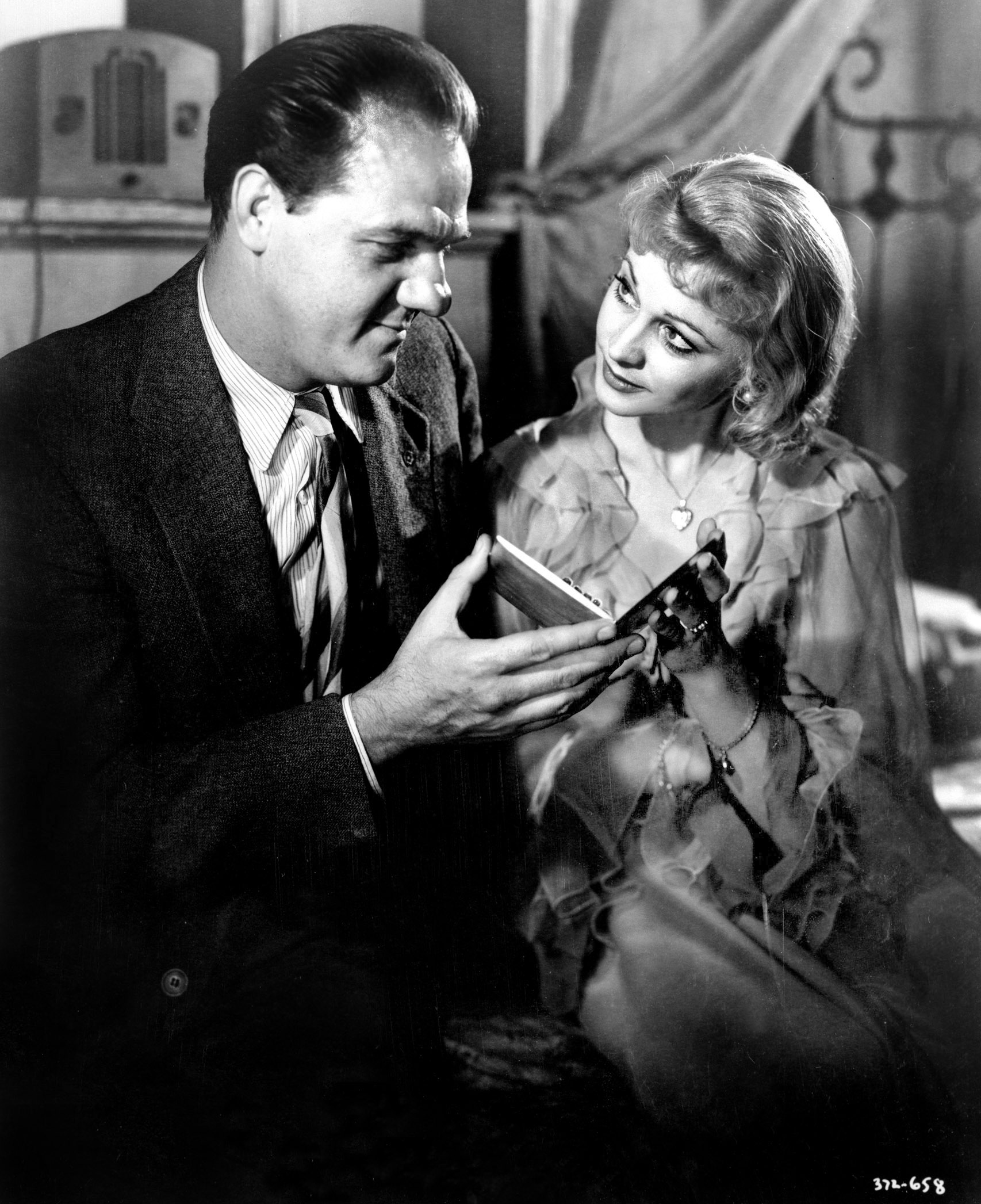
“What is straight? A line can be straight, or a street, but the human heart, oh, no, it's curved like a road through mountains.” — Blanche DuBois to suitor Harold “Mitch” Mitchell in American playwright and fiction writer Tennessee Williams (1911-1983), A Streetcar Named Desire (1947)

The image accompanying this post comes from the 1951 film adaptation of the Pulitzer Prize-winning drama by Tennessee Williams, with Vivien Leigh as Blanche and Karl Malden as Mitch. Both won Oscars for their performances.


Sunday, December 15, 2019

Theater Review: Tennessee Williams’ ‘The Rose Tattoo,’ From the Roundabout Theatre Co.


At first glance, Marisa Tomei would not seem to be an ideal candidate to play the lead in Tennessee Williams’ 1950 play, The Rose Tattoo. After all, the playwright’s state directions refer to Serafina Delle Rose as “plump,” and the movie star, God bless her, is not yet at the stage where her figure would charitably be labeled zaftig.

But in other ways, the role clung as well to her as the clothes her widowed seamstress character knitted in the Roundabout Theatre Co. revival that closed last week at the American Airlines Theater. Like Serafina, Ms. Tomei is of Sicilian ancestry (even if she is not a native of Italy), unlike the Broadway originator of the role, Irish-American Maureen Stapleton. She is closer to the character’s age, too, than Ms. Stapleton (54 vs. 24). Her screen roles demonstrate her comfort in expressing this character’s erotic instincts. Most of all, she can segue expertly between tragic and comic modes, as Williams could write when inclined (which, more often than not, he wasn’t).

In a sense, it is surprising that Broadway had not gotten around to reviving The Rose Tattoo much sooner. Not only did the role of Serafina win Anna Magnani a Best Actress Oscar in 1955, but the play itself won Williams a Best Play Tony Award.

Yet it took the Roundabout a while to stage it—as the company’s ninth production of a Williams play, it had to wait its turn behind The Milk Train Doesn’t Stop Here Anymore, written when the playwright was well into a creative and popular decline. It might not have made it this time either, except that Tomei and director Trip Cullman had proved that it remained a viable theatrical property with an acclaimed 2016 production at the Williamstown Theatre Festival.

The Rose Tattoo, you see, may well be Williams’ most optimistic play. In Serafina’s hope for a second chance of love after the sudden death of both her husband and the unborn child she lost in shock afterward, the playwright gave dramatic life to his own giddy new lease on life at the start of his relationship with Frank Merlo, who became his most significant and long-lasting romantic partner. 

The Italian-American Merlo also sparked the slightly unusual milieu of this play. Like much of his work, it is set in the South, but the drawling denizens of the region take a back seat this time to Sicilian immigrants on the Gulf Coast. The women of the community, headed by matriarch Assunta (played by an affecting Carolyn Mignini), form a kind of chorus of deep concern surrounding Serafina.

Even with ths different setting and character types, Williams could not help returning to his traditional themes of illusion and constraint-overpowering passion. But this time, a wounded female protagonist realizes that the first must be rejected and the second welcomed in order for her to go on living. 

Serafina’s desperate prayer to the statue of the Madonna she keeps—“Oh, Lady, give me a sign!”—is answered in the most  unlikely way: in the arrival on her doorstep of Alvaro Mangiacavallo (a fine Emun Elliott), whose argument with a traveling salesman has left him with torn clothes. 

Agreeing to mend his company jacket, Serafina lends him her late husband’s rose shirt. Glimpsing his finely muscled torso in the sunlight for the first time, she can’t help gasping, “My husband's body, with the head of a clown!”

This scene, as much as any other in the play, revealed Tomei’s frankly physical approach to the role. She fairly staggered back at the sight of Elliott’s torso, creating raucous laughter. She produced the same effect in another scene in which Serafina struggles none too successfully to wiggle out of her girdle.

The conflicts in Williams’ best-known plays are normally battlefields of the mind, but Serafina, a Sicilian earth mother, wages hers in the here and now: with neighbors who regard the widow as disorderly, with a prospective new lover she is trying to understand, and with a teenage daughter who provokes all her overprotective instincts.

Cullman masterfully used contributions from set designer Mark Wendland to create this community swayed as much by sensuality as by swaying coastal breezes. But his best work was drawing such a funny-sad, vibrant performance from Tomei. 

In the process, the actress not only made an implicit argument for allowing future theatergoers to see Serafina more often onstage, but also for her own return—hopefully soon—to Broadway.
Monday, December 9, 2019

Quote of the Day (Jean Shepherd, on Real-Life vs. Theatrical Marital Strife)


“Real-life man and wife, mother and father battles rarely even remotely resemble the Theatrical or Fictional version of the Struggle between the Sexes. Homes have been wracked by strife and dissension because of a basic difference of opinion over where to go on a vacation, or what kind of car to buy, or a toaster that made funny noises, or a sister-in-law’s false teeth, not to mention who is going to take out the garbage. And why.

“In all my experience I have never known homes that had the kind of fights that appear in plays by Edward Albee and Tennessee Williams. It would never have occurred to my father to bellow dramatically in the living room, after twenty-seven Scotches: ‘You bitch! You’re not going to emasculate me!’

“The Old Man would not have even known what the word ‘emasculate’ meant, much less figure that that’s what my mother was up to.”—American humorist, radio and TV personality, and writer and actor Jean Shepherd (1921-1999), “My Old Man and the Lascivious Special Award That Heralded the Birth of Pop Art,” in In God We Trust: All Others Pay Cash (1966)

Saturday, February 28, 2015

Tuesday, November 5, 2013

Quote of the Day (Laurence Olivier, on Vivien Leigh)


“I started to rehearse Streetcar on 29 August 1949. I think I can say that I was helpful to Vivien’s performance of Blanche; I hit on the practical notion that as by changing one feature one can create a whole new face, so by the alteration of one major characteristic, not hitherto associated with you, you can become another person with a different personality. I noticed at the first rehearsals, by the reactions among the company, that Vivien's unexpected, much deeper, much rougher voice had impressed them. I watched, fascinated, the strange new person that grew from this one dominant change of key. I thought, if her critics had one grain of fairness, they will give her credit for being an actress and not go on forever letting their judgment be distorted by her great beauty and Hollywood stardom. As it turned out, they were not so bad as usual, but clearly reluctant in their approval. Her colleagues and the public were unanimously eulogistic in their praises.”—Laurence Olivier, describing directing wife Vivien Leigh in a London production of A Streetcar Named Desire, in Confessions of an Actor: An Autobiography (1982)

This passage speaks volumes about the relationship between Sir Laurence Olivier and the second and most famous of his three wives, Vivien Leigh, born on this date 100 years ago in India. You see the loving protectiveness that sustained him through two decades of marriage to a woman he correctly described to later lover Sarah Miles as “a manic depressive, schizophrenic, nymphomaniac”; admiration for a fellow actor’s skill; an emphasis on how external characteristics, rather than the dredging up of personal experience, informs a role; and, perhaps, at least some competiveness between the two (he was “helpful” to the performance of an actress who, he also told Miles, “wasn’t good enough in the theatre [to be designated by the queen as ‘Dame’]. She would never even bother turning up for her voice production classes.”).

Streetcar came halfway through one of the most storied—and sad—marriages in film history. (For the denouement, see my prior post on the making of The Prince and the Showgirl, set against the background of their crumbling relationship.)

The “Hollywood stardom” to which Olivier referred came to Leigh as a result, of course, of Gone With the Wind. She wasn’t exactly right for the role of the Southern belle to beat all Southern belles (the novel’s first sentence, after all, is, “Scarlett O'Hara was not beautiful, but men seldom realized it when caught by her charm as the Tarleton twins were"). But with her kind of looks onscreen (in the words of friend Jesse L. Lasky Jr., “hair stirred by the breeze, eyes like fire opals beneath the circle of her wide-brimmed black hat”), who would dare quibble? So she won the role, after the most publicized talent search in movie history, along with her first Oscar.

The dominant characteristic of Scarlett is her indomitability in the face of catastrophes that crush nearly everyone else near and dear to her. Leigh made only nine more feature films after Gone With the Wind and, with the exception of the younger, spirited half of Caesar and Cleopatra (1945), none of the roles reflect Scarlett’s strength.

Her London triumph as Blanche DuBois in A Streetcar Named Desire, along with her central part in the greatest Hollywood blockbuster of them all in GWTW, gave her the leverage to win the role in the film adaptation from the actress who originated Blanche on Broadway, Jessica Tandy, and to take home her second Oscar in 1951. 

But this film, like others in these years, mirrored her offscreen stormy love life and fragile mental condition. (Like Heath Ledger’s Oscar-winning stint as the Joker in The Dark Knight, it raises the issue of how far an actor with mental-health issues can go in exploring a dark role.)

The role of Blanche--fearful of losing youth and beauty--has to be among the most harrowing an actress can play. Ten years later, another Tennessee Williams property would expose, even more pitilessly, Leigh’s insecurity: The Roman Spring of Mrs. Stone, about an aging actress who takes up with a young Italian gigolo.(Again, art seemed to mirror life: Leigh had an affair with her miscast co-star: Warren Beatty, already establishing a reputation as a lothario.)

A couple of years later, Miles, who had some unhappy experiences with Leigh during the shooting of the film, met the actress again. It soon became apparent that Leigh did not have a clue about her misbehavior to the younger woman, and she apologized. At that point, Miles notes with pity, in a recent article in The Daily Mail, she glimpsed a “ravishing beauty now ravaged by life.”

Friday, May 3, 2013

This Day in Theater History (William Inge, Pulitzer-Winning Dramatist, Born)


May 3, 1913—William Inge was born in Independence, Kansas, the youngest of five children in a family that would give rise to his prize-winning plays and screenplays involving repression, marital incompatibility, and quiet desperation in the Midwest.

As I entered my teenage years, I embarked on a spree of reading (not attending—back then, I was in no position to pay for this obsession) plays. I became aware that Inge was considered, along with Tennessee Williams and Arthur Miller, part of a great triumvirate of postwar American dramatists. It came as a shock, then, when I heard the news in 1973 that he had taken his own life.

It had seemed so different in the spring of 1962, when the playwright had seen his four consecutive Broadway successes of the Fifties—Come Back, Little Sheba, Picnic, Bus Stop, and Dark at the Top of the Stairs—adapted into equally notable films, and an original screenplay, for Splendor in the Grass, had netted him an Oscar to go with the Pulitzer he had achieved for Picnic.

Since then, it has become all too plain to me why Inge was driven to despair a decade later: the popular and critical failure of his more recent plays; an inability to chart a new direction as a novelist; his homosexual orientation, at a time when there was much less acceptance of it; and alcoholism.(When it premiered in 1950, Come Back, Little Sheba was one of the first Broadway plays to deal with the disease so extensively and searingly.)

What I still don’t understand, though, is the continuing slippage of the reputation, and even memory, of his plays. Rest assured that the celebration of the centennial of Inge’s birth will be decidedly less widespread than that a few years ago for Williams (who, incidentally, championed his work as a neophyte), or even for Terrence Rattigan, who, though a Briton, paralleled Inge in his rise and fall.

It doesn’t have to be this way. Like Inge, Williams and Miller suffered through critical neglect in the 1960s. The reputations of the latter two, however, revived, even if what they wrote in their remaining years never really equaled what they produced at their youthful peaks.

In the last three decades, the frankness with which Williams addressed homosexuality has been more generally accepted. Even plays written during his decline, such as The Milk Train Doesn’t Stop Here Anymore, have been staged once again, now seen as a continuation of his general themes. As for Miller, continuing relevance has been found in Death of a Salesman (particularly during the recent economic malaise) and The Crucible (the guilt-by-association theme was less remarked upon in the late Nineties than the middle-aged protagonist’s public shaming as a result of involvement with a Lewinsky-like younger woman). 

In his history of the Broadway drama in the Forties and Fifties, All That Glittered, Ethan Mordden offered up one means by which Inge's most autobiographical play, Dark at the Top of the Stairs, might have, along with Patrick Dennis' considerably more lighthearted Auntie Mame,  continuing meaning for our time: the message that "the unconventional family cell might succeed and the conventional one fail."

It has been said that Inge never really got beyond one or two themes, but how many writers really do? Inge might have tried to get away from his small town—first as a drama and music critic in St. Louis, then as a playwright and screenwriter in New York—but he came to realize that his best material lay back in the heartland—a realization that had also struck the novelist Willa Cather several decades before, under similar circumstances.

The Roundabout Theatre Co. mounted a fine revival of Picnic earlier this year (see my review here), and Come Back, Little Sheba was restaged several years ago with S. Epatha Merkerson of Law and Order in the role that Shirley Booth played so magnificently on stage and screen. But if Inge's reputation is to undergo a serious reevaluation, he will, once again, have to attract continued attention of top-notch actors and directors ready to rediscover him, as Jason Robards and Jose Quintero did with Eugene O’Neill starting with their reworking of The Iceman Cometh--and the way Inge himself attracted talents such as directors Elia Kazan and Joshua Logan, and actress Kim Stanley (who gave a career-making performance as the tomboy kid sister in Picnic).