Monday, January 31, 2022

TV Quote of the Day (‘WKRP in Cincinnati,’ As Johnny Caravella Morphs Into ‘Dr. Johnny Fever’)

[Johnny Caravella, a much-travelled deejay, fired in a prior radio gig for using the word “booger” on air, has just been told by new station manager Andy Travis that the new format change to rock ‘n’ roll means he won’t have to play the Hallelujah Tabernacle Choir’s cover of "You're Having My Baby" anymore.]

Johnny Caravella [played by Howard Hesseman] [about changing the format of the station]: “Ah, listen, you, you do mean now?”

Andy Travis [played by Gary Sandy] [as he leaves the control booth]: “Yes. And... you can say ‘booger’ if you want to.”

Johnny [gleefully flinging an old record off a turntable]: “Well, it's good-bye to the elevator music!”

[Johnny laughs as he carefully places a different record on the turntable]

Johnny [with a sinister grin slowly emerging on his face]: “Do it!”

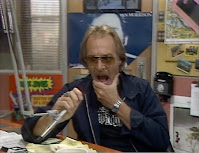
Johnny [making the needles scratching the record sound effect, as he begins to speak on the air excitedly]: “All right, Cincinnati, it is time for this town to get down! Now, you got Johnny...Dr. Johnny Fever, and I am burnin' up in here! Whoo! Whoo! We all in critical condition, babies, but you can tell me where it hurts, because I got the healing prescription here from the big 'KRP musical medicine cabinet. Now I am talking about your 50,000-watt intensive care unit, babies! So just sit right down, relax, open your ears real wide and say, ‘Give it to me straight, Doctor, I can take it!’"

[Johnny starts Ted Nugent's "Queen of the Forest" on the record, flails his arms in the air in excitement, then sits in his chair grabbing the mic.]

Johnny [putting on his sunglasses]: “I almost forgot, fellow babies: ‘booger!’"— WKRP in Cincinnati, Season 1, Episode 1, “Pilot: Part 1,” original air date Sept. 18, 1978, teleplay by Hugh Wilson, directed by Jay Sandrich

The four-year run of the fine sitcom WKRP in Cincinnati covered exactly my time as an undergrad. No matter how busy I got, I always tried to make room in my schedule for the show.

Although the kind of workplace ensemble comedy that became so common in the decade after the premiere of The Mary Tyler Moore Show, WKRP seemed to reach its zany heights with its most extreme character, Dr. Johnny Fever. I felt particularly sad, then, when I read that the man who brought him to life, Howard Hesseman, had passed away this weekend.

Hesseman would have similar moderately long stints over the following decade—in the final season of One Day at a Time, as Ann Romano’s second husband, and Head of the Class, as a teacher of exceptional students. But he made his biggest impact with WKRP, perhaps because, back in the day, he was familiar with Johnny’s lifestyle.

None of that is meant to deny Hesseman’s very real talent as a versatile character actor, demonstrated in over 50 years of TV credits (starting with a distinct contrast with Dr. Johnny: a hot dog vendor in an auto show, in the final season of The Andy Griffith Show.)

Sunday, January 30, 2022

Spiritual Quote of the Day (St. Paul to the Philippians, on Being ‘United in Heart’)

“Brothers and sisters:
If there is any encouragement in Christ,
any solace in love,
any participation in the Spirit,
any compassion and mercy,
complete my joy by being of the same mind, with the same love,
united in heart, thinking one thing.
Do nothing out of selfishness or out of vainglory;
rather, humbly regard others as more important than yourselves,
each looking out not for his own interests,
but also for those of others.”—Philippians 2:1-4
 
The image of St. Paul accompanying this post was painted by the Spanish Renaissance painter El Greco (1541-1614).

Saturday, January 29, 2022

Quote of the Day (Andi Zeisler, on ‘The Dangerous Friend’)

“When you’re young, the dangerous friend urges you to shoplift, strands you in the bad part of town when you have an argument, dog-ears the good parts of Forever and leaves it in your room where your mom is sure to spy it. She may be the person who first gets you drunk or engineers the loss of your virginity to some guy she knows. But the dangerous friend isn’t dangerous because she’s daring, or precocious, or even reckless. She’s dangerous because she makes you trust her against all logical judgment, makes you want to please her even if your own happiness is compromised, and imprints herself on your mind with disconcerting speed and force." — Writer, editor, and cultural critic Andi Zeisler, “Breaking Up with Smitty,” originally from the anthology Secrets and Confidences: The Complicated Truth About Women’s Friendships (2004), edited by Karen Eng, reprinted in The Utne Reader, July-August 2005

Ms. Zeisler is talking about a particular kind of “dangerous friend”—the dangerous female friend (DFF), to be exact. There’s some overlap with the dangerous male friend—the sort who not only gets you drunk, but gets behind the wheel of a car repeatedly, drunk and/or high, simultaneously risking your life and his.

Guys can probably list counterparts to Ms. Zeisler’s list based on male friends of their acquaintance. With my pronounced aversion to risk, my experience with the sort is extremely limited. I’d have to point to Rob Lowe in Bad Influence or something like him on the masculine side of the line.

Many women, I suspect, have come across the type of DFF that Ms. Zeisler is referencing. To use the more common labels she cites, “drama queen,” “pain in the ass,” “narcissistically disordered personality,” “high maintenance.”

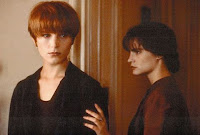
Then, on different ends of the evolutionary and endearment scales, there are the “hot mess” (a term only starting to gain wide currency around the time of this article) and “psychotic friend.” An example of the second kind can be found in the image accompanying this post, from the 1992 thriller Single White Female, with Bridget Fonda as the innocent and Jennifer Jason Leigh as said psycho.

I wonder how the DFF is faring psychologically these days in the COVID-19 era? On second thought, I thought. Her fate is surely both pitiful and terrifying for those in her orbit to experience.

Friday, January 28, 2022

Joke of the Day (Andrew Tarvin, on Those Who Are Happy and Those Who Are Not)

“Forty-seven percent of Americans struggle to stay happy. Of course, it’s even worse in Disney World, where statistically only 1 out of 7 dwarfs is Happy.”—Computer scientist-turned-standup comic Andrew Tarvin quoted in “Works Like a Charm,” Crain’s New York Business, July 10, 2017

Thursday, January 27, 2022

Quote of the Day (Wendell Berry, on How Artists Deal With ‘The Problem of Limits’)

“It is the artists, not the scientists, who have dealt unremittingly with the problem of limits. A painting, however large, must finally be bounded by a frame or a wall. A composer or playwright must reckon, at a minimum, with the capacity of an audience to sit still and pay attention. A story, once begun, must end somewhere within the limits of the writer’s and the reader’s memory. And of course the arts characteristically impose limits that are artificial: the five acts of a play, or the fourteen lines of a sonnet. Within these limits artists achieve elaborations of pattern, of sustaining relationships of parts with one another and with the whole, that may be astonishingly complex. And probably most of us can name a painting, a piece of music, a poem or play or story that still grows in meaning and remains fresh after many years of familiarity.”— American novelist, poet, essayist, and environmental activist Wendell Berry, “Faustian Economics,” Harper’s, May 2008

(The image accompanying this post, showing Wendell Berry standing before the solar panels on his farm in Henry County, KY, was taken on Dec. 14, 2011, by Guy Mendes.)

Wednesday, January 26, 2022

Quote of the Day (William Faulkner, With an Early Version of ‘The Great Resignation’)

“As long as I live under the capitalistic system, I expect to have my life influenced by the demands of moneyed people. But I will be damned if I propose to be at the beck and call of every itinerant scoundrel who has two cents to invest in a postage stamp. This, sir, is my resignation.”— Nobel Prize-winning American novelist and short-story writer William Faulkner (1897-1962), from an October 1924 letter of resignation from his job as Univ. of Mississippi postmaster, quoted in Conversations with William Faulkner, edited by M. Thomas Inge (1999) 

Tuesday, January 25, 2022

Quote of the Day (Virginia Woolf, on How Books Are Made)

“A book is not made of sentences laid end to end, but of sentences built, if an image helps, into arcades or domes.” —English novelist and essayist Virginia Woolf (1882-1941), A Room of One's Own (1929)

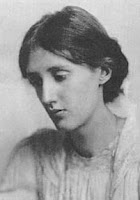
Few could construct sentences, let alone books, like Virginia Woolf, born 140 years ago today. She turned out, by this count, 34 books—essays, biographies, novels, and diary entries. As part of the Bloomsbury set of writers, artists and intellectuals, she also made it possible for others to find their creative voices.

Remarkably, she wrote all of this while being afflicted repeatedly with influenza and, ultimately and more damagingly, what are now believed to be episodes of bipolar disorder. The latter condition led her to commit suicide in 1941.

Woolf is one of the few authors whose work has become voluminous enough and life documented sufficiently to warrant not one, but several blogs devoted to her and/or the Bloomsbury circle, including Blogging Woolf.