
Showing posts with label Economics. Show all posts
Showing posts with label Economics. Show all posts
Tuesday, April 14, 2026
Quote of the Day (Gillian Tett, on Investors and ‘Once-Unimaginable Disasters’)


Thursday, February 12, 2026
Quote of the Day (Lars-Erik Cederman, on Economics and Ethnic Nationalism)

The image
of Lars-Erik Cederman that accompanies this post was taken on Nov. 1, 2018, by AliceRuth11.
Tuesday, December 30, 2025
Quote of the Day (Andrew Ross Sorkin, on 1929 and Our ‘Sweeping New Age of Financialization and Innovation’)

“Yet history offers a blunt reminder: When transformation comes this quickly, it rarely benefits everyone unless it is paired with transparency, oversight and regulation. The dot-com boom of the late 1990s was pitched as a democratizing moment, too, until it collapsed under a wave of hype and fraud. The pattern is familiar, stretching back to 1929: Whenever access expands faster than safeguards, charlatans rush in and ordinary investors are often left holding the bag.”—Financial journalist and historian Andrew Ross Sorkin, “1929 Vibes,” The New York Times Sunday Magazine, Oct. 19, 2025
Friday, July 5, 2024
Quote of the Day (Robert Heilbroner, on Stopping Inflation)

Shortly after this edition of perhaps Heilbroner’s best-known book appeared, Federal Reserve chairman Paul Volcker embarked on what the economic historian called “stopping the rise of prices dead in its tracks.”
The move, propelled by the 1979 oil crisis, raised the Fed’s
interest rate to nearly 20 percent in 1981—shock therapy that finally brought
inflation down, but at the cost of a recession, rather than the full-scale
depression feared by Heilbroner.
For the next 40 years, the United States enjoyed a
respite from rampant inflation, courtesy of deregulation, cheap goods from
foreign markets, and technology that Fed Chair Alan Greenspan told Congress in
2005, “elevated the growth of productivity, suppressed unit labor costs, and
helped to contain inflationary pressures.”
The situation was so unusual that this February 2018 post from the Federal Reserve Bank of St. Louis worried about
the implications of very low inflation.
The pandemic, which resulted in disrupted supply
chains from abroad and greater government spending to stimulate the economy,
ended what increasingly looks like a holiday from history.
Sunday, March 3, 2024
Quote of the Day (John Gapper, on Weakening ‘Old Empires of Coffee, Cocoa and Tea’)

The image accompanying this post, of John Gapper, was taken Oct. 15, 2010, by The Financial Times.
Wednesday, August 9, 2023
Quote of the Day (John Lanchester, on Education, Economics, and Democracy)

Monday, June 5, 2023
Quote of the Day (P. J. O’Rourke, on Adam Smith)

We don’t know the exact birthdate for the
Enlightenment economist and philosopher Adam Smith, but he was baptized
three centuries ago today in Kirkcaldy, Scotland.
Normally, to begin or end the workweek, I choose a
humorous quote to get their minds off hard days at the office (or, more
recently, the virtual office. In observance of this milestone related to Smith,
I hoped to find jokes by or at least about him.
As you might expect, the author of The Wealth of
Nations and The Theory of Moral Sentiments was not exactly the
wisecracking type. Still, you’d hope at least other economists (or maybe
someone who played one, like Ben Stein) might have gotten off a joke about his
work. But no such luck, reinforcing why economics is known as “the dismal
science.”
So the best I could do here was this quote from P. J.
O’Rourke.
I don’t think Smith should be regarded as devoutly as many
libertarians are wont to do. But I will give O’Rourke this: for someone whose
work has influenced the course of the West as that other Enlightenment document
that also came out the same year as The Wealth of Nations, The
Declaration of Independence, Smith’s work does indeed remain relevant.
I should say here that I particularly like this Smith quote
I noted in a prior post.
(For a vigorous attack on the belief that Smith
accepted inequality as a necessary tradeoff for a more prosperous economy, I
urge you to read Deborah Boucoyannis’ 2014 post on the “Politics and Policy” blog of the London School of Economics.)
Friday, November 4, 2022
TV Quote of the Day (‘Yes, Prime Minister,’ As a Financial Crisis Convulses the British Cabinet)

Hacker [played by
Paul Eddington]: “Why the sudden crisis? The Treasury must've seen it
coming.”
Sir Humphrey
[played by Nigel Hawthorne]: “Prime Minister, I'm not the Permanent
Secretary to the Treasury. You must ask Sir Frank.”
Hacker: “What would Sir
Frank say?”
Sir Humphrey:
“It is not for a humble mortal such as I to speculate on the complex and
elevated deliberations of the mighty. But in general, I think Sir Frank
believes that if the Treasury knows something has to be done, the Cabinet
shouldn't have too much time to think about it.”
Hacker: “But that's an
outrageous view!”
Sir Humphrey:
“Yes, indeed. It's known as Treasury policy.”
Hacker: “Suppose the
Cabinet has questions?”
Sir Humphrey:
“Well, I think Sir Frank's view is that on the rare occasions when the Treasury
understands the questions, the Cabinet doesn't understand the answers.”— Yes,
Prime Minister, Season 1, Episode 5, “A Real Partnership,” original
air date Feb 6, 1986, screenplay by Antony Jay and Jonathan Lynn, directed by Sydney
Lotterby
Surely at this point, the above dialogue makes for uncomfortable listening for the Conservative Party grandees in charge—sort of—at Downing Street these last few years—particularly now that the Bank of England, setting its biggest rate hike in 33 years, warns that the UK could experience its longest recession in 100 years.
And we Yanks think we have it bad..
Tuesday, June 14, 2022
Quote of the Day (John Maynard Keynes, on Wealth Inequality)

Thursday, January 13, 2022
Quote of the Day (Paul Krugman, on Fear and Cryptocurrencies)
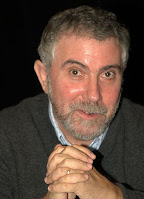
“One answer is protection against the perennial fear
that governments will inflate away all your wealth — as a recent Bloomberg
article put it, some billionaires are buying crypto in case money ‘goes to
hell.’ Indeed, there have been 57 hyperinflations in the world that we know
about. However, they all took place amid political and social chaos; do you
really think that in such an environment you’d be able to get online and cash
in your Bitcoins?”—Opinion columnist and Nobel Economics laureate Paul Krugman,
“Crusading for God, Family and Bitcoin,” The New York Times, Jan.
11, 2022
What’s with Bitcoin and its brethren
cryptocurrencies, anyway? (I use “brethren” advisedly; considerable
testosterone is being expended in the pell-mell push to adopt this relatively
new type of financial exchange.)
Some would argue that this is an excellent financial
innovation and that there’s nothing to worry about. But I wonder how much this
is turning into not a financial innovation, but a financial fad. As of this
month, there were more than 8,000 cryptocurrencies in existence, according to an article in coinmarketcap.com.
How much does the average investor know about
cryptocurrencies, aside from the fact that they’re supposed to be The Next Big
Thing? Are all of these on the level?
By the time this gets sorted out, I’m afraid
that many people are going to lose their shirts. For a foretaste of what this
will be like, look no further than the class-action lawsuit against Kim Kardashian, Floyd Mayweather, and Paul Pierce for their alleged involvement
in a “pump and dump” scheme involving EthereumMax, a cryptocurrency that is a “speculative
digital token created by a mysterious group of cryptocurrency developers.”
Don’t go looking for guidance from the federal
government on this, either. Aside from the fact that partisan gridlock is preventing much of anything getting done these days on Capitol Hill, let alone financial regulation, Gahyun Helen You’s recent article in Foreign
Policy Magazine makes for scary bedtime reading when it
notes, “The ability of these digital currencies to undermine control of the
monetary system and thus erode sanctions power presents a particular risk to
the United States. Absent decisive action, the U.S. market may instead be
governed by foreign frameworks.”
In 1720, the “South Sea Bubble” sparked what is often considered the world’s first stock-market crash. Even Sir Isaac Newton, the cranky scientific genius who, as England’s Master of the Mint, helped to curb much of the nation’s rampant counterfeiting, got caught up in the bubble. If a smart guy like that could get taken in, what are the odds of you and me not becoming suckers with our version of this scam today?
We’re about to learn if we’ve
learned anything at all about financial speculation over the last three centuries—or
if future economic histories are going to talk about “The Bitcoin Bubble.”
(The image accompanying this post, showing Paul
Krugman at the Brooklyn Book Festival, was taken Sept. 12, 2010, by Shankbone.)
Wednesday, April 21, 2021
Quote of the Day (John Maynard Keynes, on the Fallout From WWI and The Failed Treaty of Versailles)

John Maynard Keynes,
who died of a heart attack 75 years ago today, may be best known for the school
of economics named after him, which holds that, because free markets lack the
self-balancing mechanisms to produce full employment, state intervention is
necessary to stimulate demand and stabilize the economy.
That notion, in its different forms, guided mainstream
U.S. economic thinking from the New Deal to the rise of Reaganism, and has been
enjoying something of a revival not only in the Biden administration’s economic
program but even the tax cut passed under Donald Trump (as noted by David J.
Berger in a May 2019 article for The Hill).
Keynes’ American disciple John Kenneth Galbraith, in a
1984 essay for The New York Review of Books, called him “by far
the most influential economist of this century and, with [Adam] Smith, [Karl] Marx,
and possibly [David] Ricardo, one of the three or four greatest economists who
ever lived.”
But long before he formulated this influential theory, Keynes had become famous for immediately grasping how the vengeful and power-obsessed victors of WWI were sowing the seeds for an even more devastating conflict. He had attended the peace conference at Versailles for ending World War I as the senior Treasury member of the British delegation.
But
the more he watched, the more appalled he became at the blindness of the “Big
Four” allied victors in imposing punitive war reparations on Germany.
Having failed to scale back this insistence on what he
termed a “Carthaginean peace,” Keynes departed the proceedings in disgust, then
worked furiously in a farmhouse for two months on what became the bestselling The
Economic Consequences of the Peace.
Time has not dimmed the power of his fury at the
madness of the allies’ four leaders—Britain’s David Lloyd George, America’s
Woodrow Wilson, France’s Georges Clemenceau, and Italy’s Vittorio Emanuele
Orlando—for not recognizing “the fundamental problems of a Europe starving and
disintegrating before their eyes.”
Virginia Woolf’s husband Leonard wittily but aptly
dubbed the economist “Keynessandra.” The problems of the following two decades
after his manifesto—hyperinflation (“There is no subtler, no surer means of
overturning the existing basis of society than to debauch the currency”), periodic
economic failures, nationalist resentment, political extremism, and another
war—proved the wisdom of his vision.
It is also worth remembering Keynes’ unheeded call for
an America that would resist the urge to retreat into postwar isolationism:
“But if America recalls for a moment what Europe has
meant to her and still means to her, what Europe, the mother of art and of
knowledge, in spite of everything, still is and still will be, will she not
reject these counsels of indifference and isolation, and interest herself in
what may prove decisive issues for the progress and civilization of all
mankind?”
Keynes is the bane of libertarian economists for his belief in activist government. (You can find a succinct, and sometimes on-target, summary of such skepticism in Madsen Pirie's June 5, 2019 blog post on the Web site of the Adam Smith Institute.)
But the economist was hardly opposed to investing in
markets. At the time of his death, his assets totaled $30 million in today’s
money, with much of that derived not from his decent-selling books but through
value investing.
As noted in Philip Delves Broughton’s recent Wall
Street Journal review of Justyn Walsh’s Investing With Keynes,
Keynes was “a kind of proto-Warren Buffett, a diligent savant who could crunch
the numbers, discern the qualitative aspects of a toothsome investment and
remain unflustered by the churn of the markets.” Not a bad prescription for
surviving a bubble prosperity.
Saturday, June 27, 2020
Quote of the Day (Anne Case and Angus Deaton, on a Different Epidemic—‘Deaths of Despair’)

“The epidemic of deaths of despair in the United
States neither was nor is inevitable, but other rich countries are not guaranteed
to have immunity from this American disease. For now, the United States is
something of an anomaly among wealthy nations, a status it owes to specific
policies and circumstances. But other countries may find themselves following
in American footsteps. If wage stagnation persists in Western countries and if
the use of illegal drugs grows, the social dysfunctions of the United States
could well spread in a more concerted way. Working classes elsewhere are also
grappling with the consequences of globalization, outsourcing, and automation.
The dynamic that has helped fuel the U.S. crisis of deaths of despair—of elites
prospering while less educated workers get left behind—may produce similar
devastating results in other wealthy countries.”— Anne Case and Angus Deaton, “The Epidemic of Despair: Will America’s Mortality Crisis Spread to the Rest of the World?” Foreign Affairs, March/April 2020
Given the long lead times of print magazines, this
article was likely written when COVID-19 still had not devastated the American economy.
Even with this slightly premature analysis, Case and
Deaton present alarming numbers on how, in recent years, the American Dream has
proven ever more elusive. Increased “deaths of despair”—a phrase they coined
five years ago to account for fatalities caused by drug overdose, alcoholic
liver disease, or suicide—have, combined with deaths from heart disease, produced
a reversal in long-term U.S. gains in life expectancy at birth from 2015 to
2017.
Nothing like this, they report, has been seen since—but naturally—“the influenza pandemic at the end of World War I.” How much more pointed might have been the
conclusions of Case and Deaton—economics professors at Princeton—if they could
have sensed the calamity to come.
In a globalized economy, it doesn’t take long
for an epidemic—whether a fast-acting medical one or a more slow-moving, metaphorical
demographic one—to jump borders.
Case and Deaton trace the roots of this crisis
partly to the disappearance of good, well-paying jobs and partly to the high
cost of health care. Rather than the wholesale state interference with the
economy advocated by the likes of Bernie Sanders and Alexandria Ocasio-Cortez,
they advocate “public policy that raises wages and builds a more comprehensive
social safety net,” especially as it relates to regulating the current
out-of-control health-care system.
In the current era of extremist positions right and
left, the authors’ proposals may strike many as nothing unusual. But their
explanation of this crisis long in the making is detailed and compelling. As
Linda Loman warned her sons about the tragedy befalling her husband in Arthur
Miller’s Death of a Salesman: “Attention,
attention must be paid.”
Nobody knows yet just how extensive the psychological
fallout from the worst American economic downturn since the Great Depression
will be. But does anyone doubt that it will produce more than its share of new
Willy Lomans?
(One fictional example of a “death of despair” was
the title character of the Roseanne reboot,
pictured here. That plot development may have been triggered by toxic comments
by the series’ controversial star, Roseanne Barr, a year and a half ago. But
Roseanne Conner’s death—which, her
shocked family discovers, resulted from an accidental opioid overdose—was very
much in keeping with a show that, in its original nine-year original run, was
at pains to show how close to the edge the blue-collar Conners came to falling
victim to larger forces beyond their control.
Friday, May 15, 2020
Song Lyric of the Day (George and Ira Gershwin, on Dating and "The Economic Situation")

“I’m
tired of keeping up with the economic trends
And
the universal problems that perplex;
Oh,
tell me where I can find a man who condescends
To
show an int’rest in sex.”—"The Economic Situation," music by George
Gershwin, lyrics by Ira Gershwin, in Ira Gershwin: Selected Lyrics, edited
by Robert Kimball (2009)
For The
Ziegfeld Follies of 1936, George Gershwin (1998-1937) and brother Ira (1896-1983)
had “Miss Gherkin” (a young Eve Arden) and a group of chorus girls lament the
terrible impact of hard times on their love lives. It’s not so much that
anxiety and overwork lacerate the male libido, but rather that politically
active intellectuals now show no interest in them whatsoever.
I really had to chuckle, though, when I came across
this couplet:
“You’re
looking your best, but he hasn’t noticed
For
you’re up to your neck in the Taxpayers’ Protest.”
How
did the Gershwins anticipate the Tea Party movement of the last decade?
Leave
it to the wise, witty and brilliant brothers to make the nation chuckle even
during the Great Depression.
Tuesday, October 29, 2019
This Day in Economic History (‘Black Tuesday’ Kicks Off Great Depression)

Oct. 29, 1929—Only five days after Wall Street
trembled before righting itself, the New York Stock Exchange collapsed. The 16
million shares sold at declining prices not only made this “Black Tuesday”
but also, for all intents and purposes, the start of the Great Depression.
In contrast to prior economic contractions, which
lasted only a year or two, the Great Depression was far more protracted—not
really ending until the arms ramp-up just before Pearl Harbor—and far more
devastating, putting one-quarter of the American workforce on the unemployment
line simultaneously.
It is well-known that, in effect, it thrust the
federal government into a more interventionist position in relation to the
economy. But not as many Americans realize that the Depression opened the
country up to dangerous forces in a way never seen before. More Americans than
ever before were willing to at least flirt with the idea of Communism, and in
Louisiana, Huey Long made the entire state dance to his will.
Perhaps somewhat less surprising, my predominantly
U.S. readership may not realize the impact of the Depression on other nations,
starting with north of the border in Canada, a downturn chronicled by historian Pierre Berton
in The Great Depression: 1929-1939. New Zealand, Australia and the
United Kingdom also felt the blow. Worst of all was Germany, where voters in
the already weak Weimar Republic looked increasingly toward, then embraced, the
Nazi Party.
Critic Edmund Wilson called his account of the early
stage of the downtown The American Earthquake. But if the noun in that title
applies domestically, the case of Germany suggests that yet a stronger term
might be required to depict the political damage in that country, where people sought
simplistic solutions, then moved to wipe out the most vulnerable in their society.
I will not rehash what happened on Black Tuesday. If
you want a vivid narrative of what happened that fateful day, you can turn to
economist John Kenneth Galbraith’s The Great Crash: 1929. What I really want to do is consider: could it
happen again?
In one sense, it already has—in the 2007-2009 Global
Financial Crisis (GFC). Much ink has been spilled about how Fed Chair Ben
Bernanke and Treasury Secretary Hank Paulson, mindful of what happened in
1929, prevented a complete economic meltdown.
But what happened was bad enough. Consider some of
the consequences of the crisis in the decade since, here and abroad:
*largely anemic economic growth;
*a whole cadre of the unemployed who, toward the
start of the recession, became jobless for so long that they ended up out of
the workforce for good;
*the hollowing out of the middle class;
*a resentment of government bank bailouts that, in
part, sparked the Tea Party movement;
*scapegoating of immigrants.
In the July/August issue of Foreign Affairs, Gillian Tett, an editor at The Financial Times, laid out the results of the “Faith-Based Finance” of a
dozen years ago—how a mystical conviction about new technology, for instance, not only led to a
round of Wall Street delusion, but could be repeaed:
“It would be foolish to imagine that the lessons of
the crisis have been fully learned. Today, as before, there is still a tendency
for investors to place too much faith in practices they do not understand. The
only solution is to constantly question the basis of the credit that underpins
credit markets. Just as there was in 2007, there is still a temptation to
assume that culture does not matter in the era of sophisticated, digitally
enabled finance.”
In a sense, Galbraith had anticipated this in 1954,
when his highly acclaimed history of the Great Crash appeared. Although much of
the book brimmed with ironic reflections on the comeuppance of Wall Street a
quarter-century before, he became considerably more sober in the introduction
to his 1961 edition:
"Someday, no one can tell when, there will be
another speculative climax and crash. There is no chance that, as the market
moves to the brink, those involved will see the nature of their illusion and so
protect themselves. The mad can communicate their madness; they cannot perceive
it and resolve to be sane. There is some protection so long as there are people
who know, when they hear it said that history is being made in this market or
that a new era has been opened, that the same history has been made and the
same new eras have been opened many, many times before. This acts to arrest the
spread of illusion. A better sense of history is what protects Europeans if not
perfectly at least more adequately from speculative excrescence."
Subscribe to:
Posts (Atom)


