


Slate SoundBites for April 2, 2026
3 hours ago

The image accompanying
this post of John Donne was created by English portrait miniature painter Isaac
Oliver 9ca. 1565-1617).

I wrote about the squad in a prior post from a
decade ago. But I find that with the passage of time, additional poignancy accrues
to this achievement, and more can be written about the larger meaning of it.
The victory secured the Hall of Fame credentials of
coach Red Holzman, as well as several starters from that squad: Walt
Frazier, Bill Bradley, Earl Monroe, Dave DeBusschere, Willis Reed, and Jerry
Lucas.
Ecstatic fans like me couldn’t imagine at the time
that this was a summit the team would not reach again for 50 years and
counting, as I write this.
We were reminded of it, brutally, this week, as the Knicks were beaten in the second round of the playoffs by the Miami Heat.
(One consolation: thank God it didn’t happen at Madison Square Garden, on Wednesday,
the 50th anniversary of that earlier victory, with Frazier himself in
the stands, doing his best to cast whatever residual magic he had left on Jalen
Brunson, Julius Randle and Co.)
Particularly over the last two decades, the teams have
been so woebegone that longtime fans were just grateful for the team to be competitive,
let alone that it would have a championship run.
It was all so different back in the early Seventies.
For the Knicks players, their success in ’73 meant
that their title in 1970 was no fluke; that they had avenged their loss to the
Lakers in the 1972 Championship Series; and that they deserved to be considered
not just among the best of their time, but eminently worthy of emulation through
their team-oriented style.
For Holzman, it meant the vindication of his
trade the prior year for Earl Monroe, who, many observers wondered would be
able to blend his style with backcourt partner Frazier, as well as sweet
revenge in the Conference Finals against nemesis Red Auerbach, the Boston Celtics
president and GM given to off-court gamesmanship to rattle foes (like changing
the Knicks locker room when they were visiting for games in the Boston Garden).
Holzman savored the fact that the Knicks became the first team to win an
elimination game in the Celtics’ home court.
For New York fans, the Knicks’ triumph was something
far greater, analogous to what Pittsburgh Steelers championships were about to
accomplish: boosting the spirits of a Rust Belt metropolis badly in need of it.
In the early Seventies, New York City often seemed nothing
like the “Fun City” that Mayor John Lindsay proclaimed it, with crime, population
lost to the suburbs, graffiti-strewn subways, and strained finances that would
plunge the city toward financial crisis in the middle of the decade. And that
was on top of other strains that New Yorkers experienced like other Americans
in those years: the Vietnam War and Watergate.
In contrast, the Knicks gave New Yorkers something that
not only distracted them from the outside world, but that even united them in
pride for a team that sacrificed individual goals for the good of the whole.
Fans paid attention not just to the more celebrated ones, like the Rhodes scholar
Bradley, the indomitable Reed, and the too-cool-for-school Frazier, but even
role players.
(Several weeks ago, I astounded a close relative when
I mentioned one of these from the 1973 squad, Harthorne Wingo. My relative
insisted that I must be making the name up. Nope!)
Back then, it really was like the title of a book and documentary
about the team from several years ago: “When the Garden Was Eden.”
They’d never won a championship before hiring Holzman
as head coach. They haven’t won one since he left the sidelines, either.
In reading about the aftermath of the Knicks’ second
title, I couldn’t help but wonder if I were seeing something similar this week in
the case of the squad that, perhaps more than any other over the last decade,
reminds me of them on their emphasis on defense and hitting the open man: the
Golden State Warriors.
With the Warriors’ loss to the Los Angeles Lakers only
a few hours after the Miami Heat ushered this year’s Knicks squad out of the
playoffs, the resemblance to Holzman’s team suddenly hitting its twilight years
seems hard to miss.
Just as Holzman had to deal with the sudden departures
of injured and aging veterans Reed, DeBusschere, and Lucas after the ’73-’74 season,
Warriors coach Steve Kerr must now contend with 38-year-old Draymond Green,
35-year-old Steph Curry, and 33-year-old and injury-plagued Klay Thompson in
the last stretch of their career.
And, just as Holzman found in the late ‘70s that
highly touted young players like Ray Williams and Micheal Ray Richardson couldn’t
really take the place of his former Knick core, Kerr must be wondering after
his team’s second-round exit when Jordan Poole, Moses Moody, and Jonathan
Kuminga are ready to take the baton from Curry, Thompson, and Green.
I could not conclude this post without words of praise
for Red Holzman. The numbers of six of his players, now retired, hang from the
rafters of MSG. So does a number associated with their coach: 613, the number
of wins he notched in leading the team.
The Knicks coach was glad to see the success of one of
his former players, Phil Jackson, as head coach of the Chicago Bulls. But
Jackson’s self-created “Zen Master” image was nothing like the modest style of
Holzman.
Holzman started by effecting an attitudinal shift when
he took over the Knicks. As Frazier put it four decades later: “He cut out all
the shenanigans.”
A typical quote of his, in Mort Zachter’s 2019
biography, Red Holzman: The Life and Legacy of a Hall of Fame Basketball Coach, is, “A good team doesn't have any superstars. They fit together,
make sacrifices and do things necessary to win."
According to Holzman, there were five essential
factors for winning: emotional maturity, the will to win, good fellowship,
leadership and alertness.
Ultimately, he focused the team’s attention on
fundamentals: Ball movement, teamwork, and spontaneity, culminating in the two “D’s”:
Discipline and defense.
Indeed, it’s not so much an image from those years
that comes to mind but a sound, a mighty roar from the Garden faithful that
came through loud and clear as I listened to games on the radio: “DEEE-fense,
DEEE-fense!”


Opie Taylor [played
by Ron Howard]: “Yeah, but I didn't do it, Pa. Honest.”
Andy: “I believe you.”
Deputy Barney Fife [played by Don Knotts]: [angrily]
“Are you pittin' your crime detectin' judgement against mine?”
Andy: “Well, Barney, I
have to, because, for one thing, Opie wouldn't lie to me.”
Barney: “You call that
evidence?”
Andy: “And for another, he ain't learned how to write yet.”— The Andy Griffith Show, Season 1, Episode 7, “Andy the Matchmaker,” original air date Nov 14, 1960, teleplay by Arthur Stander, directed by Don Weis
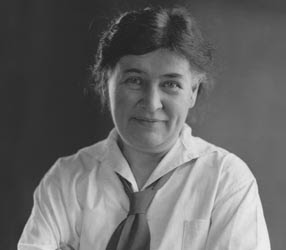

In New York City nearly 235 years ago, George
Washington demonstrated the qualities Americans hoped for in their President.
In a New York City courtroom yesterday, a former and still-aspiring occupant of his office was found to be notably wanting in virtue and sense of duty.
It was frustrating to watch this latter individual
fill that job with neither a sense of decorum nor of honesty. But maybe now,
the “eternal rules of order and right” that Washington hailed will at long last
begin to be vindicated.


