Showing posts with label Noel Coward. Show all posts

Tuesday, April 22, 2025

Flashback, April 1925: Noel Coward’s ‘Fallen Angels’ Makes Controversial West End Debut

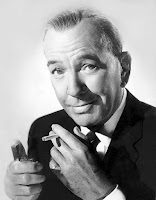
Noel Coward (pictured), enjoying his first burst of popularity, engaged the attention of London’s West End audiences in April 1925 with another frothy comedy, Fallen Angels—only this time he also attracted the notice of the national censorship arm.

In the prior two years, the playwright had made a splash with his West End debut, The Vortex. But it was his hit follow-up, Hay Fever, that led Anthony Prinsep of the Globe Theatre to reconsider and dust off an earlier effort, Fallen Angels.

The subject matter of this latter effort—dialogue among two female friends about premarital sex—raised the eyebrows of British censor Lord Cromer of the Lord Chamberlain office, which since 1737 had been tasked with approving all plays before they opened. 

This same year was a particularly active one for Lord Cromer, as he went on to veto Eugene O’Neill’s Desire Under the Elms and an English translation of Luigi Pirandello’s Six Characters in Search of an Author.

In the end, Lord Cromer ruled that Coward’s “light and unreal and humorous” approach to the material rendered it harmless. But he recommended deleted passages in order to make the saucy lines “less objectionable” to those “who disapprove of quite unnecessary frankness of expression among women.”

The Lord Chancellor notwithstanding, one female playgoer did indeed find Coward’s irreverent send-up of two friends who find they have bedded the same man to be “objectionable.” Her outburst interrupting the second act earned her immediate ejection from the building—and the production the kind of welcome notoriety that so often gooses the box office.

The play’s producers quickly capitalized on what purported to be its naughty subject matter. “IT IS NOT A PLAY FOR CHILDREN,” they announced the following year in a flyer for a Preston, England production. “It depicts the ultra-modern young women of today, with truth and realism. They may not be lovable characters, but they are essentially amusing, and decidedly daring.”

Fallen Angels premiered at the Globe Theatre (now called the Gielgud Theatre) midway through the 1920s, a decade that, as Bruce Bawer’s September 2023 article in The New Criterion observed, “belonged to Noël Coward,” as “the quintessential exemplar of Britain’s upscale youth.” Within two months of Fallen Angels’ debut, four of his plays would be running simultaneously in London, a mark rivaled only by Somerset Maugham.

The latter, older and more established in the theater than Coward, had distressed Tallulah Bankhead so much by rejecting her for the role of prostitute Sadie Thompson in Rain that, as she later related in her autobiography, she had put on the character’s costume, "gulped down 20 aspirins" and lay down after scribbling "It ain't gonna rain no more."

The day after this setback, Bankhead received a call from her friend Coward, who was experiencing a crisis of his own. The actress playing Julia, he explained, had withdrawn from the production with practically no time to spare before the opening. Could Tallulah fill in and learn the lines in the four days before the premiere?

“Four days!” the flamboyant actress drawled. “Dahling, I can do it in four hours.” Their friendship and professional association would continue for several more decades, most famously in the 1948 Broadway revival of Coward’s Private Lives.

Fallen Angels lasted a little over a month when it came to Broadway in 1928, then was revived with somewhat more success—239 performances—when it was revived on the Great White Way in 1956 with future TV stars Efrem Zimbalist, Jr., William Windom, and Nancy Walker.

Though seen more frequently in the UK, the scandal once associated with it has faded with the decades, and it has not entered the charmed circle of Coward plays like its more successful immediate follow-up, Hay Fever, not to mention Private Lives, Design for Living, Present Laughter, or Blithe Spirit.

Imagine my surprise, then, when I noticed on the Web that the Roundabout Theatre has announced it for its Spring 2026 schedule. I am not one of those people predisposed to dismiss a vintage play as “dated,” and the principals promoted for the Roundabout show—stars Rose Byrne and Kelli O’Hara, and director Scott Ellis—boost one’s confidence that they will wring every laugh out of Coward’s insult- and innuendo-laden dialogue.

Monday, December 30, 2024

Quote of the Day (Noel Coward, on Why ‘Writing Is More Important Than Acting’)

"Writing is more important than acting, for one very good reason: it lasts. Stage acting only lives in people's memories as long as they live. Writing is creative; acting is interpretive.”— English playwright, fiction writer, memoirist, composer, actor and wit Sir Noel Coward (1899-1973), quoted in The Noel Coward Reader, edited by Barry Day (2010)

The 125th birthday of Noel Coward passed almost two weeks ago, but I couldn’t allow 2024 to go by without noting the worldwide observance of the event.

The image of Coward that has come down to posterity—in dinner jacket, with slicked-back hair and cigarette in hand (kind of like what you see with this post)—obscures a polymath of ferocious energy and dedication who shames the rest of us by comparison. 

Even more than the bon vivant of legend, it is this artist who scoffed at notions about his genius but gladly accepted compliments about his professionalism, that I celebrate with this post.

One last thing, though: You’ll notice in the above quote that Coward refers not to “acting” in general but to “stage acting” in particular. The latter certainly offers the possibility of an electricity between audience and performer that is not possible on film.

But film acting, in contrast, certainly “lives in people's memories as long as they live.” Coward himself is a good example.

Modern audiences will have no idea how he appeared onstage in 1933 with Alfred Lunt and Lynn Fontanne in his comedy Design for Living. But as long as a TV station or movie revival house exists, viewers can watch him 18 times on film, from his 1935 screen debut in The Scoundrel to his 1969 swan song, The Italian Job.

Those roles, as fleeting or even imperfect as they could sometimes be, show why so many people of his time—and even ours—remain “mad about the boy.”

Monday, December 26, 2022

Quote of the Day (Noel Coward, on an Easy Casting Decision for One of His Shows)

“The girl who plays Nancy is quite remarkable. She can neither sing, dance nor act, has a lisp and no top to her head! I left terse orders for her to be replaced.”—English playwright, singer-songwriter, and director Noel Coward (1899-1973), on an inadequate cast member in an Australian production of his musical Sail Away, June 6, 1963 letter to private secretary Lorn Loraine, in The Letters of Noel Coward, edited by Barry Day (2007)

Monday, November 14, 2022

Quote of the Day (Noel Coward, on an Actor Being Rejected for an Upcoming Tour)

Gary Essendine: “Beryl Willard is extremely competent. Beryl Willard has been extremely competent, man and boy, for forty years. In addition to her extreme competence, she has contrived, with uncanny skill, to sustain a spotless reputation for being the most paralysing, epoch-making, monumental, world-shattering, God-awful bore that ever drew breath...I will explain one thing further - it is this. No prayer, no bribe, no threat, no power, human or divine, would induce me to go to Africa with Beryl Willard. I wouldn't go as far as Wimbledon with Beryl Willard.”

Liz: “What he's trying to say is that he doesn't care for Beryl Willard.” —English playwright, actor, director, and singer-songwriter Noel Coward (1899-1973), Present Laughter (1939)

Thursday, December 23, 2021

Quote of the Day (Noel Coward, on the Urge to ‘Go Out and Be Social’)

“I've got to be bright
And extremely polite
 And refrain from becoming too loose or too tight
And I mustn't impose conversational blight
On the dolt on my left
And the fool on my right.
I must really be very attractive tonight
As I have got to go out and be social.”—English playwright, composer and bon vivant Sir Noel Coward (1899-1973), “I’ve Got To Go Out and Be Social,” in The Noel Coward Reader, edited by Barry Day (2010)
 
In Coward’s youth—in fact, in the youth of many early in this century—the instinct to “go out and be social” during year-end festivities was seemingly ineradicable. For the last two years, going on the dinner-and-party circuit has been far harder to sustain because of COVID-19.
 
Here’s hoping that in December 2022, the way of life that Coward tweaked will return, and that his witty verses will be understood and chuckled over again.

Saturday, August 8, 2020

Song Lyric of the Day (Noel Coward, on ‘This Unkind Familiar Now’)


“Here in the light of this unkind familiar now
Every gesture is clear and cold for us
Even yesterday's growing old for us
Everything's changed somehow.”—English playwright, actor, and songwriter Sir Noel Coward (1899-1973), “Then,” from The Noel Coward Reader, edited by Barry Day (2010)

When Sir Noel Coward wrote these lyrics for the one-act “musical fantasy” “Shadow Play,” as part of his 1936 play cycle Tonight at 8.30, he conceived of a duet between husband and wife, about the initial love in their now-collapsing marriage. Reading the lyrics now, though, I can’t help reinterpreting them in light of COVID-19.

Everything has indeed “changed somehow” now. The longer the crisis lasts, the less likely that any remnants of our past assumptions or way of life will remain. Yesterday has only just passed, but it will feel like a millennium ago before all this is over.

Monday, August 3, 2020

Movie Quote of the Day (‘Design for Living,’ in Which a Playwright Defines His Job)


Gilda Farrell [played by Miriam Hopkins]: “Are you a painter too?”

Tom Chambers [played by Fredric March]: “Oh, no, not me. I'm a playwright. I rewrite unproduced plays. I’m very good at that kind, actually.”— Design for Living (1933), screenplay by Ben Hecht, based on the play by Noël Coward, directed by Ernst Lubitsch

Monday, April 22, 2019

Quote of the Day (Noel Coward, on an English Institution)


Charles: "Anything interesting in The Times?"

Ruth: "Don't be silly, Charles."—English playwright Noel Coward (1899-1973), Blithe Spirit (1941)

In the U.S., conservatives would say the same thing about The New York Times--but for far different reasons than the couple in this play talking about the London institution...

Monday, October 9, 2017

Quote of the Day (Noel Coward, on What Shocks People—and What Doesn’t)


“It's a sad reflection on society how many people are shocked by honesty... and how few by dishonesty.” —British playwright Noel Coward (1899-1973), Blithe Spirit (1941)

Friday, April 28, 2017

Quote of the Day (Noel Coward, on Opera)


“People are wrong when they say opera is not what it used to be. It is what it used to be. That is what’s wrong with it.”—British playwright Noel Coward (1899-1973), Design for Living (1933)

Tuesday, February 21, 2017

Quote of the Day (Noel Coward, on Hopes for One’s Country)


“Let’s drink to the hope that one day this country of ours, which we love so much, will find dignity and peace again.”—British playwright, actor, and composer Sir Noel Coward (1899-1973), Cavalcade (1931)