
Showing posts with label S.J. Perelman. Show all posts
Showing posts with label S.J. Perelman. Show all posts
Tuesday, November 14, 2023
Quote of the Day (S.J. Perelman, on the Effort of Writing)


Monday, March 20, 2023
Quote of the Day (S.J. Perelman, on Immortality)
Monday, March 21, 2022
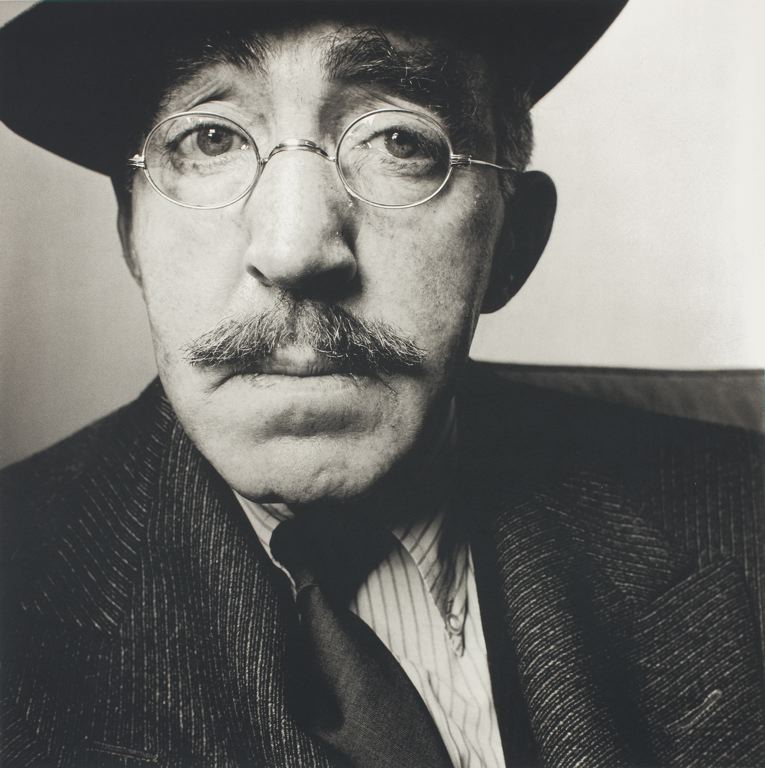
Quote of the Day (S.J. Perelman, on a Fantasy Created by a Hitchcock Classic)

Friday, August 28, 2020
Quote of the Day (S.J. Perelman, on a Dental Visit, or ‘Cuspid's Last Stand’)

“For years I have let dentists ride roughshod over my
teeth: I have been sawed, hacked, chopped, whittled, bewitched, bewildered,
tattooed, and signed on again; but this is cuspid's last stand. They’ll never
get me into that chair again. I’ll dispose of my teeth as I see fit, and after
they’re gone, I’ll get along. I started off living on gruel, and, by God, I can
always go back to it again.” — American humorist and screenwriter
S.J. Perelman (1904-1979), “Nothing But The Tooth,” in The Best of S.J. Perelman (1947)
With dentists like the crew pictured, can you blame
the poor man?
(The image accompanying this post shows Moe, Larry and
Curly—i.e., The Three Stooges—in one of their shorts.)
Monday, March 30, 2020
Quote of the Day (S.J. Perelman, on a Macho Husband of Liz Taylor’s)

“[Film and stage producer Mike] Todd’s machismo was
that common form that afflicts all undersized men—megalomania. He freely
identified himself with Napoleon, P.T. Barnum, and Carl Laemmle, Junior, not to
mention the Roman emperors of the decline. Whereas the latter, however,
believed in giving the populace bread and circuses, Todd gave them circuses and
kept the bread. Rarely if ever has there been anyone more unwilling to fork
over what he owed to those actors, writers, and technicians who aided him in his
grandiloquent projects of stage and screen. The little corpuscle, in short,
believed in flaunting money where it made the most impression—at Deauville,
Monaco, and the gambling tables of Las Vegas. In this respect, he was a true
macho. My sole souvenir of our frenetic association [the film Around the World in 8o Days] is a
replica of the carpetbag Phileas Fogg carried on his celebrated journey, a
thousand of which Todd distributed to Broadway companions, investors,
accountants, dentists, and other sycophants. But surely, his admirers have
since queried me, I must have been awed by his tremendous vitality. Only in
part, I respond; Moi meme, I prefer
the anthropoid apes.”—American humorist and screenwriter S.J. Perelman
(1904-1979), “The Machismo Mystique,” from Vinegar Puss (1975)
There were two exemplars of machismo among
his acquaintances, S.J. Perelman noted in the essay from which I’ve just
quoted. One, Ernest Hemingway, remains so famous that there seems little point
in my belaboring the obvious. But the other, Mike Todd, is surely less
familiar to my readers, and his antics—along with Perelman’s hilarious
description of him—are worth recalling.
Perelman was used to show-business lunatics--he did, after all, help write some of the best screenplays (Monkey Business, Horse Feathers) for the Marx Brothers. But I think you can see here that, nearly 20 years after working with Todd, just the memory of Todd was enough to bring him to heights of wonderful invective.
“Flamboyant,” used most by journalists to
summarize this showman’s life, is a pallid word for this would-be entertainment
Napoleon. Undaunted by losing his shirt in the Depression when his construction
business crashed, Todd was bitten by the show-business bug.
Notice that I didn’t say he was particularly wise—or
good—at his work. By 1950, the profligate spending that Perelman hinted at
engulfed Todd in a second bankruptcy. It didn’t help that four years before, a musical version
of Around the World in 8o Days, starring Orson Welles, cratered after he had pulled out, losing
virtually all of its investors’ (including Todd's) money.
Then, something astonishing
happened. Shrugging off his horrifying involvement in staging the 19th-century
Jules Verne novel, Todd rolled the dice on the property a second time, except
now as an all-star Hollywood vehicle. He not only made his investment back over
and over again, but won the Best Picture Oscar for 1956. (Perelman shared a Best
Adapted Screenplay Oscar with John Farrow and James Poe).
Oh, yes, another sign of Todd’s machismo, perhaps
the major reason why he is remembered at all today: the last of his wives,
Elizabeth Taylor: the equivalent of today’s trophy wife, a woman at the height
of her glamor—and less than half his age, as you might be able to tell in the picture accompanying this post. (He would be the third of her eight husbands.)
When he died at
age 50, in a crash of his private plane, Todd nearly took down with him the one
man in Hollywood who could credibly exceed him in machismo: Kirk Douglas, who,
with great initial reluctance—at the behest of his wife—turned down the producer's
invitation to join him on the fatal flight.
So, let’s see: A builder thirsting for the bright lights of the entertainment world, glorying in the eye-candy on his arm, spending like
there’s no tomorrow, and stiffing creditors and employees—Todd was nearly 60
years ahead of his time as Oval Office material.
Monday, January 7, 2019
Quote of the Day (S.J. Perelman, Defining ‘Farm’)

“A farm is an irregular patch of nettles bounded by
short-term notes, containing a fool and his wife who didn't know enough to stay
in the city.”—American humorist and screenwriter S.J. Perelman (1904-1979),
“Acres and Pains,” in The Most of S.J. Perelman (1959)
Monday, January 16, 2017
Quote of the Day (S.J. Perelman, on Concealing ‘One's True Livelihood From the Kiddies’)
 "The instinct to conceal one's true livelihood
from the kiddies, for fear of their possible scorn, is as normal as snoring. A
highly solvent gentleman in Forest Hills, a vestryman and the father of three,
once told me in wine that for thirty years, under twelve different pseudonyms,
he had supplied the gamiest kind of pulp fiction to Snappy Stories and Flynn's,
although his children believed him to be a stockbroker."— American
humorist and screenwriter S.J. Perelman (1904-1979), “How Sharper Than a
Serpent's Tooth," in The Most of S.J. Perelman (1957)
"The instinct to conceal one's true livelihood
from the kiddies, for fear of their possible scorn, is as normal as snoring. A
highly solvent gentleman in Forest Hills, a vestryman and the father of three,
once told me in wine that for thirty years, under twelve different pseudonyms,
he had supplied the gamiest kind of pulp fiction to Snappy Stories and Flynn's,
although his children believed him to be a stockbroker."— American
humorist and screenwriter S.J. Perelman (1904-1979), “How Sharper Than a
Serpent's Tooth," in The Most of S.J. Perelman (1957)Friday, October 7, 2016
Quote of the Day (S. J. Perelman, on City Versus Country Living)
 "For my money, the most parochial, unwholesome
aspect of contemporary civilization is the life led by the average urban
dweller. Cooped up in a stuffy, overheated hotel suite with nothing but a bowl
of cracked ice, a blonde, and a fleet bellboy poised on his toe like Pavlova
waiting to run errands, he misses the rich, multiple savor of country living.
He never knows the fierce ecstasy of rising in a sub-zero dawn to find the
furnace cold and the pipes frozen, or the exhilaration of changing a tire by
flashlight in an icy garage. No wonder his muscles atrophy as he lies abed
until noon, nibbling bits of toast over the latest edition. No wonder his
horizons shrink and his waistband swells. And no wonder he'll live twice as
long as I will."—American humorist S. J. Perelman (1904-1979), Acres and Pains (1947)
"For my money, the most parochial, unwholesome
aspect of contemporary civilization is the life led by the average urban
dweller. Cooped up in a stuffy, overheated hotel suite with nothing but a bowl
of cracked ice, a blonde, and a fleet bellboy poised on his toe like Pavlova
waiting to run errands, he misses the rich, multiple savor of country living.
He never knows the fierce ecstasy of rising in a sub-zero dawn to find the
furnace cold and the pipes frozen, or the exhilaration of changing a tire by
flashlight in an icy garage. No wonder his muscles atrophy as he lies abed
until noon, nibbling bits of toast over the latest edition. No wonder his
horizons shrink and his waistband swells. And no wonder he'll live twice as
long as I will."—American humorist S. J. Perelman (1904-1979), Acres and Pains (1947)Friday, October 17, 2014
Quote of the Day (S.J. Perelman, on ‘Imperious’ Lillian Hellman)
 [Lillian Hellman is] “a curious mixture, part
imperious yenta who throws her weight around and part amusing old friend when
she and I and the Hacketts talk about old times in the movie biz and Broadway.
She has a sense of her importance that frequently burns your ass….We all get on
together…though every so often I’m tempted to order Lillian to knock it off.
(Should have said that I got here right in the middle of her being filmed by
Bill Moyers.)”—S.J. Perelman, letter to a friend quoted in David L. Goodrich, The Real Nick and Nora: Frances Goodrich and Albert Hackett, Writers of Stage and Screen Classics (2001)
[Lillian Hellman is] “a curious mixture, part
imperious yenta who throws her weight around and part amusing old friend when
she and I and the Hacketts talk about old times in the movie biz and Broadway.
She has a sense of her importance that frequently burns your ass….We all get on
together…though every so often I’m tempted to order Lillian to knock it off.
(Should have said that I got here right in the middle of her being filmed by
Bill Moyers.)”—S.J. Perelman, letter to a friend quoted in David L. Goodrich, The Real Nick and Nora: Frances Goodrich and Albert Hackett, Writers of Stage and Screen Classics (2001)
S.J. Perelman—who over the course of 75 years amused millions,
whether through his short humorous pieces for The New Yorker or his screenplays for the Marx Brothers—died on
this date in New York in 1979. The great humorist could be wildly funny in a
way that even elicited the admiration of his targets (such as Raymond Chandler,
who is said to have deeply appreciated the parody “Farewell, My Lovely
Appetizer”).
For all his brilliance, however, little
of his writing cuts as sharply as his late-life comments on playwright Lillian Hellman (pictured), whom he had known from the late 1920s. In the winter of 1974, the two shared
a rented house for several weeks in Sarasota, Fla., with two other old friends, husband-and-wife
screenwriting team Frances Goodrich and Albert Hackett.
Already, in this letter, as the above quote
indicates, Perelman’s patience was being tried. Four days later, he had had
enough. Hellman, he wrote, “deserves to have her ass kicked roundly” for
exhibiting “all the grandeur of Queen Isabella, Empress of Spain, and the
Indies, Mexico and the Iberian Air Line.”
I came across Perelman’s account of his vacation
from hell after I watched Brian Richard Mori's Hellman v. McCarthy last week on PBS. I had missed this play about
the legal fallout from novelist Mary McCarthy’s negative comments concerning
Hellman in a 1979 appearance on The Dick
Cavett Show when the drama had been staged Off-Broadway by the Abingdon Theatre, so I was delighted to
see it aired on public television’s new Theater Close-Up series. I already knew that its climax—a
meeting between the two women to see if a settlement of the lawsuit could be arranged—never
actually transpired. I began to research to see how much else in the play was accurate.
As it turned out, a good deal. The name of Hellman’s
lawyer was changed, but the real-life version, like the one in the show, was a
good friend of the playwright-memoirist (good enough to pursue her libel suit against McCarthy without
charging fees). And, as in the show, Hellman had been restlessly roving from
channel to channel with her nurse beside her at home when she caught McCarthy’s
obviously hyperbolic statement that “every word she [Hellman] writes is a lie, including
‘and’ and ‘the.’”
(It is ironic, given the lawsuit that Hellman threw
at Cavett and PBS for allowing McCarthy’s statement to go unchallenged, that
when Perelman met Hellman on his visit, she was busy being lionized by Moyers, a
fixture of public television for decades.)
In the play, Hellman (played by Roberta Maxwell) was
endlessly patronizing and abusive toward her nurse. In real life, Hellman was
hardly better, and may, if possible, have been worse with, as they say, "the help." She would threaten to scream if her nurse didn't furnish her with a cigarette.
Similar testimony was offered in A Likely Story: One Summer with Lillian Hellman, by Rosemary Mahoney, a
17-year-old who had been hired by the playwright in the late 1970s as a part-time
live-in housekeeper-cook in her Martha's Vineyard home. When Hellman wasn’t
haggling with Mahoney over pay and time, she was scolding the teen for trivial
or imagined mistakes.
To an extent, the abusiveness to her nurse and Mahoney might be
chalked up to Hellman’s admittedly fragile physical and mental condition of the
time: alone, regarded as a has-been for more than a decade by the theater
community, visually impaired, unable to give up cigarettes, and constantly drinking.
But more shocking, for a playwright who, in works such as The Little Foxes, had demonstrated sympathy with minority groups
and labor, was how condescending she could be—to Mahoney’s large Irish-American
family, and even to African-Americans, whom she privately slurred.
The family of Hellman’s mother had made a small fortune in the
banking industry. Whether as a result of this family environment, the fame she
achieved in adulthood, or both, Hellman had, by her seventies, exhibited an unbecoming
sense of entitlement. If even longtime friends such as Perelman felt annoyed by
her, you can imagine what it must have been like for those whose employment
depended on her caprices.
Even two decades after Nikita Khrushchev had
denounced predecessor Josef Stalin for his purges of the late 1930s, Hellman—who
had been visiting Moscow at the time and should have known better—was reluctant to admit she had been wrong, claiming that U.S. Communists and fellow travelers had not caused the same kind of damage as Joseph McCarthy. But in how she treated others,
she might as well have been the haughtiest of capitalists, even worse than the cunning
brothers of The Little Foxes for
being so hypocritical.
In Hellman v. McCarthy, Cavett wonders if either of the two aging literary lionesses really came out the better for Hellman's protracted and expensive libel lawsuit. But I would argue that Hellman lost more than McCarthy. Partly as a result of the litigation, the playwright's considerable gilding of her life in her memoirs had been mercilessly exposed.
Subsequent biographers have inevitably had to deal with the fallout from this. Yet, even aside from her supposed nonfiction, Hellman had created, through her plays, a public persona wildly at odds with the way she lived her life. Time and again, she carried on with all the haughtiness of the one percent.
In Hellman v. McCarthy, Cavett wonders if either of the two aging literary lionesses really came out the better for Hellman's protracted and expensive libel lawsuit. But I would argue that Hellman lost more than McCarthy. Partly as a result of the litigation, the playwright's considerable gilding of her life in her memoirs had been mercilessly exposed.
Subsequent biographers have inevitably had to deal with the fallout from this. Yet, even aside from her supposed nonfiction, Hellman had created, through her plays, a public persona wildly at odds with the way she lived her life. Time and again, she carried on with all the haughtiness of the one percent.
What was Hellman in the end? An “Unfinished Woman,” as one of her memoirs proclaimed
her? I don’t know.
A "Difficult Woman," as a 2012 biography by Alice Kessler-Harris termed her? Better, but still not quite there.
An impossible woman? Now you're talking.
A "Difficult Woman," as a 2012 biography by Alice Kessler-Harris termed her? Better, but still not quite there.
An impossible woman? Now you're talking.
Subscribe to:
Posts (Atom)


