Thursday, August 4, 2022

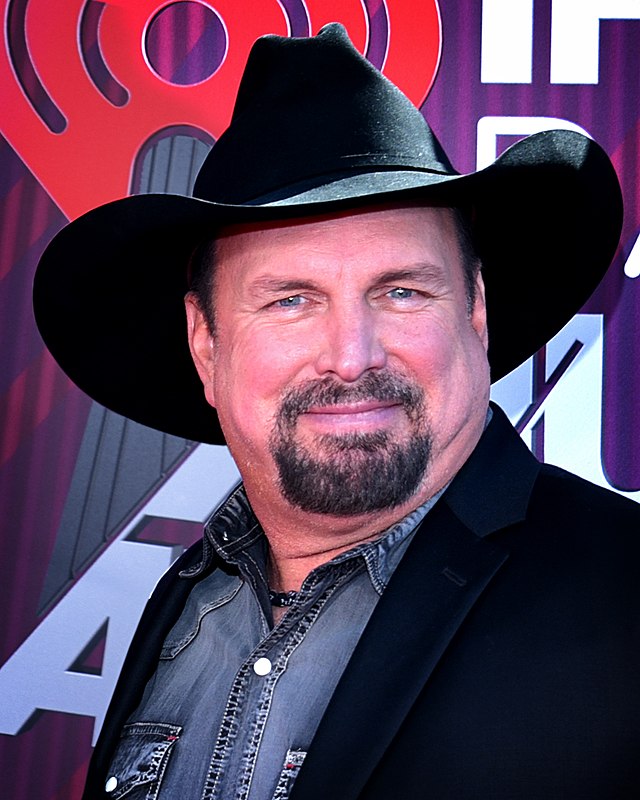
Quote of the Day (Garth Brooks, on a Major Source of Conflicts)

“Some of the greatest conflicts are not between two people but between one person and himself.”—Country-music superstar Garth Brooks quoted in Rick Mitchell, Garth Brooks: One of a Kind Workin' on a Full House (1993)

(The image accompanying this post, by Glenn Francis, shows Garth Brooks arriving at the iHeartRadio Music Awards in Los Angeles on March 14, 2019.)

Wednesday, August 3, 2022

Quote of the Day (W. H. Auden, on the ‘Leaping Light’ of Summer)

“Look, stranger, on this island now
The leaping light for your delight discovers…
And this full view    
Indeed may enter
And move in memory as now these clouds do,
That pass the harbour mirror
And all the summer through the water saunter.”—English-born American poet, critic and playwright W. H. Auden (1907-1973), “On This Island,” the title poem of the On This Island collection (1937)

Well, since it was the first week of October six years ago when I took this photo, “Indian summer” (not the torrid mid-summer variety we’re experiencing now) might be a bit closer to my experience.

But the interplay of clouds, light, and the water celebrated by W. H. Auden made an impression on me when I walked around Brooklyn Bridge Park back then. Auden himself was still two years away from coming to the U.S. when he wrote these verses (I don't know the locale that inspired him0, but when he finally came to the U.S. and settled in Brooklyn Heights for a year, he would have occasion to see this sight for himself.

Tuesday, August 2, 2022

Quote of the Day (James Joyce, on “Every Life’)

“Every life is in many days, day after day. We walk through ourselves, meeting robbers, ghosts, giants, old men, young men, wives, widows, brothers-in-love, but always meeting ourselves.”—Irish novelist and short-story writer James Joyce (1882-1941), Ulysses (1922)

Monday, August 1, 2022

Quote of the Day (P.G. Wodehouse, on an Exceptionally ‘Pinheaded’ Young Man)

“People who enjoyed a merely superficial acquaintance with my nephew Archibald (said Mr Mulliner) were accustomed to set him down as just an ordinary pinheaded young man. It was only when they came to know him better that they discovered their mistake. Then they realized that his pinheadedness, so far from being ordinary, was exceptional. Even at the Drones Club, where the average of intellect is not high, it was often said of Archibald that, had his brains been constructed of silk, he would have been hard put to it to find sufficient material to make a canary a pair of cami-knickers. He sauntered through life with a cheerful insouciance, and up to the age of twenty-five had only once been moved by anything in the nature of a really strong emotion – on the occasion when, in the heart of Bond Street and at the height of the London season, he discovered that his man, Meadowes, had carelessly sent him out with odd spats on.”—English humorist P.G. Wodehouse (1881-1975), “The Reverent Wooing of Archibald,” in Mr. Mulliner Omnibus (1972)

Sunday, July 31, 2022

Spiritual Quote of the Day (St. John Chrysostom, on Greed, an ‘Unrestrainable Frenzy’)

“Now tell me why is wealth an object of ambition?.... To the majority of those who are afflicted with this grievous malady it seems to be more precious than health and life, and public reputation, and good opinion, and country, and household, and friends, and kindred and everything else….Nor is there any one to quench this fire: but all people are engaged in stirring it up, both those who have been already caught by it, and those who have not yet been caught, in order that they may be captured. And you may see everyone, husband and wife, household slave, and freeman, rich and poor, each according to his ability carrying loads which supply much fuel to this fire by day and night: loads not of wood or faggots (for the fire is not of that kind), but loads of souls and bodies, of unrighteousness and iniquity. For such is the material of which a fire of this kind is wont to be kindled. For those who have riches place no limit anywhere to this monstrous passion, even if they compass the whole world: and the poor press on to get in advance of them, and a kind of incurable craze, and unrestrainable frenzy and irremediable disease possesses the souls of all. And this affection has conquered every other kind and thrust it away, expelling it from the soul.”—Father of the Eastern Church and Bishop of Constantinople St. John Chrysostom (345-407), “No One Can Harm the Man Who Does Not Harm Himself,” translated by W.R.W. Stephens, from Nicene and Post-Nicene Fathers, First Series, Vol. 9, edited by Philip Schaff (1889).

I wish that a picture of the eloquent preacher who said these words, St. John Chrysostom (the surname means “golden-mouthed”), would interest people enough to read these words. But I’m afraid that an illustration of a figure from nearly two millennia ago is not someone to capture the attention of a 21st century reader.

So, I thought I would use an image likely to be more familiar to the common reader—or, at least, film fans, since mass entertainment is the unlikely modern equivalent of the ancient parable.

So, in case you are wondering: yes, that is director John Huston, in a role he took on increasingly on in the last two decades of his long Hollywood career—actor—facing Jack Nicholson (back to the camera, in shadow), in the great 1974 neo-noir classic, Chinatown.

Huston’s character, a jovial-seeming industrialist called Noah Cross, is one of the great villains of movie history. The name itself is ironic: read one way, it suggests an Old Testament patriarch, along with New Testament redemptive qualities.

But as Nicholson’s private eye, Jake Gittes, discovers, this figure is behind the massive diversion of water from farms to Los Angeles. And the “Cross” surname might as well be short for “double-cross,” for few evils are beyond this magnate’s thirst for money, including municipal corruption, murder and child molestation.

In one of the most striking exchanges in Robert Towne’s Oscar-winning screenplay, Gittes probes for the motive behind all this, asking Cross, “How much are you worth?”

Cross: “I have no idea. How much do you want?”

Gittes: “I just wanna know what you're worth. More than 10 million?”

Cross: “Oh my, yes!”

Gittes: “Why are you doing it? How much better can you eat? What could you buy that you can't already afford?”

Cross: “The future, Mr. Gittes! The future.”

Beware of a pursuit of wealth so frenzied that it mortgages the future of society, the film tells us. It does indeed become what Chrysostom cautioned of: “a kind of incurable craze and unrestrainable frenzy and irremediable disease [that] possesses the souls of all.” 

Or, as Gittes warned in Chinatown's climax, about the poisonous influence of Cross: "He's rich! Do you understand? He thinks he can get away with anything."

Saturday, July 30, 2022

Song Lyric of the Day (Joni Mitchell, on ‘These Dark CafĂ© Days’)

“All good dreamers pass this way some day
Hidin' behind bottles in dark cafes, dark cafes
Only a dark cocoon before I get my gorgeous wings and fly away
Only a phase, these dark cafe days.” — Singer-songwriter Joni Mitchell, “The Last Time I Saw Richard," from her LP Blue (1971)
 
Like so many other baby boomers, I was astonished to discover that the legendary Joni Mitchell had made a surprise appearance at the 2022 Newport Folk Festival last Sunday. It was even more glorious to think that she had performed nine songs, including one on her guitar—the first time she had done so before a paying audience since her 55th birthday.
 
On her live 1974 double-LP set, Miles of Aisles, Mitchell expressed her ambivalence about fulfilling fan expectations, telling an audience, “That's one thing that's always the major difference between the performing arts to me, and being a painter. A painter does a painting, and he does a painting — and that's it, you know. He’s had the joy of creating it, and he hangs on a wall, and somebody buys it, somebody buys it again, or maybe nobody buys it, and it sits up in a loft somewhere until he dies. But nobody ever said to Van Gogh, 'Paint A Starry Night again, man!' You know? He painted it, and that was it.”
 
This past weekend, however, the 78-year-old musician and artist seemed genuinely delighted in revisiting old fan favorites like “Carey,” “Big Yellow Taxi,” “A Case of You,” “Help Me,” “The Circle Game,” and “Both Sides Now.” Collectively, they could be her “songs of experience,” to borrow a phrase from William Blake.
 
The lyrics I chose for today’s quote represent perhaps the more dominant strain of her youth: songs of flight (“my gorgeous wings”), of the bohemian yearning for musical, artistic and personal freedom.
 
She would be the first to tell you of the personal price she paid for that quest (discussed in this prior post of mine about “Urge for Going”). But they form as indelible a part of her legacy as her “songs of experience.”
 
The Newport audience was honoring her stunning contribution to music with their full-throated response. But there were other reasons for their warm welcome back to her.
 
Chief among those reasons is this: everybody loves a comeback story, and Mitchell had to overcome greater odds than most to make it back onstage. Vanessa Romo’s blog post for Georgia Public Broadcasting relates how, following the singer’s 2015 brain aneurysm, even relearning how to speak and walk was a struggle.
 
But Mitchell took matters a step further: “Playing an instrument and vocal cord coordination, those sorts of things, are really, super complex fine movements that would take a long time to relearn," Dr. Anthony Wang, a neurosurgeon at Ronald Reagan UCLA Hospital, told Ms. Rono.
 
Mitchell relearned how to play the guitar by watching past videos of herself to see where she put her fingers. But the rest came through the stubbornness that sometimes drove hit-bent record execs to distraction in her youth, or what her attending surgeon correctly termed her “will and grit."
 
Over the past several years, baby boomers have grown used to the icons of their youth leaving the stage through physical decline and death.
 
But for one glorious moment this past weekend, they were able to witness a return of a genius who created words and chords that form part of the collective soundtrack of our lives. It was indeed something to cheer—even sing—about.

(The photo of Ms. Mitchell accompanying this post came from an Asylum Records ad from 1974.)

Friday, July 29, 2022

Quote of the Day (Larry David, on Why He ‘Never Could Have Lived in the Old West’)

“I never could have lived in the Old West. I would have been completely paranoid about someone stealing my horse. No locks. You tie them to a post! How could you go into a saloon and enjoy yourself knowing your horse could get taken any moment? I would be so distracted. Constantly checking to see if he was still there.”— American comedian, writer, actor, director, and television producer Larry David quoted in Maureen Dowd, “Master of His Quarantine,” The New York Times, April 5, 2020

(This image of the creator of Seinfeld, Curb Your Enthusiasm—and Broadway’s Fish in the Dark—was taken at the 2009 Tribeca Film Festival by David Shankbone.)