Showing posts with label Depression. Show all posts

Thursday, May 7, 2026

Song Lyric of the Day (The Rolling Stones, on a Line of Cars, ‘All Painted Black’)

“I see a line of cars and they're all painted black
With flowers and my love, both never to come back.”—English rock ‘n’ rollers Mick Jagger and Keith Richards, “Paint It Black,” from the Rolling Stones’ Aftermath LP (1966)

Sixty years ago today, “Paint It Black,” was released as a single in the U.S., eventually spending two weeks at number one during the summer and serving as the lead song of their fourth studio album, Aftermath.

Among the early hits of the Rolling Stones, this one remains distinctive to me. With “Satisfaction” in 1965, Mick Jagger was already well-launched on the misogyny that characterized so many of his subsequent lyrics, and he stayed stuck in the same mental groove in in two songs from this new collection, “Under My Thumb" and "Stupid Girl."

But “Paint It Black” gave evidence of something larger than dissatisfaction with “the birds” that so obsessed the Stones’ lead singer. It’s far more than the sweet, strings-laden melancholy of “Yesterday” by their compatriots in the British Invasion, the Beatles.

From Brian Jones’ unusual, even unnerving sitar opening, the Stones were evoking a severe depression with the potential to throw you off your axis, even locating it in something specific: grief (that “line of cars” suggesting a funeral procession).

“ ‘Paint It Black’—I wrote the melody, he [Jagger] wrote the lyrics,” Richards recalled in his 2010 autobiography, Life. “It’s not that you can say in one phrase he wrote that and he did that. But the musical riff is mostly coming from me. I’m the riff master.”

According to Simon Harper’s May 2025 account, the March 1966 recording session for the tune in RCA’s Los Angeles studio wasn’t jelling. Producer Andrew Loog Oldham had decided that, if no movement occurred in 10 minutes, they’d move on.

Just then, bassist Bill Wyman suggested Hammond organ pedals, with Jones—tiring of his normal six-string guitar and becoming the band’s de facto multi-instrumentalist—tried out sitar chords he’d been strumming, the byproduct of tutelage under virtuoso Harihar Rao.

The song had evolved into something far more mesmerizing and disturbing than what everyone in the studio had been hearing originally. The other Stones supposedly felt that their collective improvisational input entitled them to share songwriting credit on the band’s sixth single with Jagger and Richards.

In the end, it may not have mattered that much. In the early 1970s, to free themselves from their early, pugnacious manager Allen Klein, the Stones signed away rights to this and others up to 1971.

And that would be enough fill most ordinary people with the kind of depression associated with “Paint It Black”—except that the Stones have made so much more money, and been even more savvy about saving it, since then.

Oh, by the way: some audiophiles have their recordings of the song with a comma in the title: “Paint It, Black,” as seen in the image accompanying this post. Why?

Years later, Richards confirmed that it was the band’s intention not to include the comma. It was a mistake on the part of their record company, Decca, that produced the errant punctuation mark.

This reminds me of what happened with one of my favorite Supremes songs, “Stoned Love.” Writer Kenny Thomas had written it as “Stone Love,” intending to evoke the strength of amour with the lyrics. Yet when it came back from the Motown warehouse, the letter “d” had been tacked onto the first word of the title.

I couldn’t help but think that someone at the record plant had been stoned when he made that mistake—and that similarly, a mind-altering substance led someone at Decca to insert that idiotic, confusing, useless comma. If that was the case, it’s too bad that the Rolling Stones didn’t take the cue and quit drugs cold turkey.

Wednesday, June 11, 2025

This Day in Literary History (William Styron, Chronicler of Slavery, Holocaust, and Despair, Born)

June 11, 1925— Novelist and essayist William Styron, who wrote powerful fiction about slavery, the military, and the Holocaust—as well as a searing memoir of his own struggle with suicidal depression—was born in Newport News, Va.

Lie Down in Darkness brought the 26-year-old Styron notice as a novelist of abundant narrative gifts and deep moral seriousness, working in Faulkner’s tradition of Southern storytelling. He did not realize until his first bout of mental illness in the mid-1980s that even the heroine of this early effort suffered from this affliction.

As part of a cohort of writers who served in World War II and briefly spent time abroad after its conclusion, he—as well as friends James Jones, Irwin Shaw, Norman Mailer, and Peter Matthiessen—took cues from the “Lost Generation.”

They were, Styron’s youngest daughter Alexandra wrote in her memoir Reading My Father, “Big Male Writers…[who] perpetuated, without apology, the cliché of the gifted, hard drinking, bellicose writer that gave so much of twentieth-century literature a muscular, glamorous aura."

Even as Styron played the bon vivant during summer parties at Martha’s Vineyard, his poet-activist wife Rose and their four children endured his moodiness, angry outbursts, and frequent frustration over his inability to bring his work to as quick and successful conclusion.

In middle age, that age of homage, masking their own attempts to obliterate the shock of their war, proved increasingly unsuccessful and counterproductive. Though Styron’s career lasted four decades, his output was not that extensive—four full-length novels, a book of short stories, a memoir, a play, and an essay collection—finding, at the age of 65, that the “senior partner” to his writing, his drinking, no longer satisfied or spurred his writing.

A childhood in Tidewater region of Virginia was overshadowed by his mother’s decline and death from breast cancer, a struggle that only worsened his father’s melancholy. W.C. Styron’s second marriage left his son with a stepmother he found chilly and unsympathetic.

I briefly described in this post from 14 years ago the controversy surrounding Styron’s Pulitzer Prize-winning account of the bloodiest slave uprising in antebellum America, The Confessions of Nat Turner.

Many admirers like myself of his forays into the darkest chapters of American life attributed the long gaps between books to perfectionism, a tendency common among authors.

But with Darkness Visible, he described, in shattering detail, how his writer’s block was bound up with a psychic condition that he likened to a storm in his brain.

This memoir provided knowledge and help to others similarly afflicted. But, aside from the trio of novellas collected in Tidewater Morning (1993), Styron was never able to complete his World War II novel, The Way of the Warrior, after Sophie’s Choice in 1979, because his depression returned with a vengeance in the spring of 2000, troubling him till his death six years later.

Tuesday, January 3, 2023

Song Lyric of the Day (Donny Hathaway, Hoping That ‘Brighter Days Will Soon Be Here’)

“Never mind your fears
Brighter days will soon be here
Take it from me:
Someday we'll all be free.”— “Someday We'll All Be Free,” written by Donny Hathaway and Edward Howard, performed by Donny Hathaway on his LP Extension of a Man (1973)

Last night, a beautiful cover version of this song by Hanka G reminded me of the stunning original by Hathaway. Edward Howard wrote the lyrics to encourage Hathaway, who was already suffering from the mental illness that would claim his life six years later.

A half century later, the song remains a powerful balm to the spirit for anyone experiencing anxiety, depression, or just simply the blues—especially with the holidays over and the bleakness of winter setting in.

Wednesday, May 12, 2021

Quote of the Day (Aldous Huxley, on ‘The Leisured Rich’ and the Poor)

“The leisured rich, who are not paid to do anything, themselves pay for the privilege of filling their vacuum with active occupations or passive diversions. Sport in all its varieties, alcohol and elaborate eating, love-making, theater-going, card-playing—these are some of the activities and diversions with which the rich can afford to fill up the aching void of their leisure. By means of such distractions they contrive to keep boredom and melancholia at bay….To the onlooker, the leisures of the rich may not provide a particularly uplifting spectacle; but for the rich themselves unemployment is not intolerable. A poor man, living at subsistence level, can buy no opiates or stimulants. Foe him, the vacuum of leisure is complete. He is exposed to the full force of boredom and depression. He is never able to forget, as the rich man can forget in the whirl of his distractions, the futility of a life deprived of sense or purpose and contributing nothing to the greater life of society at large. The effects of prolonged and unmitigated leisure are appalling. Slowly and insidiously it tends to reduce its victims to a kind of living death.”  — English novelist/essayist Aldous Huxley (1894-1963), “The Man Without a Job,” December 20, 1936, in Aldous Huxley, Between the Wars: Essays and Letters, edited by David Bradshaw (1994)

These days, addiction rates are twice as high among the jobless as among those with a job, according to the information web guide Addiction Center. So Huxley’s contention about the poor man being unable to buy “opiates or stimulants” does not hold true today, no matter what may have happened when he wrote this during the Great Depression that gripped both side sides of the Atlantic.

Huxley—who, later in life, experimented with mescaline and LSD—recognized, in his 1932 dystopian novel Brave New World, that “psychotropic drugs were not just toys for recreational purposes but had the power to fuel political and religious change,” according to this Oxford University Press blogpost by pharmacology professor Richard J. Miller of Northwestern University.

Huxley's other point, about the poor being exposed to “the full force of boredom and depression,” remains true, as does his warning about “prolonged and unmitigated leisure” among what used to be called the “idle rich.” The impact of the current COVID-induced recession will take a long time to sort out, but the psychological effects cannot be discounted.

Sunday, April 7, 2019

Quote of the Day (John Predmore, Praying for Physical and Spiritual Healing)


“For continuing or renewed health for all those I love,
         Strengthen them in your mercy, Lord.
For all struggling with life-threatening illness,
         Be their source of comfort, O Good Shepherd.
For all weakened by age or infirmity,
         Strengthen both their limbs and their spirit, O God.
For all suffering from mental or nervous afflictions,
         Be their calming presence, Lord Jesus.
For all with disabling handicaps,
         Give them courage and patience, O Lord.
For all struggling with spiritual anxiety, depression or addiction,
         Shower them with your love and mercy, O God.
For all who feel alone, for the lonely, the marginalized, the homebound, the shunned, and those who feel on the edge of society,
         Let them feel your comforting presence.
For all close to death,
         Ease their pain and grant them your peace, O Sacred Heart
For doctors, nurses, hospice workers, and caregivers,
        Guide their healing actions and inspire their words and spirit,
        most Loving Lord.”—Jesuit priest John Predmore, “Prayer: Petitions for Healing,” Prayer: Petitions for Healing (blog), Aug. 23, 2012


As I age, I have watched in dismay as more and more people fall victim to physical and mental illness—an experience that I am sure many other Baby Boomers can identify with. I hope those who read this will join me in praying for all those afflicted in these ways.


Thursday, January 18, 2018

Quote of the Day (Theodore Roethke, on Madness)


“What's madness but nobility of soul
At odds with circumstance?"—American poet Theodore Roethke (1908-1963), “In a Dark Time,” in The Collected Poems of Theodore Roethke (1963) 

Wednesday, December 20, 2017

Quote of the Day (Edward Abbey, on Melancholy and Action)


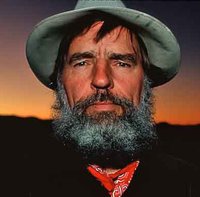
“As a confirmed melancholic, I can testify that the best and maybe only antidote for melancholia is action. However, like most melancholics, I suffer also from sloth.” —Western essayist, novelist, and environmental advocate  Edward Abbey (1927-1989), A Voice Crying in the Wilderness (Vox Clamantis in Deserto): Notes from a Secret Journal (1989)