Saturday, October 27, 2018

Quote of the Day (Charlotte Bronte, on ‘Hidden Treasures’ of the Human Heart)


“The human heart has hidden treasures, 
  In secret kept, in silence sealed; 
The thoughts, the hopes, the dreams, the pleasures, 
  Whose charms were broken if revealed.”—English novelist-poet Charlotte Bronte (1816–1855), “Evening Solace,” in Poems by Currer, Ellis, and Acton Bell (aka Charlotte, Emily, and Anne Bronte) (1846)

Friday, October 26, 2018

Photo of the Day: Slow Turn Into Fall, Riverside Park, NYC


“October’s half over
and the leaves have not begun
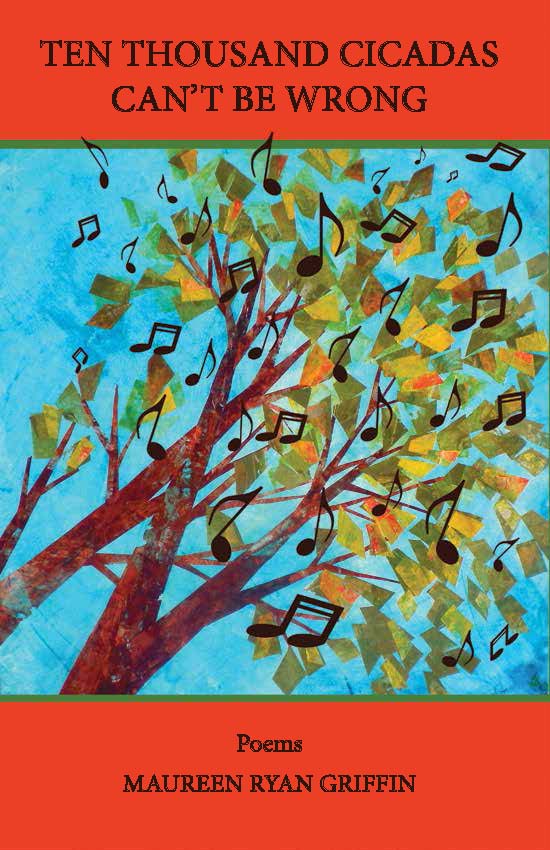
to surrender.”— Poet and nonfiction writer Maureen Ryan Griffin, “Symphony in E Minor: On Wanting the Leaves Off All the Trees,” in Ten Thousand Cicadas Can’t Be Wrong (2014)

I took the attached photo at almost the exact time as now two years ago in Riverside Park. Even now more than then, autumn was slow to come this year, and I’m afraid it won’t stick around for long.

Movie Quote of the Day (‘High Anxiety,’ With 2 Staffers at the Psychoneurotic Institute for the Very, VERY Nervous)


[Dr. Montague has just gotten through a vigorous session of “discipline” meted out by the evil Nurse Diesel, leaving him unable to sit without wincing.]

Nurse Diesel [played by Cloris Leachman]: “Come to my room right after dinner.”

Dr. Charles Montague [played by Harvey Korman]: “No, not tonight. I'm too tired. I think I'll turn in early.”

Diesel: “I'll let you wear my underwear.”

Montague [changing his mind instantly]: “I'll be there!”— High Anxiety (1977), screenplay by Mel Brooks, Ron Clark, Rudy De Luca, and Barry Levinson, directed by Mel Brooks

Last night, I saw this Alfred Hitchcock parody to end all Hitchcock parodies. (Ten of The Master’s classics are referred to here, with two combined together in one sidesplitting scene: the crop-duster from NORTH BY NORTHWEST and the massive avian attack of THE BIRDS.) 

There are times—actually, more than a few—when a comedy really comes in handy. This did the trick for me this week!

Thursday, October 25, 2018

Quote of the Day (Eric Hoffer, on Why ‘The Ideal Devil is a Foreigner’)


“Finally, it seems, the ideal devil is a foreigner. To qualify as a devil, a domestic enemy must be given a foreign ancestry. Hitler found it easy to brand the German Jews as foreigners. The Russian revolutionary agitators emphasized the foreign origin (Varangian, Tartar, Western) of the Russian aristocracy. In the French Revolution, the aristocrats were seen as ‘descendants of barbarous Germans, while French commoners were descendants of civilized Gauls and Romans.’ In the Puritan Revolution the royalists ‘were labeled “Normans,” descendants of a group of foreign invaders.’”— American moral and social philosopher Eric Hoffer (1898-1983), The True Believer: Thoughts on the Nature of Mass Movements (1951)

 No movie or fiction will scare me this Halloween quite like this analysis of political fanaticism. Thirty-five years after its author's death, it bears rediscovery and reflection...

Wednesday, October 24, 2018

Quote of the Day (Joseph Epstein, on ‘The Modest Reputation of the Essay’)


“One might, at an early age, wish to be a poet or a dramatist or a novelist or even possibly a critic. One somehow wanders or stumbles into becoming an essayist. But, given the modest reputation of the essay and the way it has tended to be taught in schools, it is quite amazing that anyone should ever again wish to read essays let alone write them.” —American essayist and editor Joseph Epstein, A Literary Education and Other Essays (2014)

Although I don’t think that one develops an interest in the essay from an early age, as one does for the other forms that Epstein cites, I would not attribute this to how it is taught. I think it has ever been thus.

Nearly 40 years ago, one of the best contemporary essayists, Edward Hoagland, told me, when I interviewed him for my college newspaper, that, at least in his case, resort to the essay resulted from “the reformer’s impulse” to set the world right. Even if you qualify it and say one’s own world, that still holds true.

The genre is a meditative one, one to come at the point in a life that calls for self-assessment or self-improvement. Childhood is hardly the time for that.

If one aspect of our age threatens the essay as a genre, it might the tendency toward assertion—i.e., simply stating a position—rather than persuasion—a thorough consideration of counter-arguments and an honest attempt to speak to them. The confessional impulse behind the essay may be stronger than ever, but without this attempt at reader outreach and understanding, I fear for its future ability to engage those who encounter it.