Have no enemy but time.”—Nobel Prize-winning Irish poet-playwright William Butler Yeats (1865-1939), “In Memory of Eva Gore-Booth and Con Markievicz,” originally published in 1927, reprinted in The Collected Poems of W.B. Yeats, edited by Richard Finneran (1989)
Tuesday, May 19, 2026
Quote of the Day (William Butler Yeats, on ‘The Innocent and the Beautiful’)
Have no enemy but time.”—Nobel Prize-winning Irish poet-playwright William Butler Yeats (1865-1939), “In Memory of Eva Gore-Booth and Con Markievicz,” originally published in 1927, reprinted in The Collected Poems of W.B. Yeats, edited by Richard Finneran (1989)
Wednesday, September 11, 2024
Quote of the Day (William Butler Yeats, on ‘Arrogance and Hatred’)
Peddled in the thoroughfares.” —Nobel Prize-winning Irish poet-playwright William Butler Yeats (1865-1939), “A Prayer for My Daughter,” originally published in Michael Robartes and the Dancer (1921), republished in The Collected Poems of W. B. Yeats (1989)
Tuesday, January 10, 2023
Quote of the Day (William Butler Yeats, on ‘The Worst Rogues and Rascals’)
A law indifferent to blame or praise,
To bribe or threat; habits that made old wrong
Melt down, as it were wax in the sun’s rays;
Public opinion ripening for so long
We thought it would outlive all future days.
O what fine thought we had because we thought
That the worst rogues and rascals had died out.”—Nobel Prize-winning Irish poet-playwright William Butler Yeats (1865-1939), “Nineteen Hundred and Nineteen” (1921), in The Tower (1928)
In the U.S., the disillusionment expressed by Yeats had long since set in. Nevertheless, “the worst rogues and rascals” had never been more brazenly evident than during last week’s 15-vote count to elect Kevin McCarthy Speaker of the House.
It wasn't just serial liar George Santos was waiting to join a body he instantly dishonors by his presence. It was also that the last-ditch holdouts (notably including the mendacious Matt Gaetz, shown in the attached image in a tense moment with McCarthy) were merely fighting for their moment to shine on Fox News.
“Nihilists” might have been the most common word I kept hearing about the small group (less than 10%) of the new Republican majority in the House of Representatives who obstinately voted against McCarthy.
But the epithet could just as well have applied to many of his supporters. It was all too appropriate that the final ballots that moved McCarthy into his long-desired position took place on the second anniversary of the assault on the Capitol, for 118 members of the House who voted against Joe Biden’s certification as President have returned to their jobs.
In fact, it might be said that a straight line runs from January 6, 2021 to January 6, 2023. McCarthy not only joined those voting against certification, but went crawling down to Mar-a-Lago after coming under attack from MAGA forces for criticizing Donald Trump for inciting the insurrection.
To the longtime Republican leader’s horror, his consistent efforts since then to placate the Jacobin wing of his party may only have encouraged them. Policy differences between him and them are nonexistent, as he has continually yielded to their demands. But his attempts at appeasing them only confirmed their belief that he would do or say anything to become Speaker.
On
January 6, 2023 as on January 6, 2021, a far-right coalition temporarily disrupted
electoral processes long taken for granted. In their desire to sow division and
disorder, they only managed to bring democracy into disrepute—and at a time
when dictators were watching and gloating.
Saturday, June 4, 2022
Song Lyric of the Day (Joni Mitchell, on the Hour of ‘This Rough Beast’)
For what is this rough beast
Its hour come at last." — Singer-songwriter Joni Mitchell, "Slouching Towards Bethlehem," based on the William Butler Yeats poem “The Second Coming,” included on Mitchell’s CD Night Ride Home (1991)
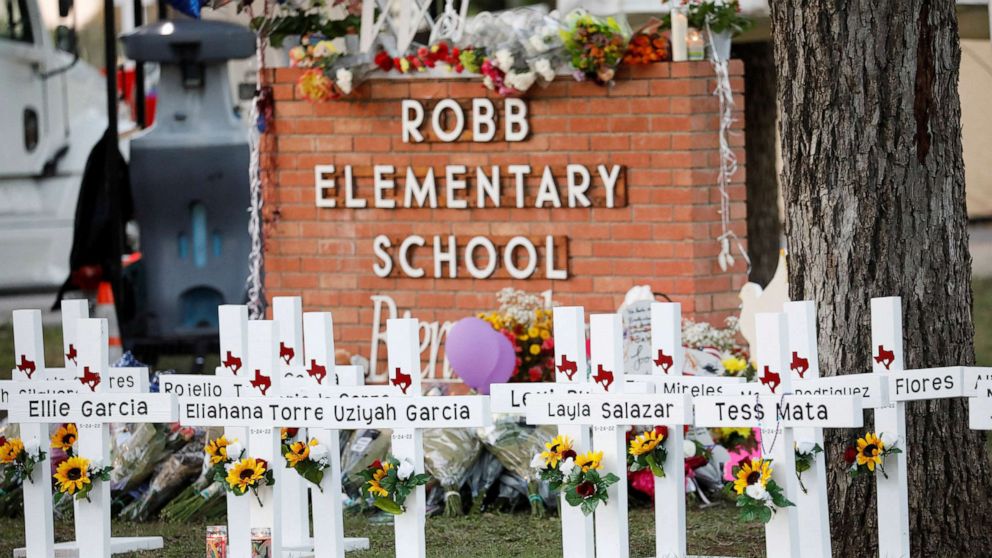
This post is dedicated to the victims of the Uvalde
shooting this week—and to all the casualties of mass shootings over the last
several decades.
Some of those “thoughts and prayers” we keep hearing
about after all these incidents should be reserved for us, the guilty
bystanders who haven’t done a blessed thing to stem the plague of gun violence
in this country.
We are already experiencing the bewilderment of the
international community over this rank failure. Before long, I fear, we will
suffer the rebuke of history.
I can only hope God has mercy on us, because we surely
don’t deserve any.
Tuesday, November 16, 2021
Quote of the Day (William Butler Yeats, on ‘The Horses of Disaster’)
Their hoofs heavy with tumult, their eyes glimmering white;
The North unfolds above them clinging, creeping night,
The East her hidden joy before the morning break,
The West weeps in pale dew and sighs passing away,
The South is pouring down roses of crimson fire:
O vanity of Sleep, Hope, Dream, endless Desire,
The Horses of Disaster plunge in the heavy clay.” —Nobel Prize-winning Irish poet-playwright William Butler Yeats (1865-1939), “He Bids His Beloved Be at Peace,” in The Wind Among the Reeds (1899)
Thursday, October 21, 2021
Quote of the Day (W. B. Yeats, on Literature, ‘Always One Man’s Vision of the World’)
“Literature is always personal, always one man’s vision of the world, one man’s experience, and it can only be popular when men are ready to welcome the visions of others. A community that is opinion-ridden, even when those opinions are in themselves noble, is likely to put its creative minds into some sort of a prison.” —Nobel Prize-winning Irish poet-playwright William Butler Yeats (1865-1939), “An Irish National Theatre” (2008), in Collected Works in Verse and Prose of William Butler Yeats, Vol. 4 (e-book edition, 2015)
Wednesday, February 24, 2021
Quote of the Day (William Butler Yeats, on How ‘Love is the Crooked Thing’)
There is nobody wise enough
To find out all that is in it,
For he would be thinking of love
Till the stars had run away,
And the shadows eaten the moon.”—Nobel Prize-winning Irish poet-playwright William Butler Yeats (1865-1939), “The Young Man's Song,” in Responsibilities and Other Poems (1916)
(Thanks to my friend
Peter for bringing these wonderful verses to my attention.)
Friday, April 12, 2013
This Day in Theater History (O’Casey’s ‘Gunman’ Debuts at Ireland’s Abbey Theatre)
April 12, 1923—The Shadow of a Gunman, the first play of Sean O’Casey’s staged by Ireland’s Abbey Theatre after three prior unsuccessful tries by the
playwright, opened on a Thursday night to so-so business. But by the end of its
four-performance run that weekend, the first of his “Dublin Trilogy” of plays
on nationalism and class in revolutionary Ireland had won wide acclaim, saved
the renowned theater from hard times, and set its creator on the course of the
most successful stage of his career.Lady Gregory got O'Casey to concentrate on his greatest strength--characterization--in this play and the two that followed, Juno and the Paycock and The Plough and the Stars. They were the biggest hits the Abbey had till that point.
O’Casey and Gregory truly made an odd couple, this young Marxist and elderly aristocrat, but they became real soul mates. After the hugely successful premiere of Juno and the Paycock, she even told Yeats, “This is one of the evenings at the Abbey that makes me glad to have been born.”
Ironically, though much of O'Casey's later work would be expressionist in style, the success of his "Dublin Trilogy" influenced the Abbey's definitive turn in the coming years toward social realism.
Friday, August 17, 2012
Quote of the Day (William Butler Yeats, on His Glory in Friends)
Friday, March 16, 2012
Quote of the Day (William Butler Yeats, on the ‘Pilgrim Soul’ in His Love)
“How many loved your moments of glad grace, And loved your beauty with love false or true;
But one man loved the pilgrim soul in you,
And loved the sorrows of your changing face.”— William Butler Yeats, “When You Are Old,” from The Rose (1893)
Thursday, February 2, 2012
This Day in Literary History (Joyce’s ‘Ulysses’ and the Irish Literary Revival)
February 2, 1922—On the morning of his 40th birthday, James Joyce was presented with the first copy of his novel Ulysses, by his friend Sylvia Beach, owner of the Parisian bookstore Shakespeare and Co. As my college friend Steve was good enough to remind me recently, the great event occurred on Groundhog’s Day. Only 1,000 copies of the book were printed in that initial run, but news about its extraordinary nature soon spread. Not everyone was pleased. At least a few Irish citizens, for instance, were so annoyed by Joyce’s modernist masterpiece that they probably wished that he, like the groundhog, had instead chosen to hibernate a while longer. One of those was Lady Augusta Gregory, one of the artistic directors of Ireland’s Abbey Theatre and a longtime patron of writers.
In one chapter of Joyce’s novel, for instance, he had referred to her as an “old hake”--an Irish term for a gossipy woman. She would also have read (or, at least, heard) a line about “our peasant plays,” an unmistakable reference to the type of material that she, William Butler Yeats, and John Millington Synge had staged at the Abbey. Synge himself, dead 13 years, came in for a jab. Shakespeare, one of Joyce’s characters notes, was the “chap that writes like Synge.”
It’s been months since I saw Woody Allen’s very fine Midnight in Paris, but now I’m a little chagrined that he didn’t get around to depicting Joyce among the 1920s notables that Owen Wilson encounters on his nocturnal excursions. With his deteriorating eyesight, his drinking and his fine tenor voice (so fine that many, including wife Nora, felt he should have been a singer rather than a writer), Joyce would have made as distinct an impression as any of the culturati in the final cut of the movie, even Ernest Hemingway.
“Jim” Joyce (as the young American called him) and Hemingway had something else in common besides their Paris days: they frequently bit the hand of anyone kind enough to help them when they were starting out. Hemingway’s works are littered with the victims of his numerous literary assassinations: F. Scott Fitzgerald, Harold Loeb, Sinclair Lewis, and John Dos Passos, to name just a few.
At least let’s give Joyce credit for this much: those whom he attacked had plenty of opportunity to prepare themselves for what he might say.
Take Yeats, for instance. The great poet and friend of Lady Gregory is believed to have met Joyce only twice. The first and more memorable of the two encounters occurred in October 1902. The conversation might have taken an inexorable turn for the worst when Yeats, slightly annoyed by Joyce’s suggestion that the folklore-derived plots of Yeats’ plays evidenced the poet’s deterioration, pointed to a page in one of Joyce’s short stories and countered that he had “got that from somebody else who got it from the folk.” Joyce, already certain that he was sui generis, insisted that it came from his own mind.
As Joyce got up to go, he turned to Yeats and asked how old he was. On being told 36 (one year younger than he actually was), the 20-year-old Joyce responded: “I thought as much. I have met you too late. You are too old.”
Joyce, in other words, was already demonstrating a youthful arrogance perhaps only exceeded by Orson Welles at the time of Citizen Kane: the kind that led Herman Mankiewicz, the filmmaker's collaborator on that classic, to crack, "There but for the grace of God, goes God."
One month after Yeats had his encounter with Joyce, the poet arranged for the young man to meet Lady Gregory. You have to ask yourself why Yeats did something so preposterous -- and to someone who was his friend, for heaven's sake--when his own encounter with this young welp turned out to be so unsatisfactory. The only explanation I have is that misery loves company.
Early in 1903, Lady Gregory arranged for the Daily Express to send Joyce books to be reviewed. This would help alleviate his money problems while getting his name before the public. One of the books the editor of this publication mailed Joyce was Lady Gregory’s own Poets and Dreamers. I'm sure there was an expectation that Joyce would go easy on it.
You get an idea of the tone of the subsequent review in this phrase: “in the fullness of its sterility.”
Oh, did I forget to mention that Lady Gregory was not happy one bit about this?
Perhaps Joyce felt the aid he received was not commensurate with his genius. Perhaps he hated the feeling of being beholden to anyone. At the end of Portrait of the Artist as a Young Man, Joyce’s alter ego, Stephen Dedalus, vows to “forge, in the smithy of my soul, the uncreated conscience of my race.” That’s a grandiose ambition, but, because it acknowledges no influences or creative forbears, it’s also filled with isolation and alienation.
So, as novelist-critic Thomas Flanagan wrote in his essay collection There You Are, Joyce managed, in Ulysses, to accomplish "an Irish rebellion of the deepest and the subtlest kind, a rebellion within the word, within language itself." It was an act of separation not merely from the "acquired speech" of Stephen's English dean of studies, nor even from the Roman Catholic Church from which Joyce famously fell away, but also from Gregory, Yeats, and the other Protestant lights of the Irish Literary Revival.
Ironically, for all of Joyce’s attempts to pick a fight with Lady Gregory, he shared with her a highly developed ural sensibility--or, if you will, an ear for dialogue. It would serve both exceedingly well throughout the rest of their careers.
Lady Gregory's attempt to capture the spoken cadences of Irish peasants represented an important advance in a country where previous writers had settled for thick and awkward dialect that turned people into caricatures. And in Ulysses, almost by way of compensating for what he could no longer see, the visually impaired Joyce created dialogue and interior monologues ("stream of consciousness") that caught ordinary Dubliners on a seemingly ordinary day that his prose made extraordinary.
Friday, January 27, 2012
Flashback, January 1907: Synge’s ‘Playboy’ Causes Dublin Riot
At Dublin’s Abbey Theatre, the company’s initial good feelings about the reception of John Millington Synge’s new three-act comedy were rudely destroyed at its Saturday night premiere on January 26, 1907, when the audience took offense, midway through the play, to what one theatergoer called “an unusually brutally coarse remark.”The line in The Playboy of the Western World that set off a week of rioting and debate came from young protagonist Christy Mahon, who, when told he could find other girls besides the one he loves, remarks: “It’s Pegeen I’m seeking only, and what’d I care if you brought me a drift of chosen females, standing in their shifts itself, maybe, from this place to the Eastern World?”
One word in particular—"shifts,” an Irish expression for ladies’ undergarments— started the donnybrook. The company might have inadvertently heightened the impact of the remark, however, by substituting for “chosen females” the more geographically precise, but earthier, phrase, “Mayo females.”
At the end of the first act, Lady Augusta Gregory, one of the theater’s artistic directors, sent a telegram to her company partner, poet William Butler Yeats, who was lecturing in Scotland: “Play great success.” But by the curtain, she’d had to send another, acknowledging that the show had been “broken up” because of the offensive word.
Two nights later, Gregory, noting not just a packed house but one with an unusually high concentration of males in one section, correctly surmised that the disorder at the premiere was about to be repeated. She not only took the precaution of securing police protection, but also college athletes who might discourage the ruffians.
Neither tactic worked. In fact, the mob regarded the athletes as a challenge rather than an impediment to their mischief, and pummeled one of the would-be burly protectors to such an extent that he had to be carried out by one of the actors he was ostensibly guarding. From the moment the curtain rose, nearly 40 men, many equipped with tin trumpets, managed to make the play inaudible.
On Monday, February 4, Yeats--back in Dublin by this time, and having issued an invitation to debate the meaning of the play--told Abbey playgoers that the play demonstrated the rise of "a new thought, a new opinion, that we had long needed."
The reception for The Playboy of the Western World was nothing like that given at the Abbey to Synge’s Riders to the Sea, when the audience was so overwhelmed by the one-act tragedy they had just witnessed that they sat in stunned silence at the show’s conclusion.
Instead, Playboy brought to the fore internal tensions within the company, as well as the adversarial relationship that was developing between its prime movers— an overwhelmingly Protestant Irish group— and the larger Irish Catholic Dublin populace that, in its nationalist fervor, took quick offense against anything that remotely smacked of the hated stock “stage Irishman” character fostered by their longtime British overlords.
Many on that second, even more tumultuous Monday performance agreed with Joseph Holloway, a local architect who later claimed that, over 40 years, he had never missed an Abbey show. Synge, he wrote testily in his diary, possessed a “dungheap of a mind.” But he also recorded a dissent by another theatergoer, George Roberts, who said, “The play is the finest ever written if you had only the wit to see it!”
Contemporary critics and theatergoers are far more likely to side with Roberts, seeing Playboy of the Western World as a landmark in world drama, a truly original work that matched a hilarious plot twist (a cowardly youth who, mistakenly believing he’s killed his bullying father, becomes the hero of the countryside) with language that raised common peasant speech to levels of unexpected poetry and eloquence.
Time proved that Playboy of the Western World was one of the cornerstones of the Irish Literary Renaissance, a significant outpouring of talent and genius in a small land whose liberties had been traduced and language nearly destroyed by a colonial power. It became one of the best-known works of the Abbey, the first state-subsidized theater in the world.
Monday, February 14, 2011
Quote of the Day (Frank O’Connor on Yeats in Love)

Thursday, August 20, 2009
This Day in Theater History (Home Secured for Ireland’s Abbey Theatre)

The facility—site of the old Merchants’ Institute, with additional property tagged onto the site from an adjacent lot that had once housed a morgue—was retrofitted to become the Abbey Theatre, a driving force in the Irish Literary Renaissance that would later produce the plays of John Millington Synge, Sean O’Casey, George Bernard Shaw, and William Butler Yeats.
One of the more interesting quotes I came across while researching this post came from an exceptionally unusual source: Theodore Roosevelt, in a piece published in The Outlook in December 1911:
“In the Abbey Theatre Lady Gregory and those associated with her–and Americans should feel proud of the fact that an American was one of the first to give her encouragement and aid–have not only made an extraordinary contribution to the sum of Irish literary and artistic achievement, but have done more for the drama than has been accomplished in any other nation of recent years. England, Australia South Africa, Hungary, and Germany are all now seeking to profit by this unique achievement.”
Take a look at that quote. Today, for theater aficionados, it merely states the obvious. In the Abbey’s early days, however, this was really going out on a limb, and Roosevelt should be accorded due credit for foresight—and, indeed, you can consider it done here.
Nevertheless, you’re undoubtedly wondering: why did I call T.R. an “exceptionally unusual” source about this? Well, consider:
* He was an inveterate Anglophile, with not a great amount of relish for things Irish—and, judging from his interactions with members of Tammany Hall in his first days in politics, not a terrible amount of affection or understanding for Irish emigrants to the U.S.
* Despite a larger-than-life personality that lent itself repeatedly to dramatists and screenwriters (e.g., The Wind and the Lion), T.R. did not, unlike George Washington or Abraham Lincoln, evince much interest in the theater.
* Since returning from his African game-hunting sojourn (a far more characteristic TR activity!), Roosevelt’s attention had been increasingly absorbed by the passive, conservative tendencies of his successor in the Presidency, William Howard Taft—so much so that he was considering splitting the Republican Party by challenging Taft for another term.
* The hyperactive T.R. seemed constitutionally incapable of sitting still for a minute, so imagining him sitting for two hours watching a performance not his own boggles the mind.
Roosevelt showed his support for the Abbey at a crucial time in its American tour: Synge’s The Playboy of the Western World was sparking protests, just as it had in Dublin at its premiere. His praise came at the urging of his blueblooded Boston friend, art collector Isabella Stewart Gardner—who, in turn, was spurred on by Lady Gregory.
It was natural that Lady Gregory would spearhead this effort. Though not considered one of the geniuses of the Irish Literary Renaissance, it is inconceivable that this movement—and, in particular, the Abbey Theatre—could have come to fruition without her.
It wasn’t only that this member of the Protestant Ascendancy encouraged (and sometimes even financially supported) some of the male members of the group; that she wrote 25 plays herself, many of which were among the most popular mounted by the theater in its early years; or that she was a director of the institution from its founding until her death in 1932.
No, the playwright-folklorist also served as proselytizer and businesswoman behind what might have seemed initially like a hopelessly quixotic venture.
For all its contributions to Irish culture, the Abbey Theatre had a difficult time just surviving in its early days. In contrast, the company often played to packed houses when it toured the U.K. and U.S.
The theater was also, of course, not without controversy. The best-known battles were waged against patriotically correct rioters screaming against Synge’s The Playboy of the Western World and O’Casey’s The Plough and the Stars. But even the in-house battles that resulted in the exiles of O’Casey and Frank O’Connor could be enervating.
And yet, the group’s glories endure. To Ireland’s eternal credit, the Abbey became, in 1924, the first state-subsidized theater in the English-speaking world. It awakened not just a country but a world to the possibilities of a dramatic movement based on authenticity rather than on melodrama.
One who felt the influence most powerfully was Eugene O’Neill, the first indisputably great American playwright, who noted: “As a boy I saw so much of the old, ranting, artificial, romantic stage stuff that I always had a sort of contempt for the theatre. It was seeing the Irish players for the first time that gave me a glimpse of my opportunity."
Friday, February 8, 2008
This Day in Theater History (Sean O'Casey's 'Plough and the Stars' Opens at Dublin's Abbey Theatre)
As the roar of the crowd cascaded over him, the playwright, disturbed by tensions with his director and cast during rehearsals, figured his troubles with the production were over. In fact, they were about to worsen, leading to one of the great donnybrooks in the annals of world theater.
I love that word “donnybrook,” and its use here harks back to its Irish origins: a seemingly festive occasion that became notorious for drunkenness and disorder.
I alluded to this quintessentially Celtic controversy in a prior post on the American media. But today seems a good time to revisit the play and its part in Irish history.
The Plough and the Stars was the third and final portion of what would later be seen as O’Casey’s nationalist trilogy about boastful or cowardly men and their long-suffering women, set in the tenements of Dublin amid a war of independence and civil war.
Origins of a Controversy
But news must have quickly circulated that Plough was dynamite, because only a day after the rapturous opening night, O’Casey was hustled into the office of William Butler Yeats, founder of the Abbey and, with a Nobel Prize in hand, the nation’s leading literary light.
Certain scenes—not only involving vainglorious men during the Easter Rebellion, but also an off-screen orator using phrases from a leader of the Rising, Padriac Pearse, and a prostitute soliciting business—had aroused the ire of the patriotically correct.
Such a commotion was occurring, with objects even being tossed at actors, that Yeats was requesting O’Casey’s agreement that the police would be called so the show could go on.
An Angry Playwright in His Memoirs
From a childhood with enough financial, physical and emotional misery to rival that of Charles Dickens, O’Casey mined not only his Dublin trilogy but an autobiography that eventually numbered six volumes.
The fourth volume, Inishfallen, Fare Thee Well, took up the period when he experienced his greatest success and worst controversy. In his late 60s by this time, the playwright looked back with a bitter wit that anticipated Frank McCourt’s, lambasting not just Irish intellectuals and theater critics but also former associates at the Abbey such as Yeats, Lady Augusta Gregory and Lennox Robinson.
At times the memoirist could be unfair, as when he wrote that Gregory, the Abbey figure who had done the most to further his career, looked like “an old, elegant nun of a new order.”
“Rowdy, clenching, but well-groomed hands reached up to drag down the fading black-and-gold front curtain; others, snarling curiously, tried to tug up the very chairs from their roots in the auditorium; while some, in frenzy, pushed at the stout walls to force them down…The high, hysterical, distorted voices of women kept squealing that Irish girls were noted the world over for their modesty, and that Ireland’s name was holy; that the Republican flag had never seen the inside of a public-house; that this slander would mean the end of the Abbey Theatre; and that Ireland was Ireland through job and through tears.”
With the help of Yeats, in all his scornful brilliance, and the police, in all their bewildered authority, the show did indeed go on.
A Painful Fallout
But the riot led O’Casey to consider why he remained in Ireland while one of his other plays was doing so well in London. By the end of the year, the former soldier in the Irish Citizens' Army had decamped to the British capital, never to live in his native land again.
Just as bad, after Yeats turned down his next, more expressionist play, The Silver Tassie, O’Casey never submitted another original work to the Abbey. The dramas he wrote for the remaining 30 years of his life are now regarded as almost exclusively proletarian propaganda, and rarely performed anymore.
O’Casey’s luck with Hollywood was about as good as it was with the nationalists in Dublin: slim to none.
''Th' whole worl's in a terrible state o' chassis!,'' an inebriated O’Casey character announces in Juno and the Paycock—and the ironic statement applies just as well to the tumult surrounding The Plough and the Stars, on stage and on screen.