Showing posts with label Secularism. Show all posts

Sunday, January 5, 2025

Spiritual Quote of the Day (Camilla Cavendish, on Faith, ‘An Even Greater Force in the Coming Decades’)

“Faith is set to become an even greater force in the coming decades because the fastest-growing nations, where birth rates are highest, are among the most devout. Sub-Saharan Africa saw the most dramatic expansion of Christianity in the world since the European Middle Ages during the 20th century. Its Christian population is expected to double between now and 2050, to 1.1bn. Meanwhile Islam is the fastest-growing religion in the world, having made inroads in north Africa. By mid-century there may be almost as many Muslims as Christians. Hindus and Jews are also expected to increase their numbers — though Buddhists will not.”—British journalist Camilla Cavendish, “Secularists Must Remember That Religion Is on the Rise,” The Financial Times, Jan. 4-5, 2025

In some ways, I was delighted to read Ms. Cavendish’s headline, along with her speculation that “the hold of aggressive atheism may be weakening.” After all, I read her piece in the same week as philosopher Firmin DeBrabander’s far more devastating itemization, in the Fall 2024 issue of The Hedgehog Review, on “dechurching”— “a process involving entire populations, not just intellectuals, radicals, or other members of the so-called secular elite.”

What troubles me, I suppose, is that Ms. Cavendish’s argument boils down to demography being destiny. It’s the same kind of claim that Democratic strategists have made for a coming, decisive realignment for their party over the last two decades, and we now see what has happened to those hopes.

The basis for such hopes lies in the belief that current trends will continue unabated, but so often that does not happen in lives affected by social cataclysms.

How many demographers, for instance, would have predicted three decades ago that the 2007-09 global financial crisis and NAFTA would have combined to corrode Democrats’ one-time “blue wall” in the Rust Belt states, or that the sex abuse scandal would deliver the most devastating blow to Roman Catholicism since the Reformation?

True, Professor DeBrander cites demographic data similar to Ms. Cavendish’s in holding that obituaries for Christianity are premature. But I would like the data to be supplemented by counter evangelizing for the kind of belief promoted by Pope Francis, in a Church that fosters what he calls “theological hope” and “a change that promotes the dignity of individuals.”

I guess I am looking for the modern equivalent of Saints Francis, Dominic, and Ignatius Loyola—figures who rose, when the Church seemed overwhelmed by challenges to its moral authority, to offer reminders of the power of humility and community in teaching, by word and deed, the original core values of the Gospels.

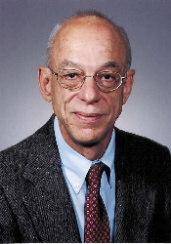
(The image accompanying this post, the official portrait of Baroness Cavendish of Little Venice, was taken Apr. 23, 2024, by Roger Harris.)

Sunday, August 8, 2021

Spiritual Quote of the Day (Robert A. Nisbet, on Secularism and ‘The Decline of Community’)

“The loss of the sense of the visible community of Christ will be followed by the loss of the sense of the invisible. The decline of community in the modern world has as its inevitable consequence the creation of a mass of helpless, bewildered individuals who are unable to find solace in Christianity regarded merely as a creed."—American sociologist Robert A. Nisbet (1913-1996), The Quest for Community: A Study in the Ethics of Order and Freedom (1953)

Sunday, March 23, 2014

Quote of the Day (Karen Armstrong, on Why Faith Is ‘Not an Obsolete Passion’)


“Religious faith is not an obsolete passion. Nor is it a delusion which people cannot help because they lack the brains or the education to disprove the articles of the creed. People choose to believe what cannot be rationally proved one way or the other, because they need this larger mythical dimension in their lives. We are now in a position to see that religion is not something that we can get rid of once we have progressed to a more ‘enlightened’ state. The eighteenth-century Age of Reason gave way to a strong and fundamentalist resurgence of Christianity in the nineteenth century. Similarly, the secularism of the twentieth century has given way to a renewed religious passion. People need to tell themselves stories about the world and their life in it, so that they have a sense of meaning and purpose. It is very hard to live according to the bleak light of the atheistic or agnostic day, which has rationally disposed of religious faith.”—Karen Armstrong, Holy War: The Crusades and Their Impact on Today's World (1988)

Sunday, September 2, 2012

Quote of the Day (John Courtney Murray, on Secularists)


“The secularist has always fought his battles under a banner on which is emblazoned his special device, ‘The Integrity of the Political Order.’ In the name of this thundering principle he would banish from the political order (and from education as an affair of the City) all the ‘divisive forces’ of religion. At least in America he has traditionally had no quarrel with religion as a ‘purely private matter,’ as a sort of essence or idea or ambient aura that may help to warm the hidden heart of solitary man. He may even concede a place to religion-in-general, whatever that is. What alarms him is religion as a Thing, visible, corporate, organized, a community of thought that presumes to sit superior to, and in judgment on, the ‘community of democratic thought,’ and that is furnished somehow with an armature of power to make its thought and judgment publicly prevail. Under this threat he marshals his military vocabulary and speaks in terms of aggression, encroachment, maneuvers, strategy, tactics.”—Fr. John Courtney Murray, We Hold These Truths: Catholic Reflections on the American Proposition (1960)

We’ve already heard a great deal, courtesy of the GOP convention, about the proper place of religion in public life. Expect to hear a whole lot more by Election Day. It’s naïve to think that this election would not witness such a debate. It’s positively unhistorical to appeal to some point in the American past when religion did not figure into public evaluation of policy and of their leaders’ character--or when leaders did not walk uncertainly into this minefield.  (E.g., Thomas Jefferson looked with horror upon the religious revival occasioned in the Second Great Awakening, but many members of that movement later supported the abolitionist and women’s suffrage movements.)

A prior post of mine briefly explored the influence of John Courtney Murray in the life of the Roman Catholic Church (his work was key in Vatican II’s pronouncements on religious freedom) and in the election of 1960, when John F. Kennedy’s advisers could lean on Murray’s work to show that Catholic teaching was perfectly compatible with American pluralism.

But now it seems as if it’s back-to-school time for many people associated with the current election cycle, from Rick Santorum (whose comment that JFK’s speech in Houston on the proper place of religious belief in politics—“It made me want to throw up”—forever branded him as immature) and secularist progressives (who, in their exclusionary vision of a value-free politics, risk losing the activists who have fueled, among other things, the labor and civil-rights movements).

Sunday, July 8, 2012

Quote of the Day (Christopher Clausen, on Islam and Secularization)


“One reason Muslim immigrants may have an easier time integrating into American society is that piety of almost any sort is so much more common and accepted here than in Europe. The complete secularization many intellectuals have been yearning for since the Enlightenment, now nearly achieved in Europe, turns out to bring its own set of unexpected problems. Although George Washington would no doubt be disappointed, an American future of emotional, never-quite-settled conflicts over the place of faith in public life looks like an acceptable price to pay for avoiding the far greater evils that afflict both the devout and godless regions of the earth.”— Christopher Clausen, “America's Design for Tolerance,” The Wilson Quarterly, Winter 2007

Sunday, January 15, 2012

Quote of the Day (Fr. John Courtney Murray, on the ‘Spectacle of a Civil Society’)

“We face a crisis that is new in history. We would do well to face it with a new cleanliness of imagination, in the realization that internecine strife, beyond some inevitable human measure, is a luxury we can no longer afford. … Perhaps the time has come when we should endeavor to dissolve the structure of war that underlies the pluralistic society, and erect the more civilized structure of the dialogue. It would be no less sharply pluralistic, but rather more so, since the real pluralisms would be clarified out of their present confusion. And amid the pluralism a unity would be discernible—the unity of an orderly conversation. The pattern would not be that of ignorant armies clashing by night but of informed men locked together in argument in the full light of a new dialectical day. Thus we might present to a ‘candid world’ the spectacle of a civil society.”—John Courtney Murray, S.J. (1904-1967), We Hold These Truths: Catholic Reflections on the American Proposition (1960)