Showing posts with label Creativity. Show all posts

Tuesday, October 14, 2025

Quote of the Day (William Boyd, on How ‘Novelists Are a Bit Like Spies’)

“Novelists are a bit like spies in the sense that we look at the world with the same kind of forensic attention. Not because we think somebody might be following us or because we’ve given away some secret, but because we’re interested. And so you notice that your neighbor has changed her hairstyle three times in the last month, just as a spy notices the same car has been parked outside for three days.”— British novelist, short story writer, screenwriter and film director William Boyd, quoted by Christian House, “Novelists Are Like Spies,” Financial Times, Sept. 6-7, 2025

The image accompanying this post, of William Boyd, was taken on Feb. 22, 2009, by Michael Fennell.

Sunday, September 28, 2025

Spiritual Quote of the Day (Fr. Jack Welch, on ‘The Catholic Imagination’)

“The Catholic imagination is a thesaurus of metaphors and symbols. The mystery of God requires a kaleidoscope of imagery. God is like a rock, a fortress, a shield, a place of refuge. God is like a mother, a shepherd, a dark night. The psyche finds images for what cannot be fully expressed.” —John Welch, O. Carm. (1939-2025), “Catholic Imagination,” Carmelite Review, Fall 2013-Winter 2014 issue

Friday, June 6, 2025

Quote of the Day (Paul Auster, on Writing by Hand Vs. a Keyboard)

“Keyboards have always intimidated me. I’ve never been able to think clearly with my fingers in that position. A pen is a much more primitive instrument. You feel that the words are coming out of your body and then you dig the words into the page. Writing has always had that tactile quality for me. It’s a physical experience.”—American novelist Paul Auster (1947-2024), interviewed by Michael Wood, “The Art of Fiction No. 178,” The Paris Review, Issue 167 (Fall 2003)

The image accompanying this post, of Paul Auster at the 2007 Brooklyn Book Festival, was taken Sept. 16, 2007, by Piktor08.

Sunday, January 19, 2025

Quote of the Day (Isaac Bashevis Singer, on a Creator’s ‘Inner Vision and Its Ultimate Expression’)

“Every creator painfully experiences the chasm between his inner vision and its ultimate expression. The chasm is never completely bridged. We all have the conviction, perhaps illusory, that we have much more to say than appears on the paper.”— Polish-born Jewish-American novelist, short-story writer, memoirist, essayist, and translator—and Nobel Literature laureate— Isaac Bashevis Singer (1904-1991), quoted in Aspects of I. B. Singer, edited by Joseph Landis (1986)

Monday, January 6, 2025

Quote of the Day (Peter Turchi, on Writing as a Kind of Puzzle)

“The composition of every piece of writing is a kind of puzzle. This is true of a novel, a sonnet, an autobiographical essay, a play or screenplay, a love letter, and an email to a colleague about a problem at work. Whom do we address? With what tone? How should we begin? What do we want the reader to think or feel or understand? Is it best to be direct or indirect, sincere or disarming? Should we start with a joke? A quotation?” —American fiction writer, editor, and instructor Peter Turchi, A Muse and a Maze: Writing as Puzzle, Mystery, and Magic (2014)

Monday, August 5, 2024

Quote of the Day (Richard Burton, on Seeing Elizabeth Taylor for the First Time)

“There were quite a lot of people in and around the pool, all suntanned and all drinking the Sunday morning liveners – Bloody Marys, boilermakers, highballs, iced beer….I was enjoying this small social triumph, but then a girl sitting on the other side of the pool lowered her book, took off her sunglasses and looked at me. She was so extraordinarily beautiful that I nearly laughed out loud…. She was unquestionably gorgeous. I can think of no other word to describe a combination of plentitude, frugality, abundance, tightness. She was lavish. She was a dark unyielding largesse. She was, in short, too bloody much, and not only that, she was totally ignoring me.”—Actor Richard Burton (1925-1984), in a diary entry recalling his first sight, at a 1952 California party, of future wife Elizabeth Taylor, quoted by Sam Kashner and Nancy Schoenberger, “A Love Too Big To Last,” Vanity Fair, June 2010

Richard Burton—who died 40 years ago today at his home in Geneva, Switzerland—fascinates me as much as any actor. He was a hell-raiser, to be sure—and, in coupling with the object of desire mentioned in the above paragraph a decade later, in Cleopatra, a cyclone of scandal.

Since his death at age 58, many have wondered how much more he might have accomplished had he not become addicted to both fame and alcohol. He himself thought he had squandered his talent on work that was essentially inconsequential: “All my life I think I have been secretly ashamed of being an actor and the older I get the more ashamed I get.”

I think of Burton as suffering from Mickey Mantle Disease, named after another prodigiously talented celebrity who overcame the humblest of origins—but still rued that he never became more.

But think of it this way in both cases: How many other gifted people have yielded to their demons without accomplishing anything at all?

Oscar nominated seven times (though he never won), Burton, for all his difficulties in staying sober, still showed at the end of his life that he could be superb in a supporting role, as in his unsettling appearance as the mysterious, cruel Party leader “O’Brien” in his last film, 1984.

At his best, in earlier films like Look Back in Anger, Becket, The Spy Who Came in From the Cold, Who’s Afraid of Virginia Woolf?, and Equus—not to mention stage work such as his legendary 1964 Broadway appearance in Hamlet— few could match his erudition, intensity, or magnificent baritone voice.

Burton showed talent in another capacity besides acting. (Surprisingly, it wasn’t in directing—his single foray behind the camera, a 1967 adaptation of Christopher Marlowe’s Doctor Faustus, was critically panned.)

No, his talent turned out to be writing. It didn’t involve screenplays, as so many other actors have turned their hands to, nor film analysis (Louise Brooks), novels (Dirk Bogarde), or memoirs (too many to list here), but diaries, 400,000 words scrawled in pocketbooks, desk diaries and loose paper.

Burton’s observational powers were acute, as was his sense of the rhythm of words. Thinking to himself, he could summon passion for material he admired such as Shakespeare’s plays:

“Last night I was lying on the bed doing a double crostic and looked up a quotation in the paperbacked Quotation Dictionary that I carry around with me specifically for that purpose. I immediately became lost in the book and read all the Shakespeare ones right through very slowly. There was hardly a line there that I didn't immediately know but seeing the miraculous words in print again doomed me to a long trance of nostalgia, a stupor of melancholy, like listening to really massive music, music that moans and thunders and plumbs fathomless depths.”

Unfortunately, just as often he expressed anger and disenchantment that all his attempts at self-medication could do nothing to assuage:

“I loathe, loathe, loathe acting. in studios. In England. I shudder at the thought of going to work with the same horror as a bank clerk must loathe that stinking tube journey every morning and the rush hour madness at night.”

In Elizabeth Taylor, he found his muse (they would star in 11 films together) and his downfall, as surely as Zelda Fitzgerald served the same functions for her novelist husband Scott. And, like the Jazz Age duo, their marriage was as much train wreck as love story, with the volatility and drinking of each only worsening the same instincts in the other.

Sunday, July 7, 2024

Quote of the Day (Rick Rubin, on Overcoming Procrastination)

“Remember that the maker almost never knows exactly what they’re making in advance. The great works often appear when we’re aiming toward something completely different. Start as soon as you see a way in. I [also] find it helpful to work on multiple things at the same time. Not in the same moment but during the same general time period. The beauty is that different projects are at different stages, so you can avoid getting burned out on any one [thing]. We can step away, work on something else and come back with new eyes, as if we’re seeing it for the first time. Tunnel vision’s easy to fall into when working on a single project for a long period. We can end up getting lost in details nobody else will ever notice, while losing touch with the grand gesture of the work.” — Music producer Rick Rubin, interviewed by Kate Guadagnino, “Advice on Beginning: Ten Creative Minds on How to Start, Pivot and Productively Procrastinate,” T: The Style Magazine of “The New York Times,” Apr. 21, 2024

The image accompanying this post of Rick Rubin was taken Sept. 24, 2006, by jasontheexploder at https://www.flickr.com/photos/26251139@N00. 

Wednesday, May 1, 2024

Quote of the Day (Peter Frampton, on Musicians With Longevity)

“People who have longevity in music are usually the ones who never think they’re that special, so they keep pushing the envelope, listening, and learning more. I'll never be as good as I want to be, because the goal posts are always moving. If a player ever starts to think they're hot s—t and stops trying to improve themselves, it's curtains, or stagnation at the very least. But my friend and yours, B. B. King, was the most humble man, till the day he died.”— English-American rock ‘n’ roll guitarist and singer-songwriter Peter Frampton with Alan Light, Do You Feel Like I Do?: A Memoir (2020)

B.B. King would find a kindred spirit, I firmly believe, in Peter Frampton. Few entertainers have known his level of fame as a teen idol after the release of his multiplatinum album Frampton Comes Alive in the mid-Seventies. 

But few have reacted with as much modesty and gratitude after his richly deserved election to the Rock ‘n’ Roll Hall of Fame last month.

There was a time when I would have gagged on that phrase “richly deserved.” I had purchased and enjoyed Frampton Comes Alive, but been deeply disappointed with his solo follow, I’m in You, as well as with his participation in a film project I still regard as sacrilegious, Sgt. Pepper's Lonely Hearts Club Band.

To his credit, Frampton has acknowledged these creative mistakes, along with the substance abuse that put his career and life at risk for a long time. He rededicated himself to his work and reminded listeners why, ever since his days with Humble Pie, he became one of the elite rock ‘n’ roll guitarists.

Memoirs can be a fraught genre, filled at times with artful trimming and deception, but Frampton’s strikes me as one written by a musician who takes pride in his work and the friends he’s made along the way without yielding to overweening ego. In short, he seems as likable as they come.

Fans naturally value skill in performers, but honesty, humility and thankfulness can be in far shorter supply. These latter qualities shine as brightly with Frampton as the prowess with the “talk box” that made him a music-industry phenomenon nearly a half-century ago.

(For further information on the inflammatory muscle disease through which Frampton has persevered over the last half-dozen years, inclusion body myositis (IBM), see this July 2020 post from the Myositis Association blog.)

(Photo of Frampton performing at Gulfstream Park in Hallandale, FL, taken on Sept. 26, 2006, by Carl Lender)

Wednesday, December 27, 2023

Quote of the Day (Shane O’Mara, on Writing and ‘A Walking Brain’)

“Before you start a creatively demanding piece of work, prime yourself by writing down a few questions about what you need to do. Then head off for a 20-minute stroll and bring a voice recorder or a notebook. You’re likely to find that you generate more ideas than you would have while sitting at your desk. A walking brain is a more active brain, and more activity in the brain can bring colliding ideas and associations at the edge of consciousness to mind—resulting in the ‘a-ha’ moment of insight.”— Shane O’Mara, professor of experimental brain research, Trinity College, Dublin, In Praise of Walking: A New Scientific Exploration (2020)

Saturday, August 26, 2023

Quote of the Day (Ernest Hemingway, on His Antidote to Writer’s Block as a Young Man)

“Sometimes when I was starting a new story and I could not get it going, I would sit in front of the fire and squeeze the peel of the little oranges into the edge of the flame and watch the sputter of blue that they made. I would stand and look out over the roofs of Paris and think, 'Do not worry. You have always written before and you will write now. All you have to do is write one true sentence. Write the truest sentence that you know.' So finally I would write one true sentence, and then go on from there.”—American Nobel Literature laureate Ernest Hemingway (1899-1961), A Moveable Feast (1964)

Not bad advice for those of us staring at a blank screen. It’s also, of course, even more beautifully written than I had remembered, with the images of the oranges and the fire combining, in a wholly organic way, into a symbol for the creative process, with the nonessential discarded into what’s left is something unusual and colorful: “the sputter of blue.”


Saturday, August 12, 2023

Quote of the Day (Marcel Proust, on How Art is Discovered Rather Than Made)

“I had arrived then at the conclusion that in fashioning a work of art we are by no means free, that we do not choose how we shall make it but that it pre-exists us and therefore we are obliged, since it is both necessary and hidden, to do what we should have to do if it were a law of nature—to discover it.” —French novelist Marcel Proust (1871-1922), Time Regained, Vol. VI of In Search of Lost Time, translated by Andreas Mayor and Terence Kilmartin, revised by D.J. Enright (1992)

Saturday, July 8, 2023

Quote of the Day (Simon Sebag Montefiore, on ‘Our Capacity to Create and Love’)

“The harshness of humanity has been constantly rescued by our capacity to create and love. Our limitless ability to destroy is matched only by our ingenious ability to recover.”—British historian Simon Sebag Montefiore, The World: A Family History of Humanity (2023)

The picture accompanying this post, showing Simon Sebag Montefiore at the literary festival "Oslo bokfestival 2011" presenting his book on Jerusalem, was taken Sept. 18, 2011, by Einarspetz.

Wednesday, May 31, 2023

Quote of the Day (Phyllis McGinley, on Discipline, ‘The Groundwork of All Art’)

“Discipline is the groundwork of all art. The abstract painter has to know first how to draw, the symbolist to write ordinary lines. And the poet, no matter how soon he intends to throw overboard his formalism, has first to be capable of a correctly rhymed and metered stanza.” —Pulitzer Prize-winning American poet Phyllis McGinley (1905-1978), “The Light Side of the Moon,” The American Scholar (August 1965)

Wednesday, November 16, 2022

Quote of the Day (Ray Davies, on Bands’ Creativity, Adrenaline and Downtimes)

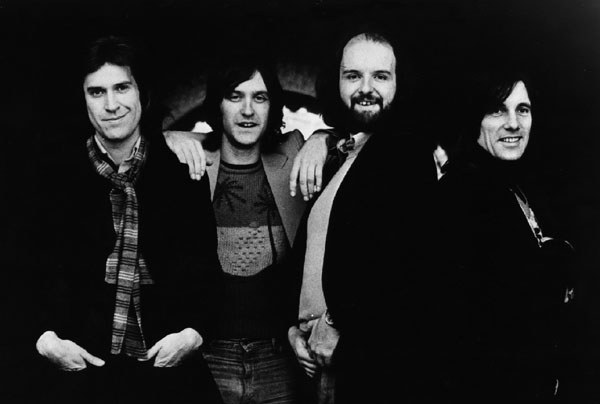
“When ‘You Really Got Me’ dropped out of the Top 10, my record company said, ‘We need a follow-up.’ I wrote ‘All Day and All of the Night’ in a few minutes, and we recorded it in a day. Bands go through an adrenaline period where they have hits for a year or two, and then they have to assess things. It’s important to do that in any form of creativity. The secret is to know there’s going to be downtimes where you need to re-energize and refocus.”—English rock ‘n’ roll singer-songwriter and Kinks frontman Ray Davies, interviewed by Andy Greene, in “The Last Word: Ray Davies,” Rolling Stone, Apr. 6, 2017

Thursday, October 20, 2022

Quote of the Day (Steve Jobs, on Why ‘Creativity is Just Connecting Things’)

“Creativity is just connecting things. When you ask creative people how they did something, they feel a little guilty because they didn't really do it, they just saw something. It seemed obvious to them after a while." — American inventor, designer and entrepreneur Steve Jobs (1955-2011), quoted in Dylan Love, “Steve Jobs' 13 Most Inspiring Quotes,” Business Insider, April 13, 2014

(The photo accompanying this post, of Steve Jobs showing off the iPhone 4 at the 2010 Worldwide Developers Conference, was taken on June 8, 2010 by Matthew Yohe.)

Saturday, October 15, 2022

Quote of the Day (Dave Davies, on the Rocky Genesis of a Kinks Classic)

“I never thought that song [“Dedicated Follower of Fashion”] would lead anywhere when he [brother Ray Davies] brought it along – it sounded overly frivolous to me, and we went through hell trying to finish a take. Ray couldn't find a way of realising the sound he had in his head, nor communicating what he wanted to the rest of us. We tried different combinations of guitars, and even a version with barrelhouse piano. But none of this satisfied Ray, and eventually we stumbled towards a solution through trial and error. The folksy mood of those earlier attempts did not necessarily make for a clean fit with Ray's sardonic lyric and it was decided that the guitars needed to be clanky and mechanistic, like George Formby's cheeky ukulele sound, then – bingo! It worked.”—Kinks lead guitarist Dave Davies, Living on a Thin Line: The Autobiography (2022)

Thursday, August 25, 2022

Quote of the Day (Edith Wharton, on Starved Imaginations in Her New York Childhood)

“I have often sighed, in looking back at my childhood, to think how pitiful a provision was made for the life of the imagination behind those uniform brownstone façades, and then have concluded that since, for reasons which escape us, the creative mind thrives best on a reduced diet, I probably had the fare best suited to me. But this is not to say that the average well-to-do New Yorker of my childhood was not starved for a sight of the high gods. Beauty, passion, and danger were automatically excluded from his life (for the men were almost as starved as the women); and the average human being deprived of air from the heights is likely to produce other lives equally starved—which was what happened in old New York, where the tepid sameness of the moral atmosphere resulted in a prolonged immaturity of mind."—Pulitzer Prize-winning American novelist Edith Wharton (1862-1937), “A Little Girl’s New York,” Harper’s Magazine, March 1938


Saturday, August 13, 2022

Quote of the Day (Motown Legend Lamont Dozier, on Writer’s Block)

“There’s no such thing as writer’s block. Stop feeding those lies about writer’s block. Writer’s block only exists in your mind, and if you tell yourself you have it, it will cripple your ability to function as a creative person. The answer to so-called writer’s block is doing the work. If you press on, the answers you need will come through. You have to show the muses that you’re capable and committed, then you’ll get the answers you need.”—Motown composer Lamont Dozier (1941-2022), How Sweet It Is: A Songwriter’s Reflections on Music, Motown and the Mystery of the Muse (2019)

(The photo of Lamont Dozier accompanying this post was taken July 10, 2009, by Phil Konstantin.)

Saturday, August 6, 2022

Quote of the Day (Jorge Luis Borges, on Events as a Writer’s ‘Clay’)

“A writer, or any man, must believe that whatever happens to him is an instrument; everything has been given for an end. This is even stronger in the case of the artist. Everything that happens, including humiliations, embarrassments, misfortunes, all has been given like clay, like material for one's art. One must accept it.”—Argentine short-story writer, essayist, poet, translator and librarian Jorge Luis Borges (1899-1986), Seven Nights, translated by Eliot Weinberger (1977)

Tuesday, April 19, 2022

Quote of the Day (Joan Didion, on Why She Wrote)

“Had I been blessed with even limited access to my own mind there would have been no reason to write. I write entirely to know what I’m thinking, what I’m looking at, what I see and what it means.”—American essayist, novelist, and screenwriter Joan Didion (1934-2021), “Why I Write,” The New York Times Book Review, December 5, 1976

The same goes for me, I think, along with the need to tell someone somewhere about it in a manner that involves expression in an orderly fashion.